CategoriesBlog

The 8 Main Types of Commercial Real Estate: A Guide for Investors

Navigating the world of commercial real estate can feel complex, with a landscape of terminology and classifications that can seem intimidating to even the most ambitious investor. However, making a strategic and successful investment in the Brampton & GTA market hinges on a clear understanding of the fundamental types of commercial real estate. From the high-rise office towers shaping the skyline to the bustling retail centres and sprawling industrial parks, each property category presents a unique set of opportunities and challenges.

This definitive guide is designed to demystify the market. We will provide an expert breakdown of the eight main property categories, exploring the purpose, potential, and key considerations for each-from office and retail to multifamily and special-purpose properties. By the end, you will have the foundational knowledge required to identify which asset classes align with your investment goals and to discuss your strategy with absolute confidence.

Key Takeaways

  • Commercial real estate is divided into core categories like office and retail, and specialized niches, each with unique risk and return profiles.
  • Mastering the different types of commercial real estate-from industrial to multifamily-is the first step to aligning an asset with your investment goals.
  • Your investment strategy, risk tolerance, and available capital will determine whether a core property, a specialized asset, or undeveloped land is the right choice for you.
  • Market dynamics in Brampton and the GTA vary significantly across property classes, making local expertise essential for strategic investment decisions.

What is Commercial Real Estate (CRE) and How Does It Differ from Residential?

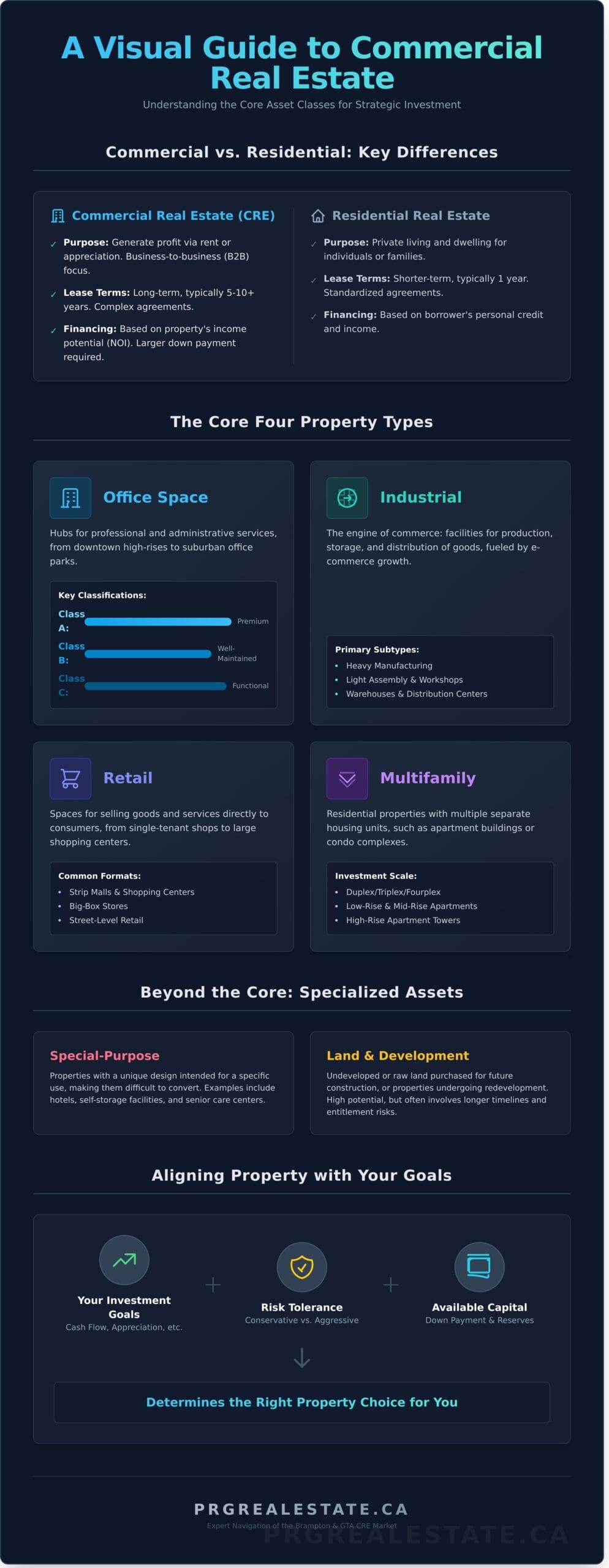
Embarking on a commercial real estate venture requires a strategic mindset, beginning with a clear understanding of the asset class itself. At its core, commercial real estate (CRE) refers to any Commercial property used exclusively for business-related purposes or to provide a workspace. Unlike residential real estate, which is purchased for private living, the primary objective of a CRE investment is to generate profit, either through consistent rental income or long-term capital appreciation. Mastering the various types of commercial real estate is the foundational step toward building a successful and resilient portfolio.

The distinction between commercial and residential extends far beyond purpose. Key operational differences that every investor must recognize include:

  • Lease Terms: CRE leases are typically longer, often spanning 5 to 10 years or more, and are far more complex than standard residential agreements, frequently involving detailed clauses on maintenance, insurance, and property taxes.
  • Financing in Canada: Securing a commercial mortgage in Canada generally requires a larger down payment and is evaluated based on the property’s income-generating potential, not just the borrower’s personal credit.
  • Tenant Relationships: Interactions are business-to-business (B2B), focusing on professional partnerships that support the tenant’s operational success and the landlord’s return on investment.

The Investor vs. The User Perspective

Engagement with CRE typically falls into two categories. The investor acquires property with the sole intention of leasing it to tenants to generate cash flow and build equity. In contrast, the user, or owner-occupier, purchases or leases a property to operate their own business. While both are making a significant investment, their goals-and therefore their evaluation criteria-are fundamentally different, with one focused on returns and the other on operational utility.

Key Metrics in CRE You Should Know

To evaluate and compare different types of commercial real estate, investors rely on specific financial metrics. Two of the most critical are:

  • Net Operating Income (NOI): This is the property’s total income after deducting all operating expenses. NOI is the purest measure of a property’s ability to generate profit.
  • Capitalization Rate (Cap Rate): Calculated by dividing the NOI by the property’s current market value, the cap rate represents the potential rate of return on the investment.

A comprehensive understanding of these metrics provides the data-driven insight necessary for making strategic acquisition decisions and achieving excellence in your investment journey.

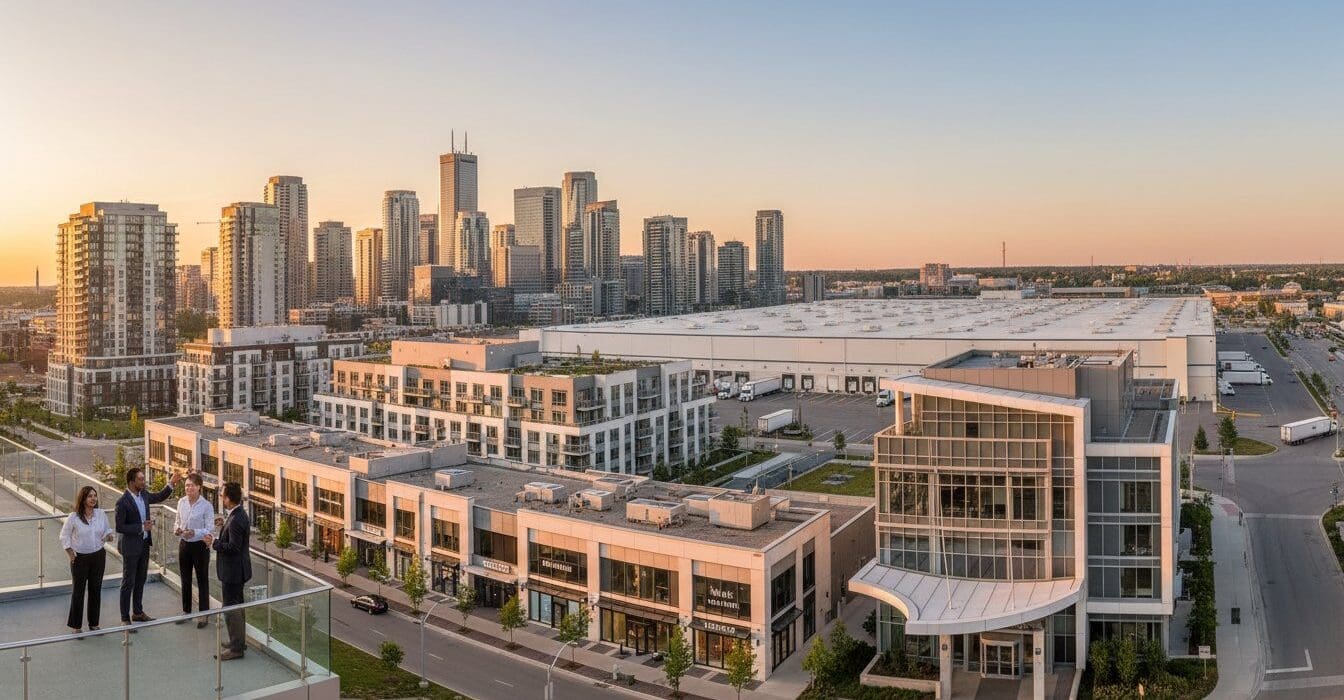
The Core Four: Office, Industrial, Retail, and Multifamily Properties

When investors begin exploring the various types of commercial real estate, their focus inevitably lands on four foundational pillars: office, industrial, retail, and multifamily. These categories represent the bulk of the commercial market, and nearly every business or investor will interact with them at some point. Each asset class operates within its own distinct market, driven by unique economic factors and tenant demands. Understanding the nuanced risk and reward profile of each is a critical first step for anyone serious about investing in different types of real estate.

Office Space: The Hub of Business

Office properties are buildings designed for professional and administrative services. Investment value is often determined by a classification system: Class A properties are premium, modern buildings in prime locations; Class B are well-maintained but older; and Class C are functional spaces requiring updates. Subtypes range from downtown high-rises and suburban office parks to specialized medical office buildings. In Canada, the market is adapting to post-pandemic trends, with a growing demand for flexible layouts and high-quality, amenity-rich hybrid workspaces.

Industrial Properties: The Engine of Commerce

Industrial real estate encompasses facilities used for producing, storing, and distributing goods. This broad category includes everything from heavy manufacturing plants and light assembly workshops to the massive warehouses and distribution centres that form the backbone of modern logistics. Driven by the relentless growth of e-commerce, the Canadian industrial sector has seen unprecedented demand. Key features that determine value include clear ceiling height, the number of loading docks, and efficient truck and transportation access.

Retail Properties: The Face of Consumerism

As the public face of commerce, retail real estate includes all properties where businesses sell goods and services directly to consumers. This spans a wide array of formats, such as neighbourhood strip malls, large community shopping centres anchored by a major grocery or department store, and standalone urban storefronts. The success of a retail investment is heavily dictated by three factors: location, foot traffic, and the strength of its anchor tenants. The sector continues to evolve, with a strategic shift towards experiential retail and mixed-use developments.

Multifamily Housing: A Residential-Commercial Hybrid

Multifamily property is defined as a residential building containing five or more individual housing units. While used for residential purposes, it is classified as commercial real estate because it is owned and operated as a business to generate income. This includes everything from low-rise apartment buildings to high-rise complexes, student housing, and senior living communities. Multifamily is one of the most sought-after types of commercial real estate for its reputation of providing stable cash flow and consistent demand, driven by the fundamental need for housing.

Beyond the Core: Specialized Commercial Real Estate Categories

Beyond the foundational asset classes, a diverse world of specialized commercial properties offers strategic opportunities for discerning investors. These niche assets, designed for specific industries or functions, can deliver exceptional returns. While they demand a higher degree of market knowledge, they often operate with less competition, providing a distinct advantage. Exploring these alternative types of commercial real estate is essential for building a truly diversified and high-performance portfolio.

Hospitality: Hotels and Lodging

Hospitality properties are assets dedicated to providing accommodation, dining, and other services to travellers and tourists. The sector’s performance is intrinsically linked to the health of the Canadian economy, tourism trends, and corporate travel budgets. Strategic investors closely monitor general industry data and market reports to assess market viability. This category includes:

  • Full-Service Hotels: Offering extensive amenities like on-site restaurants, conference facilities, and concierge services.
  • Limited-Service Motels: Providing basic, efficient accommodation without extensive on-site amenities.
  • Extended-Stay Hotels: Featuring rooms with kitchenettes designed for guests requiring longer-term stays.

A critical factor for any investor is the high degree of operational management required, which is far more intensive than a typical net-lease property and directly impacts profitability.

Special Purpose Properties: Unique and Custom-Built

This broad category encompasses properties constructed for a single, specific use, making them unique within the market. Examples are incredibly varied and demonstrate the vast scope of investment opportunities among different types of commercial real estate, including car washes, movie theatres, self-storage facilities, private schools, and places of worship. The primary investment challenge lies in their limited adaptability; if the specialized tenant vacates, repurposing the property can be costly and complex. However, these assets often benefit from stable, long-term leases with a single tenant, providing a predictable income stream for investors with the foresight to secure a strong operator.

Land and Development: The Foundation for Future Growth

While most investors focus on existing structures, land represents a fundamental and distinct category among the various types of commercial real estate. It is the raw material from which all future value is created, offering significant potential for appreciation through strategic development. Investing in land is not about immediate cash flow; it is a forward-thinking strategy focused on capitalizing on future growth, demographic shifts, and infrastructure expansion.

At PRG Real Estate Brokerage, our expertise extends beyond transactions to encompass the entire development lifecycle. We guide our clients in identifying and acquiring high-potential land parcels, from raw, unserviced tracts to fully entitled, shovel-ready sites. Our strategic approach is designed to unlock maximum value and lay the groundwork for thriving communities and successful commercial ventures.

Types of Commercial Land

Understanding the classification of commercial land is critical for any investor. Each type presents unique opportunities and challenges:

  • Greenfield Land: This refers to undeveloped land, typically in suburban or rural areas adjacent to urban expansion. Greenfield sites offer a blank canvas for large-scale master-planned communities or extensive commercial complexes, representing pure growth potential.
  • Infill Land: These are vacant or underutilized parcels within already developed urban or suburban areas. Infill opportunities are highly sought after due to their access to existing infrastructure, services, and established markets, making them ideal for targeted, high-density projects.
  • Brownfield Land: This category includes former industrial or commercial properties where redevelopment is complicated by potential environmental contamination. While they require remediation, Canadian municipal and provincial governments often offer incentives to encourage their revitalization, turning liabilities into valuable assets.

Key Considerations for Land Investment

Unlike other types of commercial real estate, land’s value is entirely prospective. Success hinges on rigorous due diligence and expert analysis. Key factors include:

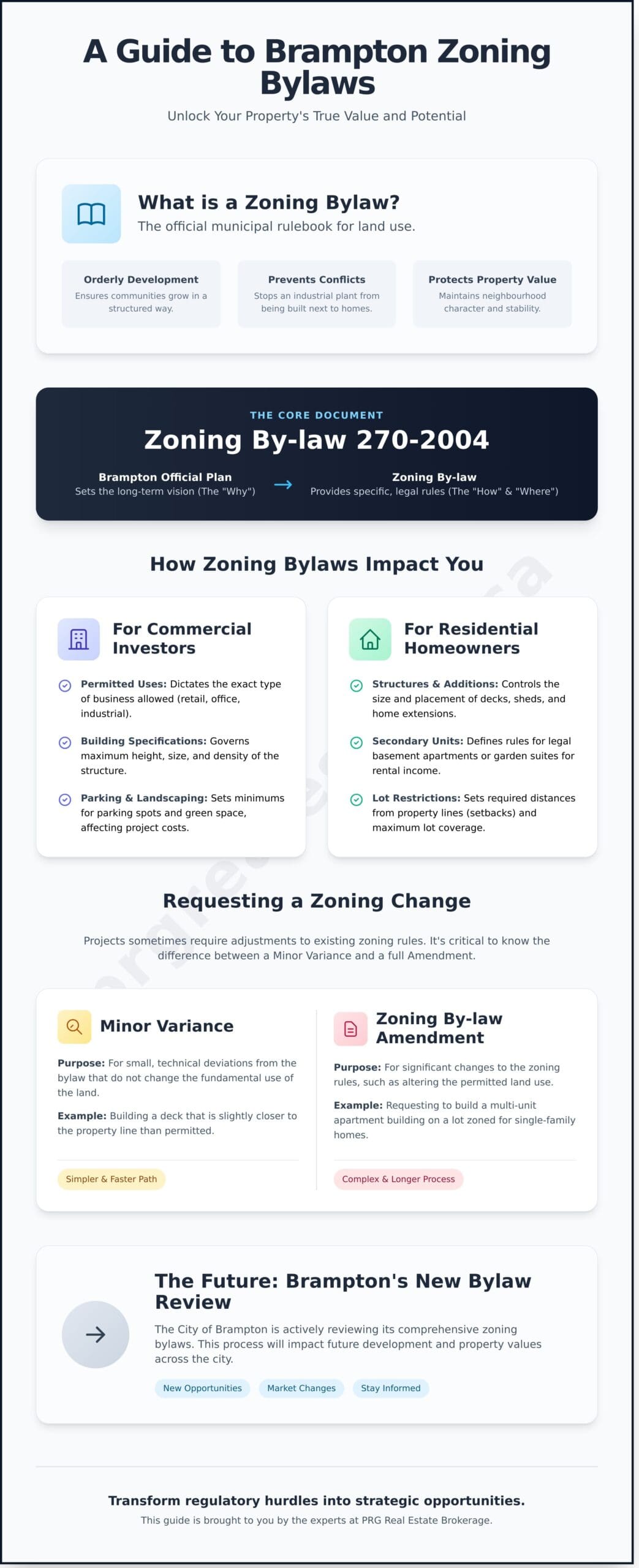
  • Zoning and Entitlements: A property’s current zoning and its potential for rezoning are the most critical value drivers. Navigating municipal Official Plans and securing development approvals is a complex process that demands specialized expertise.
  • Access to Infrastructure: The feasibility and cost of connecting a site to essential utilities-such as water, sewer, hydro, and roads-must be thoroughly evaluated. Proximity to major transportation corridors is also paramount.
  • Investment Horizon: Land investment is inherently a long-term strategy. Returns are realized upon sale to a developer or through the development process itself, which can take several years.

Navigating the complexities of land acquisition and development requires deep market knowledge and strategic foresight. Our expertise ensures your investments are positioned for success. Explore development opportunities with our expert team.

How to Choose the Right Commercial Property for Your Goals

Understanding the various types of commercial real estate is the foundational step. The next, more critical phase is strategically aligning a specific property class with your unique financial objectives, capital availability, and risk tolerance. The optimal investment is not a one-size-fits-all solution; it is a calculated decision engineered to produce a specific, desired outcome.

To clarify this process, we have outlined three common investor profiles. Identifying which profile best describes your goals will provide a clear direction for your investment journey.

For the Cash Flow Investor: Stability and Income

For investors prioritizing consistent, predictable returns, multifamily and industrial properties are premier choices. These assets, often secured by long-term leases with stable tenants, generate reliable monthly income. Similarly, retail properties with triple-net (NNN) leases in high-traffic locations offer a hands-off investment, as tenants are typically responsible for taxes, insurance, and maintenance, ensuring a pure stream of passive revenue for the owner.

For the Appreciation Investor: Growth and Value-Add

Investors with a primary focus on capital growth should target assets with significant value-add potential. This includes acquiring land in developing corridors poised for future growth or purchasing Class B/C office or retail properties that can be renovated and repositioned to command higher rents and a greater sale price. For those with significant capital and a high-risk tolerance, ground-up development projects represent the pinnacle of appreciation strategy, offering substantial returns upon successful completion.

For the Business Owner: Finding a Home for Your Operations

For business owners, the property choice is a direct function of operational necessity. A logistics company requires an industrial warehouse with high ceilings and excellent transportation access, while a law firm needs a professional Class A or B office space that reflects its brand prestige. The critical decision is whether to lease or buy-a choice that profoundly impacts both cash flow and long-term equity. This decision must be weighed carefully against your company’s growth projections and capital strategy.

Once the physical space is secured, branding extends beyond the building itself. For many service-based businesses, their vehicles become mobile billboards. It’s a powerful marketing strategy to build a local presence, and interested owners can explore Commercial Vehicle Wraps to see how this is done effectively.

Aligning your goals with the right types of commercial real estate is fundamental to building a successful portfolio. To ensure your next investment is both strategic and successful, connect with the experts at PRG Real Estate for unparalleled market insight and execution.

Partner with an Expert to Navigate the Brampton CRE Market

Understanding the various types of commercial real estate is the foundational step in building a successful investment portfolio. However, translating that knowledge into a profitable acquisition requires a deep, localized understanding of market dynamics. The opportunities and risks associated with an industrial property in Brampton are vastly different from those of a retail space in Mississauga or a multi-family unit in the Greater Toronto Area. Success is not just about choosing the right property type; it’s about choosing the right property in the right location, at the right time.

This is where strategic partnership becomes your most valuable asset. Navigating the complexities of the CRE market demands expert guidance to mitigate risk and maximize returns. As a major financial decision, your investment deserves the highest level of professional diligence and market intelligence.

Why Local Expertise Matters

A top commercial realtor provides more than just listings; they offer a decisive competitive advantage. At PRG Real Estate, our team possesses an intricate understanding of the Brampton and GTA landscape. This expertise includes:

  • In-depth Market Intelligence: We have firsthand knowledge of local zoning laws, upcoming municipal development plans, and granular market trends that dictate property value and potential.
  • Exclusive Access: Our extensive network provides access to off-market listings and opportunities that are not available to the public, giving our clients a first-mover advantage.
  • Strategic Connections: We connect our clients with a trusted network of local contacts, from city planners and lawyers to lenders and contractors, ensuring a seamless transaction from start to finish.

Your Next Step in Commercial Real Estate

Your journey begins by clearly defining your financial goals, risk tolerance, and operational capacity. The most successful investors align their strategy with the types of commercial real estate that best suit their objectives. Whether you are seeking stable, long-term cash flow from a multi-family property or higher-risk, higher-reward potential from a development project, clarity is key.

Let our commitment to excellence and unwavering integrity guide your next move. We are not just transactional agents; we are strategic partners dedicated to building “clients for life” by ensuring your commercial investments are both strategic and successful. Take the definitive step toward achieving your investment goals.

Contact PRG Real Estate to begin your strategic property search.

Mastering the landscape of commercial real estate begins with a clear understanding of your options. As we’ve explored, the various types of commercial real estate-from the foundational stability of multifamily and industrial properties to the dynamic potential of retail, office, and specialized assets-each present distinct pathways to portfolio growth. The most critical takeaway is that successful investing isn’t just about choosing a property; it’s about strategically aligning that asset class with your precise financial goals, risk tolerance, and long-term vision.

Making the right choice in the competitive Brampton and Greater Toronto Area market requires more than just knowledge-it demands proven expertise and a track record of success. As an award-winning team, PRG Real Estate delivers the strategic guidance that empowers investors, developers, and business owners to make confident, high-value decisions. We are committed to ensuring your commercial investments are not just profitable, but perfectly aligned with your ambitions. Ready to transform your vision into a tangible asset? Partner with Brampton’s top commercial realtors to find your ideal property. Your next successful investment is within reach.

Frequently Asked Questions About Commercial Real Estate

Is multifamily real estate considered commercial or residential?

In Canada, the classification depends on the number of units. Properties with four or fewer units are typically considered residential, qualifying for residential mortgages. However, buildings with five or more units are classified as commercial real estate. This distinction is critical as it dictates the type of financing, valuation methods, and regulatory standards that apply to the asset. For investors, multifamily properties offer a unique blend of residential stability with the scale of a commercial investment.

What is the difference between Class A, Class B, and Class C office buildings?

This classification system grades office buildings based on their quality and amenities. Class A properties are the most prestigious, typically new or extensively renovated buildings in prime locations with high-end finishes and top-tier tenants. Class B buildings are older but well-maintained, offering functional space at more competitive lease rates. Class C properties are the oldest, often requiring significant capital improvements and are attractive to tenants seeking the most affordable rents in a given area.

What is a triple net (NNN) lease and which property types use it?

A triple net (NNN) lease is a lease structure where the tenant is responsible for paying not only their base rent but also the three “nets”: property taxes, building insurance, and common area maintenance (CAM) costs. This arrangement shifts the financial responsibility for most operating expenses to the tenant, providing the landlord with a highly predictable income stream. NNN leases are most common with single-tenant retail, industrial properties, and some freestanding office buildings.

Can I invest in commercial real estate as an individual, or is it only for companies?

Individuals can absolutely invest in commercial real estate. While large corporations are major players, individual investors can purchase properties directly, form partnerships, or invest through vehicles like Real Estate Investment Trusts (REITs). Many investors choose to create a corporation for liability protection and potential tax advantages. Partnering with an expert brokerage is essential for an individual to navigate the complexities of commercial transactions and secure a strategic acquisition.

Which type of commercial real estate has the highest return on investment?

The highest return on investment (ROI) is not tied to a single asset class but is dependent on market cycles, location, asset management, and entry price. Historically, industrial and multifamily properties have demonstrated strong, consistent performance in the Canadian market due to high demand. However, opportunistic investors can find exceptional returns in all types of commercial real estate, from retail to office, by identifying undervalued assets or value-add opportunities. A successful strategy requires expert market analysis.

How do I get financing to buy a commercial property?

Securing commercial financing in Canada typically requires a more substantial down payment than residential loans, often 25-35% or more. Lenders, including major banks and credit unions, will rigorously evaluate the property’s income-generating potential-specifically its Debt Service Coverage Ratio (DSCR)-as well as your personal financial strength and business plan. A comprehensive proposal, accurate property appraisal, and a strong professional team are critical components for a successful financing application.

CategoriesBlog

Commercial Real Estate Investing: A Beginner’s Guide

The world of commercial real estate investing can seem like an exclusive club, reserved for seasoned developers with millions to spend in the Canadian market. For many aspiring investors, complex terms like ‘Cap Rate’ and ‘NOI’ feel like a foreign language, and the fear of a single costly mistake can be paralyzing. This uncertainty often prevents talented individuals from exploring one of the most powerful vehicles for building long-term wealth.

This guide is engineered to dismantle those barriers. At PRG Real Estate Brokerage, we believe that strategic success is built on a foundation of expert knowledge. Here, we will demystify the entire process, providing a clear roadmap for your journey. You will learn the fundamental principles, from understanding key performance metrics and exploring unique Canadian financing options to following a step-by-step framework for acquiring your first income-producing property.

Our commitment is to equip you with the strategic confidence to evaluate opportunities, mitigate risks, and assemble the expert team necessary for success. It’s time to move beyond apprehension and begin building a formidable investment portfolio with a partner dedicated to excellence.

Key Takeaways

  • Master the essential financial metrics that allow you to accurately evaluate a commercial property’s performance and potential return.
  • Discover strategic financing options and how to leverage borrowed capital to acquire valuable commercial assets, even without millions in cash.
  • Successful commercial real estate investing relies on a proven, step-by-step acquisition framework designed to maximize your outcome.
  • Understand how to identify and mitigate common risks, turning potential challenges into strategic advantages for your portfolio.

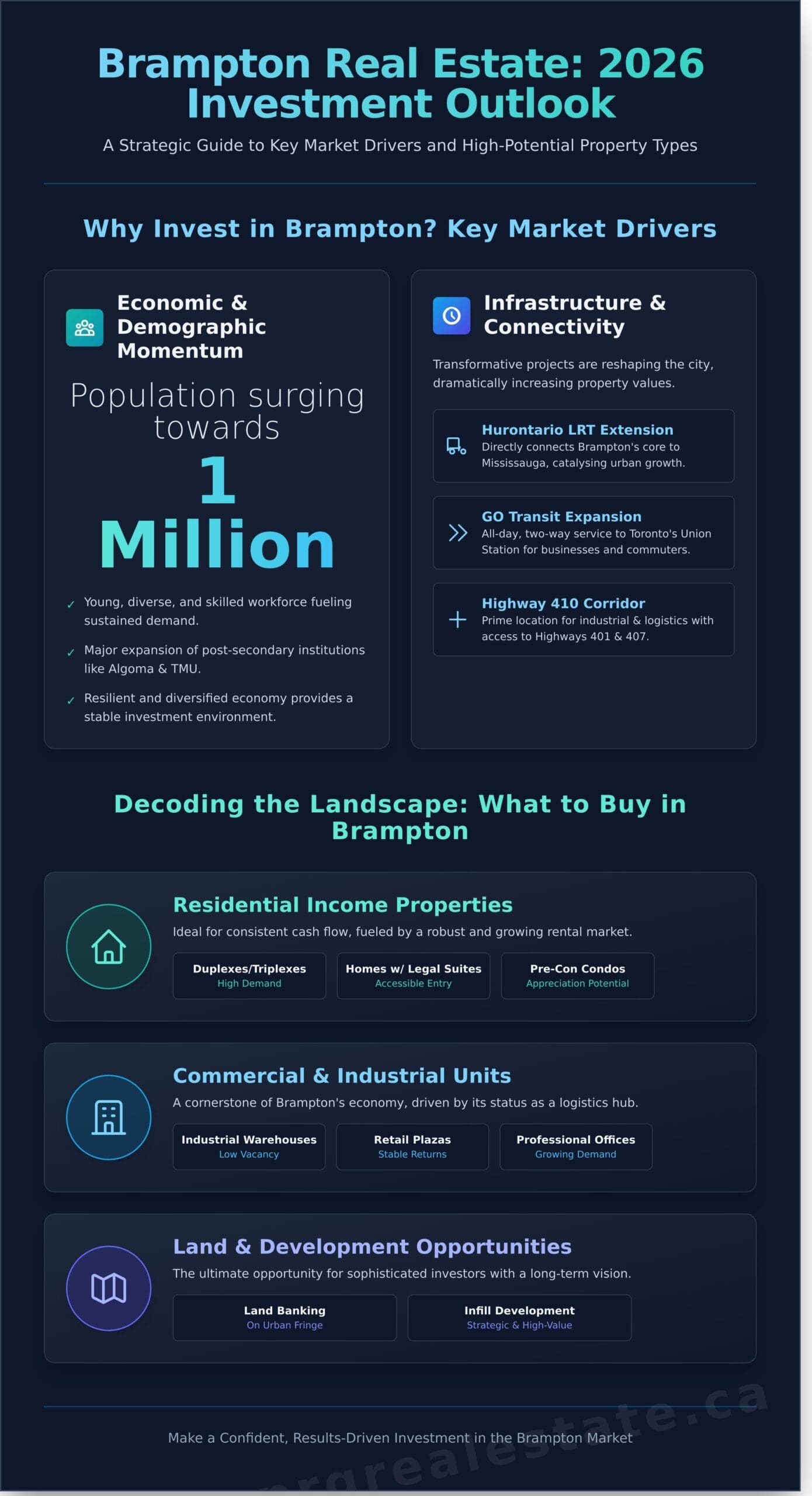
What is Commercial Real Estate? The Core Investment Types

Venturing into commercial real estate investing represents a strategic move from individual properties to business-centric assets. Unlike residential real estate, which involves properties for private living, commercial real estate (CRE) encompasses properties used exclusively for business activities. At its core, What is Commercial Real Estate? It is an asset class designed to generate profit through capital appreciation and, more significantly, rental income from tenants. The foundation of this model is the commercial lease-a long-term contract that provides a predictable and stable cash flow, making it a powerful tool for portfolio growth. However, this asset class operates on a different scale, demanding greater capital, expertise, and strategic management than typical residential investments.

The Main Categories of Commercial Property

A successful commercial real estate investing strategy begins with understanding the primary asset types, each with unique characteristics and market drivers:

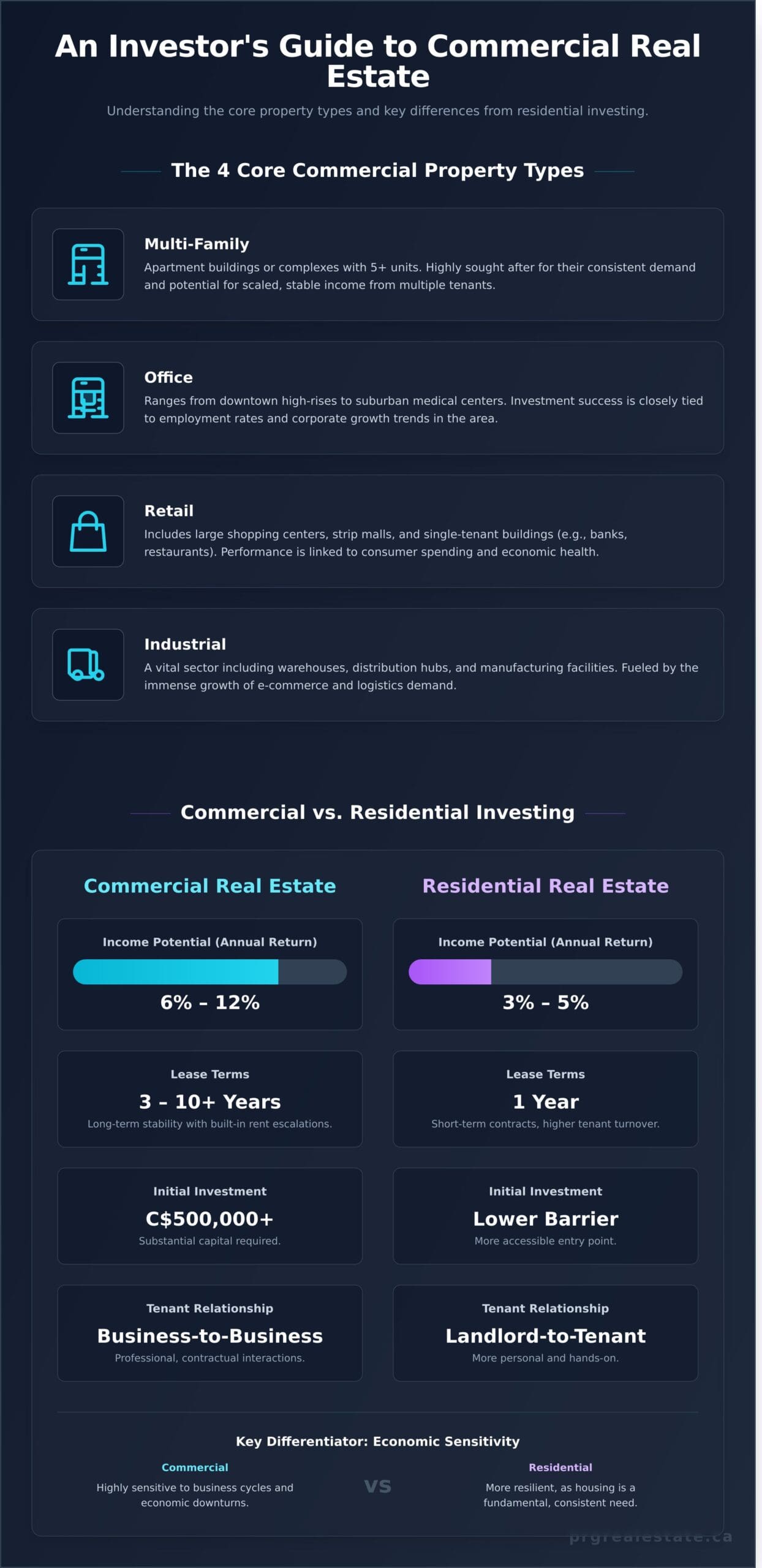
  • Multi-Family: This category includes apartment buildings or complexes with five or more individual units. In Canada, properties with 1-4 units are generally classified as residential. Multi-family assets are highly sought after for their consistent demand and potential for scaled income.
  • Office: These properties range from high-rise towers in downtown cores to suburban low-rise buildings and specialized medical office centers. Investment success is often tied to employment rates and corporate growth.
  • Retail: Encompassing everything from large shopping centres and neighbourhood strip malls to single-tenant buildings occupied by banks or restaurants. The performance of retail assets is closely linked to consumer spending and economic health.
  • Industrial: This vital sector includes warehouses, distribution hubs, and manufacturing facilities. Fueled by the growth of e-commerce and logistics, industrial properties have become a top-performing asset class in Brampton and across Canada.

Pros and Cons of Investing in Commercial vs. Residential

Navigating the transition from residential to commercial investing requires a clear understanding of the fundamental differences. While the potential rewards are significant, the challenges are equally distinct. The following table outlines the key distinctions to inform your strategic approach.

.comp-table { width: 100%; border-collapse: collapse; margin-top: 1em; }
.comp-table th, .comp-table td { border: 1px solid #ccc; padding: 12px; text-align: left; }
.comp-table th { background-color: #f2f2f2; font-weight: bold; }

Aspect Commercial Real Estate Residential Real Estate
Income Potential Higher potential returns (typically 6-12% annually) Lower but often stable returns (typically 3-5% annually)
Lease Terms Long-term (3-10+ years), often with built-in rent escalations Short-term (typically 1 year)
Initial Investment (C$) Substantial capital required; often C$500,000+ Lower barrier to entry
Tenant Relationship Professional, business-to-business interaction More personal landlord-tenant dynamic
Economic Sensitivity Highly sensitive to business cycles and economic downturns More resilient, as housing is a fundamental need

Decoding the Numbers: Key Metrics for CRE Investors

Successful commercial real estate investing is a numbers game. While a property’s location and potential are important, the financial metrics are non-negotiable. Mastering these key performance indicators (KPIs) allows you to move beyond emotional decisions and conduct a strategic, data-driven analysis. These numbers provide a standardized framework to compare different assets, measure ongoing performance, and forecast future profitability with confidence.

To illustrate, let’s analyze a hypothetical small commercial property in Brampton with a purchase price of C$1,200,000 and a gross annual rental income of C$100,000.

Net Operating Income (NOI)

NOI is the foundation of almost every commercial real estate valuation. It represents the property’s profitability before accounting for financing. The calculation is straightforward: Gross Operating Income minus all Operating Expenses. These expenses include property taxes, insurance, maintenance, and property management fees. Crucially, debt service (your mortgage payment) is not included.

  • Gross Income: C$100,000
  • Operating Expenses: C$30,000
  • NOI = C$70,000

Capitalization (Cap) Rate

The Cap Rate measures the potential rate of return on an investment property, assuming an all-cash purchase. The formula is Cap Rate = NOI / Property Price. This metric is one of the most effective tools for comparing the relative value of similar properties. Understanding metrics like the Cap Rate is a fundamental step when you’re getting started in commercial real estate, as it provides a clear benchmark for performance. For our example:

  • Cap Rate = C$70,000 / C$1,200,000 = 5.83%

Cash-on-Cash Return

While the Cap Rate ignores financing, the Cash-on-Cash Return focuses on it. This metric is essential for investors using leverage, as it calculates the return on the actual capital you’ve invested (your down payment and closing costs). The formula is Annual Pre-Tax Cash Flow / Total Cash Invested. Continuing our example with a C$300,000 down payment and an annual mortgage payment of C$50,000:

  • Pre-Tax Cash Flow (NOI – Debt Service): C$70,000 – C$50,000 = C$20,000
  • Cash-on-Cash Return: C$20,000 / C$300,000 = 6.67%

How to Finance Your First Commercial Real Estate Investment

A common misconception is that entering the commercial real estate market requires millions in liquid cash. The reality is that strategic financing is the cornerstone of successful commercial real estate investing. The principle of leverage-using borrowed capital to acquire assets and amplify returns-allows savvy investors to control significant properties with a fraction of the total cost.

Unlike residential mortgages that heavily scrutinize personal income, commercial lenders focus primarily on the property’s financial viability. They analyze its potential Net Operating Income (NOI) and its ability to cover debt payments, measured by the Debt Service Coverage Ratio (DSCR). This is why a meticulously prepared business plan and a thorough property analysis are non-negotiable; they are your most critical tools for securing financing.

Traditional Commercial Mortgages

Major Canadian banks and credit unions are the primary sources for commercial mortgages. Lenders typically require a larger down payment than for residential properties, with Loan-to-Value (LTV) ratios usually ranging from 65% to 80%. This means you should anticipate a down payment of 20-35%. These loans often feature shorter amortization periods and terms (e.g., a 5-year term on a 20-year amortization), which may conclude with a balloon payment.

Canada Small Business Financing Program (CSBFP)

For entrepreneurs planning to purchase a property for their own business to operate from (owner-occupied), the government-backed CSBFP loan is an exceptional tool. Offered through most major lenders, this program can finance up to 90% of the property cost, drastically reducing the required down payment. It provides a strategic advantage for small business owners looking to build equity while running their operations.

Creative and Alternative Financing

Beyond traditional routes, several other avenues can fund your investment. These strategic options require expert guidance to navigate effectively:

  • Seller Financing: The property owner acts as the lender, offering more flexible terms. This is often an excellent solution for unique properties or buyers who don’t meet strict bank criteria.
  • Partnerships/Syndication: Pooling capital with other investors allows you to acquire larger, more valuable assets than you could alone, sharing both the risk and the reward.
  • For investors who prefer a more passive role, property investment firms specialize in this syndicated model, managing the entire process on your behalf. If this approach aligns with your goals, you can learn more about PRG MFT.

  • Private Mortgages: These short-term, asset-based loans from private lenders are ideal for securing a property quickly, financing renovations, or navigating complex situations where bank financing is not an option.

Your 5-Step Roadmap to Acquiring a Commercial Property

Successful commercial property acquisition is not a single transaction but a strategic, multi-stage process. This five-step roadmap provides a clear framework for navigating the complexities of commercial real estate investing, ensuring each decision is built on a solid foundation of research and expert counsel. Following this disciplined approach mitigates risk and positions your investment for long-term success.

Steps 1 & 2: Define Your Strategy and Research Markets

Your journey begins with clarity. First, define your investment strategy by selecting a niche-be it industrial warehousing, retail plazas, or multi-family residential units. Each sector offers unique opportunities and demands a specific approach. Next, identify and analyze your target markets. In a dynamic region like the GTA, focusing on areas like Brampton requires a deep dive into economic indicators such as population growth, employment trends, and major infrastructure developments. This foundational research informs every subsequent step.

Step 3: Build Your Expert Team

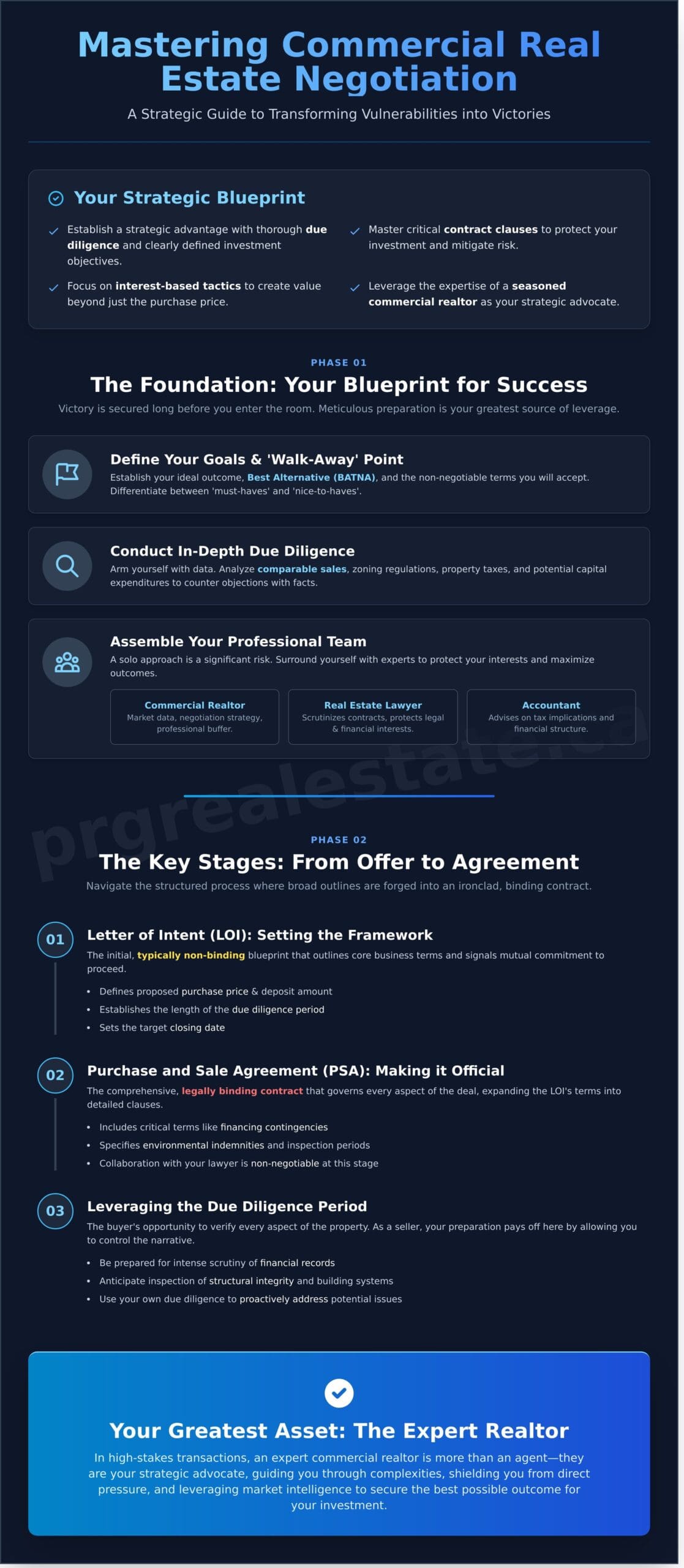
No successful investor operates alone. Assembling a team of dedicated professionals is non-negotiable, as their specialized knowledge is essential for executing a flawless acquisition. Your core team should include:

  • Commercial Real Estate Broker: Your market expert, deal-finder, and chief negotiator who provides access to on- and off-market opportunities.
  • Real Estate Attorney: A legal professional to review purchase agreements, title documents, and contracts to protect your interests.
  • Accountant/CPA: A financial expert to advise on tax implications, ownership structures, and overall financial viability.

This expert team transforms a good opportunity into a great investment. Partner with Brampton’s top commercial realtors to build your team and gain an immediate strategic advantage.

Steps 4 & 5: Secure Financing and Conduct Due Diligence

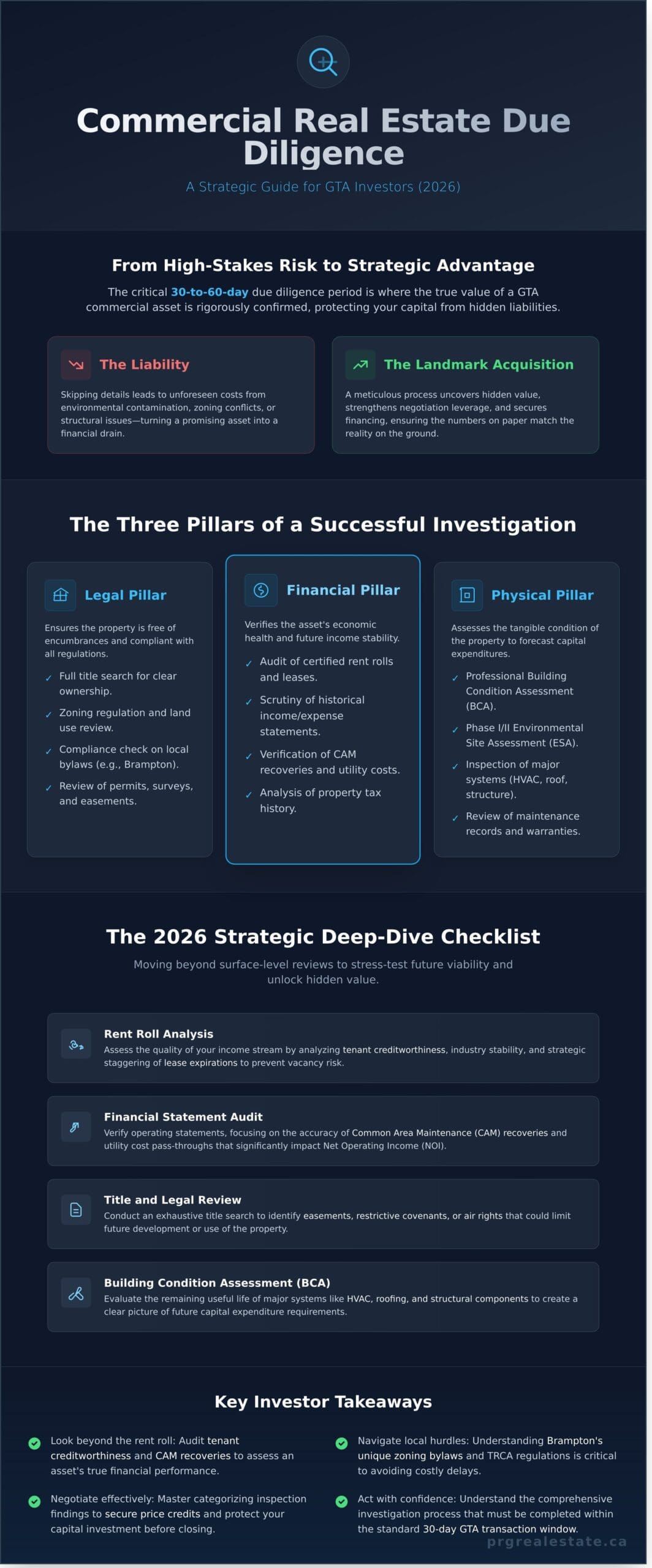
With your strategy and team in place, the next stage is financial and operational validation. Securing pre-approval for financing from a Canadian lender is essential; it clarifies your purchasing power and strengthens your position when making an offer. Following this, the due diligence phase is where your investment is truly scrutinized. This critical process involves everything from physical property inspections and environmental site assessments to detailed financial audits and a thorough review of all tenant leases. Skipping this step is the costliest mistake an investor can make, as it is your primary opportunity to uncover and mitigate potential risks before closing the deal.

Managing Risks in Commercial Real Estate Investing

All investments carry inherent risk; the defining characteristic of a savvy investor is not the avoidance of risk, but its strategic management. A prudent approach to commercial real estate investing is built on a foundation of comprehensive due diligence and forward-thinking risk mitigation. This commitment to foresight protects your capital and positions your portfolio for resilient, long-term growth.

Market and Economic Risks

Economic downturns, interest rate fluctuations, and shifts in local market dynamics can directly impact tenant demand and property valuations. To safeguard your investment, focus on diversifying across stable asset classes and geographic areas within Brampton and the GTHA. Critically, avoid over-leveraging your assets. Maintaining a disciplined loan-to-value ratio ensures your portfolio can withstand periods of lower occupancy or economic pressure without threatening solvency.

Tenant and Vacancy Risks

The stability of your cash flow is directly tied to the quality and reliability of your tenants. The departure or bankruptcy of a major tenant can significantly impact your revenue. Effective mitigation strategies are non-negotiable:

  • Rigorous Tenant Screening: Conduct thorough financial and operational background checks on all prospective tenants to ensure their stability.
  • Lease Diversification: Whenever possible, secure multiple tenants within a property and strategically stagger their lease expiration dates. This prevents a mass vacancy and creates a more predictable income stream.

Liquidity and Capital Risks

Unlike stocks, commercial real estate is an illiquid asset-it cannot be sold quickly to generate cash. Furthermore, unexpected capital expenditures, such as a complete HVAC system replacement or urgent roof repairs, can arise. The most effective mitigation is maintaining a healthy capital reserve fund. This dedicated fund ensures you can cover unforeseen expenses and major repairs without compromising your financial position or being forced into a premature sale.

Successfully navigating the complexities of commercial real estate investing requires expert guidance. Partnering with a team that prioritizes strategic planning is the ultimate risk mitigation tool. To build a resilient and profitable portfolio in Brampton, connect with the experts at PRG Real Estate.

Your Strategic Next Step in Commercial Real Estate

You now possess the foundational knowledge to navigate the world of commercial properties. From understanding the nuances of different asset types to decoding key financial metrics and mapping out your acquisition roadmap, you are prepared to make informed decisions. This guide has provided the blueprint, but the most successful ventures are built with an expert architect.

Executing a successful strategy in commercial real estate investing demands market-leading expertise and unwavering integrity. At PRG Real Estate, our team, led by top commercial realtor Harsh Pabla, provides exactly that. We specialize in identifying and securing high-value strategic investments across Brampton and the GTA. Our mission extends beyond transactions; we are dedicated to building thriving communities and earning ‘clients for life’ through exceptional results.

Take the definitive step toward building your legacy. Start your investment journey with expert guidance. Contact PRG Real Estate today.

Frequently Asked Questions About Investing in Brampton Commercial Real Estate

How much money do I actually need to start investing in commercial real estate?

The capital required for commercial real estate investing is significant. In Canada, a typical down payment ranges from 25% to 35% of the purchase price. For a C$1 million property in Brampton, this means having C$250,000 to C$350,000 in liquid capital. You must also budget for additional expenses like land transfer tax, legal fees, and appraisal costs, which can add another 3-5% to the total upfront investment. A strategic financial plan is essential for success.

Is commercial real estate a better investment than stocks?

Both asset classes offer distinct advantages. Commercial real estate provides a tangible asset, potential for stable cash flow from leases, and significant tax benefits. Stocks, conversely, offer higher liquidity and a lower barrier to entry. The superior choice depends entirely on your personal financial goals, risk tolerance, and desire for active involvement. Many successful investors use both to build a diversified and resilient portfolio, maximizing long-term wealth creation.

What is the most profitable type of commercial real estate for a beginner?

For new investors, we advise a strategic approach focusing on assets with straightforward management and stable demand. In Brampton, smaller multi-unit industrial properties, well-located retail plazas, or small mixed-use buildings are excellent entry points. These property types often feature simpler NNN (triple net) lease structures and offer a more manageable introduction to tenant relations and property operations compared to large, complex office towers or specialized facilities.

How long does it take to buy a commercial property from start to finish?

The acquisition timeline for a commercial property is more extensive than for a residential purchase, reflecting the complexity of the transaction. From identifying a suitable asset to closing the deal, the process in Brampton typically takes 90 to 180 days. This period includes crucial steps such as securing financing, conducting thorough due diligence (including environmental and structural assessments), and negotiating intricate legal contracts. Partnering with an expert team is key to navigating this efficiently.

Can I manage a commercial property myself or do I need a property manager?

While self-management is possible for a small, single-tenant property, it is a demanding role. For multi-tenant buildings or for investors seeking a more passive role, engaging a professional property manager is a strategic decision. A dedicated manager handles tenant screening, rent collection, maintenance, and regulatory compliance. This expert oversight not only preserves the value of your asset but also maximizes its profitability by ensuring operational excellence and high tenant retention.

What are the main tax advantages of investing in commercial real estate?

A key advantage of commercial real estate investing in Canada is the significant tax benefits available to property owners. You can deduct numerous operating expenses, including mortgage interest, property taxes, insurance, and maintenance costs, against your rental income. Furthermore, you can claim Capital Cost Allowance (CCA), which allows you to depreciate the building’s value over time, creating a valuable tax shield that can substantially reduce your overall tax liability and enhance your net returns.

CategoriesBlog

Choosing the Top Commercial Realtors in Brampton: Your Definitive Guide

In Brampton’s dynamic commercial real estate landscape, the difference between a successful investment and a costly mistake often comes down to one critical factor: the expertise of your representative. Navigating complex zoning laws, identifying off-market opportunities, and negotiating favourable terms requires more than just a license; it demands strategic insight and proven local knowledge. The challenge lies in discerning which commercial realtors in Brampton possess the elite capabilities to truly protect and maximize your capital, leaving many investors worried about making the wrong choice in a high-stakes transaction.

This definitive guide is engineered to eliminate that uncertainty. We will break down the essential qualities that distinguish top-tier professionals from the rest, empowering you with a clear framework for evaluation. You will learn precisely what to look for in a partner who can deliver a strategic advantage. By the end, you will have the confidence to select a realtor who will not only navigate the market’s complexities but will secure superior terms and drive the success of your commercial venture.

Key Takeaways

  • Understand the critical distinctions between commercial and residential real estate to ensure you partner with a specialist; for complex local deals, you need expert commercial realtors Brampton.
  • The top commercial realtors in Brampton leverage deep knowledge of the city’s unique logistics and industrial landscape to secure a strategic advantage for your investment.
  • Learn a proven framework for vetting any potential commercial realtors Brampton team by evaluating their documented track record, negotiation expertise, and client success stories.
  • Discover why the resources, network, and analytical support of an elite brokerage are just as critical as the individual agent in maximizing your outcome.

Why You Need a Specialist: Commercial vs. Residential Realtors

Entering the world of commercial real estate is fundamentally different from buying or selling a home. The financial stakes are significantly higher, the transactions are layered with complexity, and the path to a successful outcome demands a level of strategic insight that goes far beyond the residential market. Choosing a specialist isn’t a luxury; it’s a critical business decision that directly impacts your bottom line. An expert partner possesses the unique skills, market intelligence, and connections necessary to protect your investment and maximize its potential.

The Difference in Expertise and Training

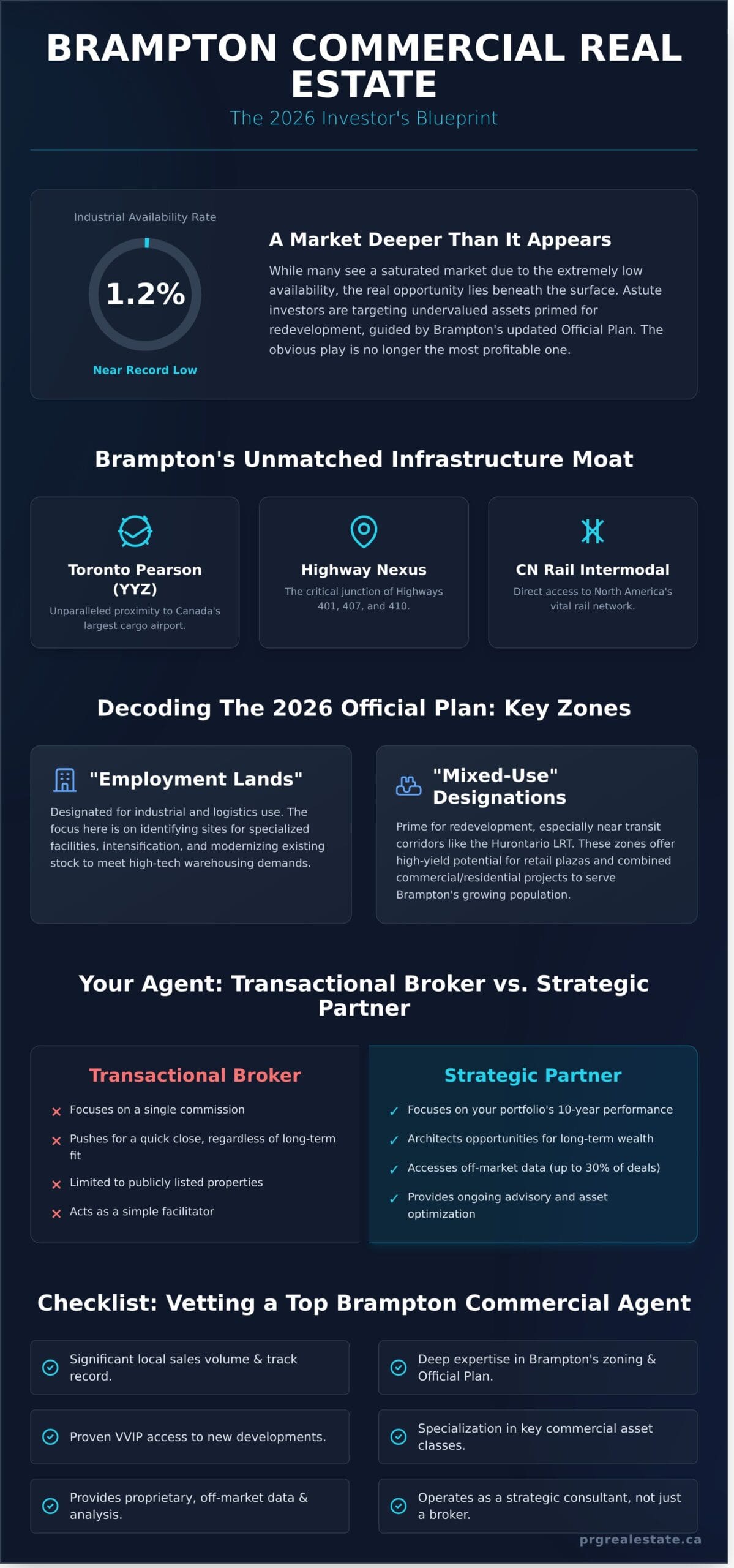
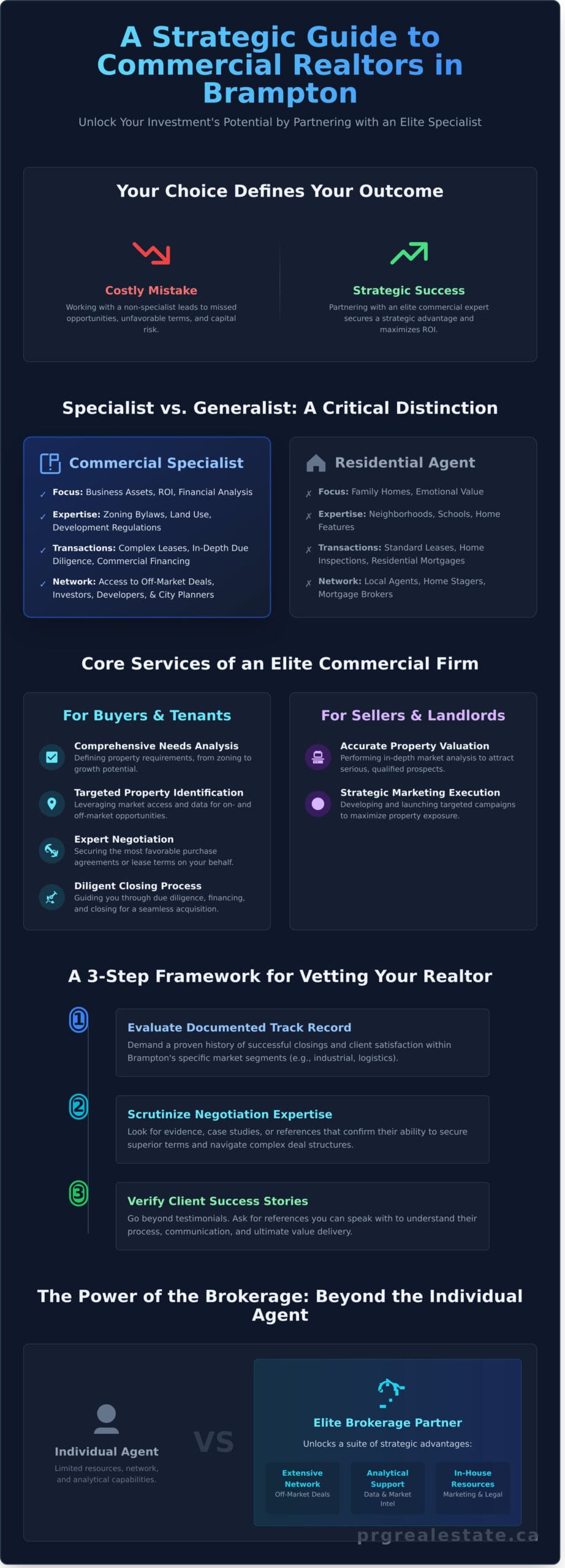
A residential agent focuses on homes; a commercial specialist focuses on assets. The training and expertise required are worlds apart. True commercial realtors brampton possess a deep understanding of municipal zoning bylaws, land use policies, and development regulations specific to the Peel Region. Their skillset is rooted in financial analysis, evaluating properties based on capitalization rates, cash flow, and return on investment (ROI). While the foundational duties of a real estate broker are consistent, the application in business-to-business negotiations-driven by data and financial projections-requires a distinct and more rigorous approach.

Navigating Complex Transactions

The intricacies of a commercial deal can be overwhelming without a seasoned guide. Consider the following distinctions:

  • Lease Agreements: Commercial leases are highly detailed legal documents, often spanning dozens of pages and covering everything from triple-net costs to tenant improvement allowances.
  • Due Diligence: This process goes far beyond a simple home inspection, involving environmental site assessments, structural engineering reports, and comprehensive financial audits.
  • Financing: Securing a commercial mortgage in Canada involves different lenders, stricter qualification criteria, and more complex underwriting processes than residential loans.

Access to the Right Network

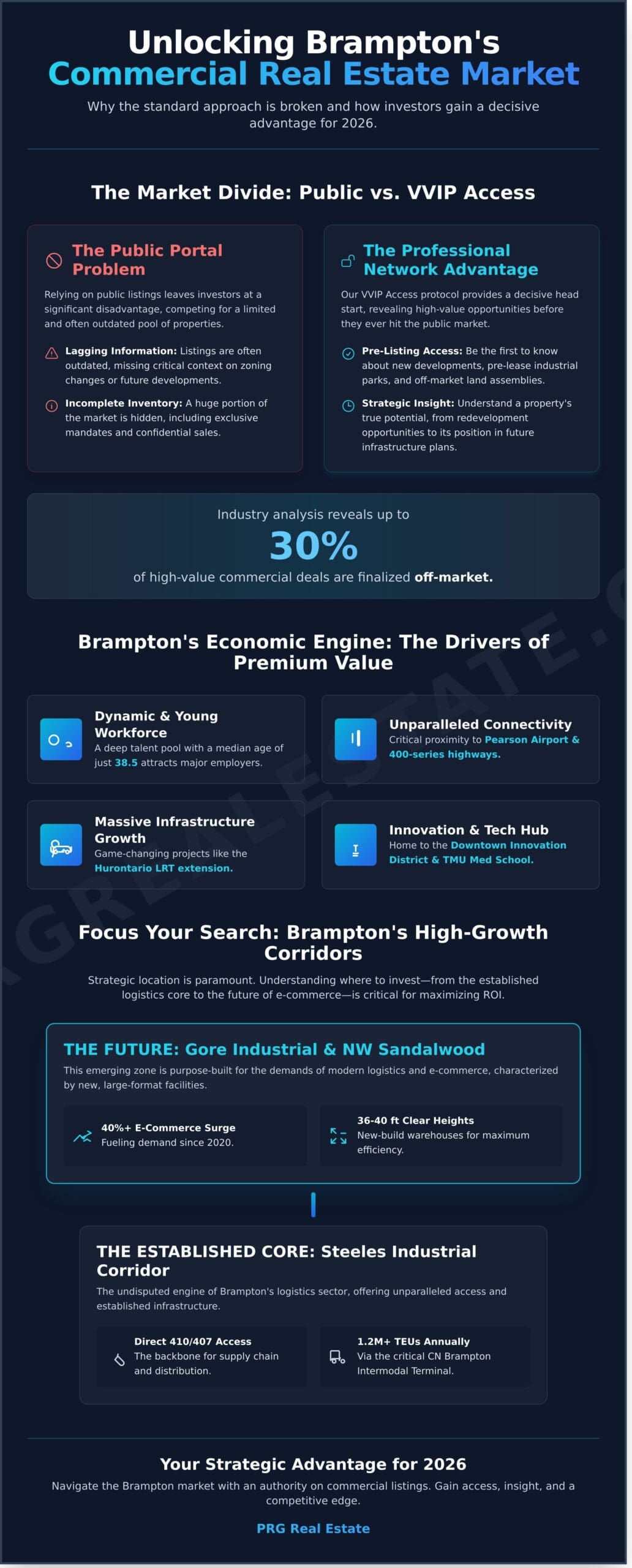
The most valuable opportunities in commercial real estate are often never publicly listed. An elite commercial realtor provides access to this exclusive “off-market” inventory through a cultivated network of developers, investors, business owners, and city planners. This network also extends to a trusted circle of lawyers, accountants, and contractors who specialize in the commercial sector, ensuring every stage of your transaction is managed by a proven expert. This strategic access is what separates a standard transaction from a landmark investment.

Key Services a Top Brampton Commercial Realtor Provides

Engaging a premier commercial real estate partner means accessing a suite of services that extends far beyond simple transactions. It’s about forging a strategic alliance focused on maximizing your return on investment and achieving your long-term business objectives. An elite firm doesn’t just facilitate deals; it creates opportunities, mitigates risk, and provides the market intelligence necessary to make confident decisions. This is the standard of full-service excellence you should demand.

Buyer and Tenant Representation

For businesses and investors seeking to acquire or lease space, our role is to act as your dedicated advocate. We translate your operational needs and financial goals into a precise property strategy, ensuring every decision aligns with your vision. Our representation includes:

  • Comprehensive Needs Analysis: Meticulously defining your property requirements, from square footage and zoning to logistics and future growth potential.
  • Targeted Property Identification: Leveraging market access and proprietary data to identify and shortlist on- and off-market properties that meet your exact criteria.
  • Expert Negotiation: Securing the most favourable purchase agreements or lease terms on your behalf, protecting your interests at every stage.
  • Diligent Closing Process: Guiding you through the complexities of due diligence, financing, and closing to ensure a seamless and successful acquisition.

Seller and Landlord Representation

When selling or leasing a commercial asset, maximizing its value is paramount. Our approach combines data-driven valuation with aggressive, targeted marketing to position your property for optimal results in a competitive market. We manage the entire process to deliver superior outcomes:

  • Accurate Property Valuation: Performing in-depth market analysis to establish a competitive and accurate valuation that attracts serious prospects.
  • Strategic Marketing Execution: Developing and launching a bespoke marketing plan to showcase your asset to a curated audience of qualified buyers or tenants.
  • Prospect Vetting and Management: Rigorously qualifying all potential prospects and professionally managing property tours and inquiries.
  • Offer Negotiation: Skillfully negotiating all offers to achieve the highest possible sale price or rental rate, ensuring your financial objectives are met.

Strategic Investment and Market Analysis

The most successful commercial real estate decisions are built on a foundation of expert analysis. Top commercial real estate professionals in Brampton provide more than listings; they deliver actionable market intelligence. This level of strategic counsel, as promoted by industry leaders like the National Association of REALTORS®, is what distinguishes a transactional agent from a true investment partner. We provide our clients with a decisive advantage by:

  • Delivering Market Insights: Offering expert analysis of Brampton’s economic trends, development pipeline, and high-growth corridors.
  • Assessing Investment Potential: Conducting rigorous financial modeling to analyze the potential returns and inherent risks of specific properties.
  • Advising on Portfolio Strategy: Helping you build, diversify, and optimize your real estate portfolio for long-term wealth creation.

How to Evaluate and Choose the Right Commercial Realtor in Brampton

Selecting the right representative for your commercial real estate needs is a critical investment decision. The right partner provides strategic guidance that extends far beyond a single transaction. To ensure you are working with one of the best commercial realtors in Brampton, conduct thorough due diligence. This actionable checklist will empower you to identify a true expert who can protect your interests and maximize your returns.

Scrutinize Their Track Record and Specialization

Tangible results are the ultimate measure of a realtor’s capability. Don’t hesitate to request a portfolio of their recent transactions specifically within Brampton. Verify that their experience aligns with your asset class-be it industrial warehousing, retail storefronts, or office space. It’s crucial to confirm they have successfully navigated deals of a similar size and complexity to your own. You can also confirm their professional registration and good standing through the official Real Estate Council of Ontario (RECO), ensuring you are partnering with a licensed and accountable professional.

Check Client Testimonials and References

A top realtor’s reputation is built on a history of client success. Look for detailed reviews and case studies on their website, Google Business Profile, and professional networking sites. While online testimonials provide a good overview, you should also ask for direct references from past clients whose needs mirror your own. A truly confident and successful agent will have a long list of satisfied partners who can speak to their expertise, integrity, and results.

The Initial Consultation: Questions to Ask

The initial meeting is your opportunity to interview a potential partner and assess their strategic thinking. An elite commercial realtor should be able to provide insightful, data-driven answers. Come prepared with specific questions to gauge their market knowledge and approach:

  • What is your strategy for my specific needs (buying, selling, or leasing)?
  • How do you see the Brampton commercial market evolving in the next 12-24 months?
  • Based on my goals, what are the biggest challenges and opportunities for me right now?
  • What is your communication protocol, and how frequently will I receive updates?

Their responses will reveal their depth of expertise and whether their professional style aligns with your expectations.

The Brampton Advantage: Why Local Market Expertise is Non-Negotiable

In commercial real estate, a generalist approach is a significant liability. This is especially true in a market as dynamic and complex as Brampton. As one of Canada’s fastest-growing cities and a critical logistics hub, Brampton’s economic landscape presents unique opportunities and challenges. To capitalize on them, investors and business owners require a partner with a granular, on-the-ground understanding that only a true local specialist can provide. This is where strategic advantage is won or lost.

Deep Understanding of Local Zoning and Development Plans

Navigating Brampton’s future requires more than just reading a map; it demands an expert interpretation of the city’s trajectory. A deep familiarity with Brampton’s Official Plan, intricate zoning by-laws, and future infrastructure projects-from transit expansions to new highway corridors-is critical. This foresight allows elite commercial realtors in Brampton to identify areas poised for significant appreciation, ensuring our clients’ investments are not just sound for today, but strategically positioned for tomorrow’s growth.

Relationships with Key Local Stakeholders

The most valuable commercial opportunities are often secured long before they reach the public market. Our team has cultivated long-standing, professional relationships with the City of Brampton’s economic development office, influential property owners, and key business leaders. This powerful network provides our clients with a distinct advantage: exclusive access to off-market deals and invaluable insights that turn insider knowledge into a tangible competitive edge.

Accurate, Hyper-Local Property Valuation

Understanding the true value of a commercial property in Brampton requires a nuanced perspective. The metrics for an industrial warehouse near the 410/407 exchange are vastly different from a retail storefront in a burgeoning residential node. We leverage real-time data on lease rates and proprietary sales comparables to deliver precise, hyper-local valuations. This meticulous approach ensures our clients sell for maximum return, avoid overpaying on acquisitions, and make decisions with absolute confidence.

Leverage our unparalleled local expertise for your next move.

What Sets an Elite Brokerage Apart: Beyond the Transaction

An exceptional agent is a powerful asset, but their effectiveness is amplified by the brokerage they represent. In the high-stakes world of commercial real estate, an individual’s expertise is magnified by the firm’s resources, reputation, and operational excellence. Choosing a realtor means choosing their entire support system-a strategic decision that directly influences the success of your investment and the protection of your assets.

A Proven System and a Team-Based Approach

Top-tier brokerages operate on proven systems designed for maximum efficiency and client success. This means your agent isn’t juggling marketing, paperwork, and research alone. At PRG Real Estate Brokerage, our realtors are backed by a dedicated administrative and marketing team, freeing them to focus exclusively on high-value tasks: strategy, negotiation, and client service. A collaborative environment ensures multiple experts review your deal, uncovering opportunities and mitigating risks that a solo agent might miss. This is powered by access to advanced research tools and proprietary property databases, delivering a distinct competitive advantage.

Industry Awards and Recognition

Accolades from respected industry bodies serve as powerful, third-party validation of a brokerage’s performance. Awards like the Royal LePage® Red Diamond™ Award, which recognizes the top 2% of agents nationwide, are not just for display. They signify a consistent track record of high-volume success and unwavering client satisfaction, proven through repeat business and referrals. When you partner with a firm whose agents are recognized as industry leaders, you align with proven excellence. This level of achievement is a key differentiator when selecting from the many commercial realtors Brampton has to offer.

A ‘Clients for Life’ Philosophy

Perhaps the most significant distinction of an elite brokerage is its perspective on client relationships. The goal is not a single transaction but a long-term strategic partnership. This ‘clients for life’ philosophy is built on a foundation of unwavering integrity and trust. It means providing candid advice, portfolio reviews, and proactive market insights long after a deal is closed. This commitment transforms your realtor into a dedicated commercial real estate advisor, ensuring your best interests are always the primary focus and your portfolio continues to thrive.

This holistic approach-combining individual talent with institutional power-is what defines a leading brokerage and ensures superior results for every client. When you choose PRG Real Estate Brokerage, you aren’t just hiring an agent; you are partnering with an entire ecosystem dedicated to achieving your goals.

Secure Your Commercial Success with Brampton’s Elite

Choosing your representative in Brampton’s dynamic commercial market is a critical business decision. The key takeaway is clear: success requires more than a generalist. It demands a specialist with deep-rooted local expertise and a strategic vision that extends beyond a single transaction. This is the definitive standard set by the top commercial realtors Brampton has to offer-a standard we proudly embody at PRG Real Estate.

Our team’s commitment to excellence has earned us the prestigious Royal LePage® Red Diamond™ Award, placing us in the top 2% of realtors nationally. We don’t just facilitate deals; we build ‘clients for life’ through unwavering integrity and results-driven strategies. Your commercial objectives deserve nothing less than elite representation.

Ready to partner with a team that will champion your investment goals? Partner with Brampton’s leading commercial real estate experts today. Let’s build your success story.

Frequently Asked Questions About Commercial Real Estate in Brampton

What is the difference between a commercial real estate agent and a broker?

In Ontario, a real estate salesperson (often called an agent) is licensed to facilitate property transactions but must work under a registered brokerage. A broker has completed further education and licensing requirements, allowing them to manage a brokerage and supervise other agents. At PRG, our team comprises highly qualified professionals, including a Broker of Record, ensuring every transaction is handled with the highest level of expertise and regulatory compliance.

How are commercial realtors typically compensated for their services?

Commercial realtors are compensated through a commission, which is a percentage of the property’s sale price or the total lease value. This fee is typically paid by the seller or landlord upon the successful closing of the transaction. The specific commission rate is negotiable and is outlined in the representation agreement. This performance-based structure ensures our objectives are perfectly aligned with yours: to secure the most strategic and favourable outcome for your investment.

What are the main types of commercial properties available in Brampton?

Brampton’s dynamic economy features a diverse range of commercial properties. The most prominent types include industrial facilities like warehouses and manufacturing plants, particularly near major transportation corridors. You will also find extensive retail spaces, from storefronts in plazas to large-format stores. Additionally, the market includes professional office buildings and multi-family residential properties, such as apartment buildings, offering a wide spectrum of investment opportunities for our clients.

How long does a typical commercial real estate transaction take from start to finish?

The timeline for a commercial real estate transaction varies based on complexity, financing, and negotiations. On average, a straightforward purchase can take anywhere from 60 to 120 days from an accepted offer to closing. This period allows for critical steps such as property inspections, environmental assessments, securing financing, and legal reviews. Our team at PRG expertly manages every stage to ensure an efficient process, mitigating delays and protecting your interests.

Can a commercial realtor help me find a property to lease, not just buy?

Absolutely. Our services extend to both sales and leasing. As top commercial realtors in Brampton, we provide comprehensive tenant representation services. This involves understanding your business’s operational needs, identifying suitable properties for lease, and negotiating favourable terms with landlords. Whether you are starting a new venture or relocating an established business, our strategic approach ensures you secure the ideal space to facilitate your success.

What should I have prepared before my first meeting with a commercial realtor?

To maximize our initial consultation, it is beneficial to have a clear vision of your objectives. Please prepare a summary of your business needs, including space requirements, desired location, and budget (in CAD). For buyers, having proof of funds or a financing pre-approval letter is a significant advantage. The more information you provide, the more effectively our team can develop a tailored strategy to achieve your real estate goals.