Commercial Property ROI in 2026: A Strategic Guide to Calculation & Maximization
CategoriesBlog

Commercial Property ROI in 2026: A Strategic Guide to Calculation & Maximization

In the dynamic Canadian real estate market, a surface-level understanding of an investment’s potential is a significant liability. Many sophisticated investors find themselves wrestling with complex spreadsheets, uncertain which metrics truly define a property’s value and fearful that a single miscalculation could derail their portfolio. This uncertainty often transforms the critical ‘go/no-go’ decision into a high-stakes gamble. The key to mitigating this risk and achieving superior outcomes lies in a strategic, forward-looking approach to calculating commercial property roi.

This 2026 strategic guide is engineered to move you beyond basic formulas. We will equip you with the advanced analytical tools and expert insights necessary to not only accurately project the financial performance of a potential asset but to truly maximize it. You will learn to identify the key levers that drive value, interpret complex data with confidence, and make decisive, data-driven investment decisions that build lasting wealth in the Canadian market. Prepare to transform your approach to commercial real estate investment for the years ahead.

Key Takeaways

  • Move beyond purchase price to master the essential metrics, including Cap Rate and Cash-on-Cash Return, that reveal an investment’s true performance.
  • Uncover the critical factors beyond the initial calculation that significantly impact your real-world commercial property roi, from market fluctuations to unforeseen capital expenditures.
  • Learn four proven, value-add strategies to actively boost your property’s profitability, transforming a good investment into a high-performing asset.
  • Understand how leveraging expert local market knowledge is the definitive advantage in identifying and securing high-return commercial properties in Brampton.

Understanding Commercial Property ROI: The Ultimate Metric for Investors

In the strategic world of Canadian commercial real estate, success is not measured by the purchase price or gross rental income alone. The ultimate metric that separates savvy investors from speculators is the commercial property roi. At its core, Return on investment (ROI) is the definitive measure of an investment’s profitability and efficiency, expressing your net profit as a percentage of your initial capital. For example, a C$50,000 annual net profit on a C$1,000,000 property is far more telling than the gross rent figures.

It’s crucial to distinguish between an anticipated ROI, based on proforma projections before purchase, and your actual ROI, calculated from historical performance data. Mastering this calculation is the first and most critical step toward building a high-performing property portfolio.

Why ROI is Critical in Commercial Real Estate

A precise understanding of ROI is fundamental to any successful investment strategy. It moves beyond surface-level figures to provide a clear, standardized benchmark of performance, empowering you to make strategic decisions with confidence.

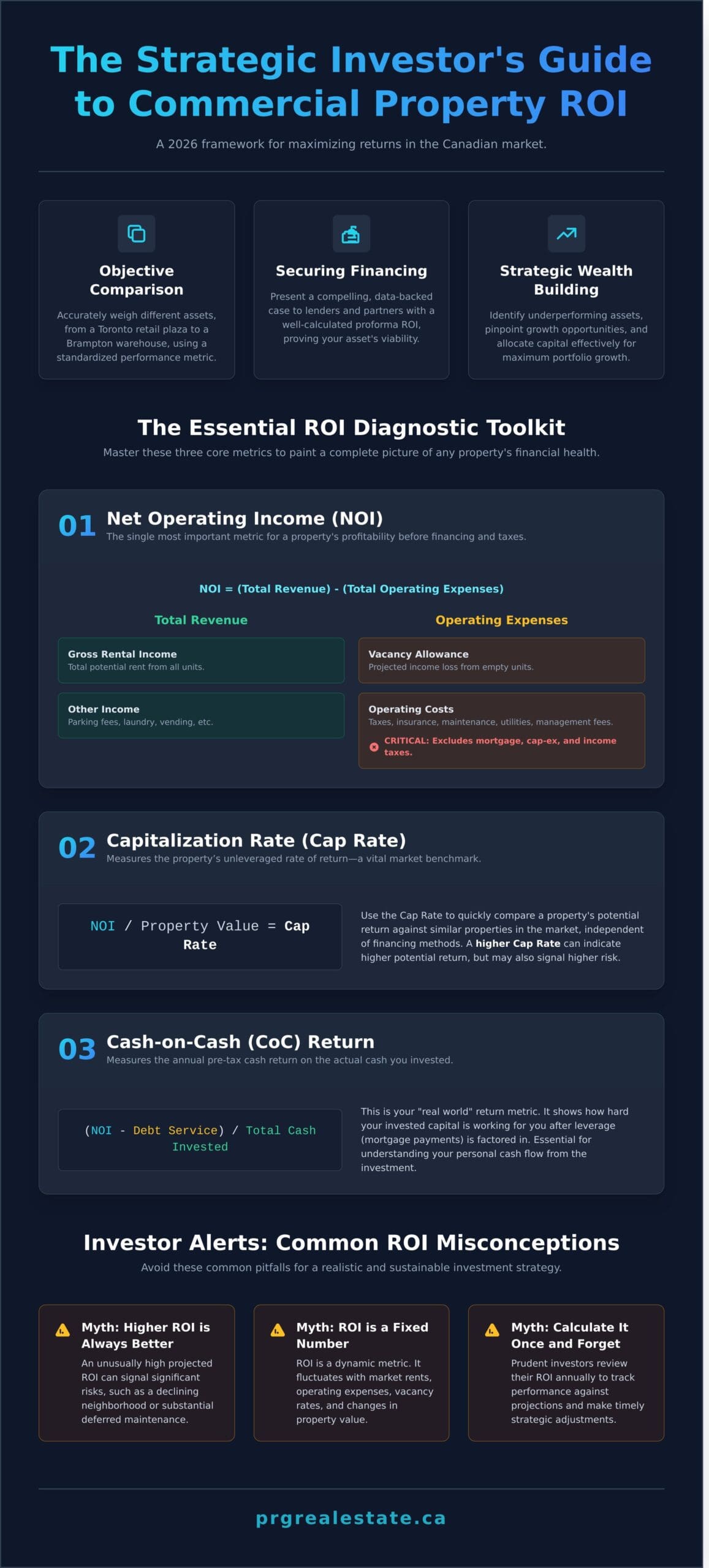
  • Objective Comparison: ROI allows for a direct, apples-to-apples comparison between vastly different assets. You can accurately weigh the potential of a 7% ROI on a retail plaza in Toronto against a 6% ROI on an industrial warehouse in Brampton.
  • Securing Financing: Lenders and financial partners demand proof of viability. A well-calculated proforma ROI demonstrates the asset’s potential to generate profit, making your financing application significantly more compelling.
  • Strategic Wealth Building: Your ROI figures form the foundation of your long-term goals. They help you identify underperforming assets, pinpoint opportunities for improvement, and strategically allocate capital for maximum growth.

Common Misconceptions About ROI

To leverage ROI effectively, investors must also recognize common pitfalls and myths that can lead to poor decision-making. Navigating these misconceptions is key to a realistic and sustainable investment approach.

  • Myth: A higher ROI is always better. While attractive, an unusually high ROI can signal higher risk, such as a property in a declining neighbourhood or one requiring substantial, unforeseen capital expenditures.
  • Myth: ROI is a fixed number. Your commercial property roi is a dynamic metric. It fluctuates with market rents, operating expenses, vacancy rates, and changes in the property’s market value over time.
  • Myth: You only need to calculate it once. Prudent investors review their property’s ROI annually. This regular analysis allows you to track performance against projections and make timely adjustments to your management strategy.

The Essential ROI Formulas: A Practical Calculation Guide

To make strategic investment decisions, you must move beyond speculation and into quantitative analysis. The true measure of a commercial property ROI is revealed through a core set of financial metrics. Think of these formulas not as isolated calculations, but as a diagnostic toolkit. While there are many different ways to calculate the ROI, mastering the following three will provide the foundational clarity needed to evaluate any deal. Each metric tells a different part of the story; together, they paint a complete picture of a property’s financial health and potential.

Calculating Net Operating Income (NOI)

NOI is the single most important metric for determining a property’s profitability before accounting for financing. It represents all the revenue the property generates, minus all reasonably necessary operating expenses.

Formula: Gross Rental Income + Other Income – Vacancy – Operating Expenses = NOI

Operating expenses include property taxes, insurance, maintenance, utilities, and property management fees. Crucially, they do not include mortgage payments (principal and interest), capital expenditures, or income taxes.

Example: A Small Brampton Commercial Unit

  • Annual Gross Rent: C$42,000
  • Vacancy Allowance (5%): -C$2,100
  • Annual Operating Expenses (Taxes, Insurance, Maint.): -C$9,900
  • Annual NOI: C$30,000

Determining Cap Rate (Capitalization Rate)

The Cap Rate measures the property’s unleveraged rate of return. It is a vital market benchmark used to compare the performance of similar properties, independent of any specific financing structure. It answers the question: “What return would I get if I bought this property with all cash?”

Formula: NOI / Current Market Value = Cap Rate

Using our Brampton example, if the property’s market value is C$550,000, the Cap Rate is C$30,000 / C$550,000 = 5.45%. In the current Greater Toronto Area market, commercial cap rates typically range from 4% to 6%, varying significantly by asset class and location. A higher cap rate often implies higher risk or a lower-quality asset, while a lower cap rate suggests lower risk and higher investor demand.

Calculating Cash-on-Cash Return

For investors using financing, the Cash-on-Cash Return is paramount. This metric calculates the return on the actual cash you’ve invested-your down payment, closing costs, and renovation expenses. It provides the clearest picture of the performance of your invested capital.

Formula: Annual Pre-Tax Cash Flow / Total Cash Invested = Cash-on-Cash Return

Continuing our example, assume a C$550,000 purchase with a C$200,000 total cash investment. If the annual mortgage payment (debt service) is C$26,400, your pre-tax cash flow is C$30,000 (NOI) – C$26,400 = C$3,600. Your Cash-on-Cash Return would be C$3,600 / C$200,000 = 1.8%. This demonstrates how leverage and financing terms directly impact your personal return and is a critical factor in assessing any deal’s viability.

Beyond the Numbers: Key Factors That Drive Real-World ROI

A spreadsheet can show a promising return, but seasoned investors know that financial formulas are only as reliable as the data fed into them. The most common pitfall for new investors is underestimating the qualitative factors that can drastically alter a property’s performance. Achieving a strategic and successful commercial property roi requires rigorous due diligence that goes far beyond the initial calculations. This is where professional expertise ensures your on-paper projections align with real-world outcomes.

Location and Market Dynamics

A property’s value is intrinsically tied to its location. A comprehensive analysis must include local economic indicators, such as job growth and major infrastructure projects, like those transforming areas of Brampton. Visibility and accessibility for customers, clients, and suppliers are critical. It’s also vital to assess the submarket’s health; high vacancy rates in the surrounding area can exert downward pressure on your rental income projections. Understanding the nuances of the broader post-pandemic commercial real estate market provides essential context for these local trends.

Tenant Quality and Lease Structure

Your tenants are the engine of your investment’s cash flow. A building occupied by creditworthy tenants on long-term leases represents a stable, low-risk asset. The structure of these leases is equally important. A Triple Net (NNN) lease, where the tenant covers property taxes, insurance, and maintenance, creates a predictable income stream for the landlord. Conversely, a Gross lease places these expense burdens on you, introducing more variability. A thorough review of existing lease agreements for details like rental escalations and renewal options is non-negotiable.

Property Condition and Capital Expenditures

Hidden costs can quickly erode your returns. Deferred maintenance is a liability that will eventually come due, often at a premium. Before any acquisition, you must account for the lifespan and potential replacement cost of major systems. These capital expenditures (CapEx) include:

  • Roofing systems
  • HVAC units
  • Parking lot and paving
  • Structural components

Commissioning a professional property condition assessment is a critical step to quantify these future costs, protecting your cash flow and the long-term viability of your investment. For a detailed guide on this process, review our comprehensive article: Evaluating Commercial Buildings for Sale: A Checklist.
Commercial Property ROI in 2026: A Strategic Guide to Calculation & Maximization

From Good to Great: 4 Proven Strategies to Increase Your Commercial ROI

Calculating your initial return on investment is merely the baseline. Elite investors understand that the true potential of an asset is unlocked through strategic management and proactive optimization. A disciplined approach to asset management is what separates average returns from exceptional ones. The following proven strategies are designed to actively enhance your commercial property roi, transforming your investment into a high-performing asset that delivers sustained value.

Strategy 1: Optimize and Increase Revenue Streams

Maximizing gross potential income is the most direct path to a higher ROI. This involves more than just collecting rent; it requires a strategic analysis of all potential revenue sources to ensure no opportunity is overlooked.

  • Align Rents with Market Value: Upon lease renewal, strategically adjust below-market rents to reflect current rates in your local Canadian market, instantly boosting your net operating income.
  • Introduce Ancillary Income: Monetize underutilized assets. Consider charging for reserved parking spots, leasing rooftop space for signage or telecom equipment, or offering secure storage units for a monthly fee.
  • Implement RUBS: Where permitted by provincial regulations, a Ratio Utility Billing System (RUBS) can be used to pass on a portion of utility costs to tenants, significantly reducing your operating expenditures.

Strategy 2: Systematically Reduce Operating Expenses

Every dollar saved in expenses flows directly to your bottom line and increases the property’s valuation. A disciplined approach to cost management is a critical component of maximizing investment performance and is essential for a healthy commercial property roi.

  • Conduct Regular Expense Audits: Routinely review all service contracts and operating costs to identify inefficiencies, eliminate waste, and renegotiate for more favourable terms.
  • Invest in Efficiency: Capital upgrades like LED lighting, smart thermostats, and low-flow water fixtures can generate substantial long-term savings on utilities, often with the support of government rebate programs.
  • Appeal Property Taxes: In Canada, property assessments are not always accurate. A successful tax appeal, managed by an expert, can result in significant and recurring annual savings.

Strategy 3: Execute Strategic Value-Add Improvements

Targeted capital expenditures can dramatically increase your property’s value and rental appeal, allowing you to command higher rents and attract more stable, long-term tenants. The key is to focus on improvements that offer the highest return.

  • Enhance Curb Appeal: Modernizing the facade, upgrading landscaping, and improving common areas can justify higher lease rates and reduce vacancy periods.
  • Repurpose Underutilized Space: Convert an oversized storage room into a small co-working space, a vacant basement into rentable storage lockers, or an unused office into a tenant lounge.
  • Add In-Demand Amenities: Depending on the asset class and location, adding features like EV charging stations, upgraded security systems, or modern end-of-trip facilities can be a powerful differentiator.

Executing these strategies with precision requires deep market expertise. To ensure your investment is positioned for maximum growth, partner with a top commercial real estate team that understands how to unlock true asset value.

Maximizing Your ROI in Brampton: The PRG Advantage

Understanding the formulas to calculate your return on investment is the first step. Translating those calculations into a profitable reality requires market-specific expertise and strategic execution. In Brampton’s dynamic and competitive landscape, the difference between an average return and a market-leading one is your choice of representation. This is where PRG Real Estate Brokerage provides a decisive advantage, ensuring your investment journey is built on a foundation of data, access, and expert guidance.

Expert Property Sourcing and Analysis

A superior commercial property roi begins with sourcing the right asset. Our team leverages unparalleled, on-the-ground knowledge of Brampton’s commercial corridors to identify undervalued properties with significant growth potential. We provide the accurate, verified data you need for your calculations-from current market rents in specific industrial parks to realistic operating expenses. Furthermore, our extensive network grants you VVIP access to off-market opportunities, positioning you to acquire high-return assets before they ever reach the public market.

Strategic Negotiation and Due Diligence

Securing a property on the right terms is critical to protecting your initial capital and maximizing future returns. The PRG Real Estate Brokerage team are master negotiators, adept at structuring deals that favour your financial objectives. We then guide you meticulously through the due diligence process, transforming assumptions into certainties. Our role extends to connecting you with our trusted network of professionals, including:

  • Top-tier commercial property inspectors
  • Experienced real estate lawyers in the Peel Region
  • Reliable contractors and property managers

A Partnership for Long-Term Growth

Our commitment to your success extends far beyond a single transaction. At PRG Real Estate Brokerage, we build relationships to become ‘clients for life,’ acting as your long-term strategic advisors. We provide ongoing insights into Brampton’s market trends, helping you identify the optimal moments to refinance, reposition, or sell your asset to secure maximum profit. Your success is our ultimate metric. Let our expertise in the local market elevate your investment strategy and deliver the exceptional commercial property roi you deserve.

Partner with Brampton’s top commercial realtors to secure your next high-return investment.

Transforming ROI from a Metric to a Milestone

As we look towards 2026, it is evident that achieving exceptional returns in commercial real estate demands more than a surface-level understanding. Success is built on a foundation of accurate calculation, a strategic awareness of the factors that influence value, and the proactive implementation of strategies to enhance asset performance. Ultimately, mastering your commercial property roi is the definitive measure of a successful and resilient investment portfolio.

Navigating this complex landscape requires a partner with proven expertise and a track record of excellence. As the Top Commercial Realtors in Brampton and Royal LePage® Red Diamond™ Award Winners, PRG Real Estate offers the strategic insight necessary to turn potential into profit. Our commitment is to ensure your investments are not just sound, but positioned for optimal growth in the Canadian market.

The opportunity for superior returns is within reach. Secure your strategic commercial investment. Contact PRG Real Estate today.

Frequently Asked Questions About Commercial Property ROI

What is a good ROI for commercial property in Canada?

In Canada, a good return on investment for commercial property typically ranges from 6% to 12% annually. However, this benchmark varies significantly based on asset class, location, and market conditions. Prime industrial properties in major hubs like the GTA may yield different returns than retail spaces in smaller cities. A strategic investment, backed by expert analysis, focuses on securing assets that align with your specific financial goals and risk tolerance for a superior commercial property roi.

Is commercial real estate more profitable than residential?

Commercial real estate can offer higher profitability than residential properties, primarily through stronger cash flow from long-term leases and built-in rent escalations. While residential assets may offer more stable appreciation, commercial investments provide opportunities for greater economies of scale. The choice depends on an investor’s capital, risk appetite, and management capabilities. A comprehensive analysis is essential to determine which strategy best aligns with your portfolio objectives.

How long does it take to see a return on a commercial property investment?

Investors can see returns from cash flow almost immediately after a property is tenanted, typically collected on a monthly basis. However, a return from capital appreciation-the increase in the property’s value-is a long-term prospect, often realized over a 5 to 10-year holding period. The timeline is heavily influenced by the investment strategy, whether it’s a stable, income-producing asset or a value-add project requiring significant repositioning and capital.

What is the difference between ROI and Cap Rate?

Capitalization Rate (Cap Rate) and Return on Investment (ROI) are both key performance metrics, but they measure different things. Cap Rate measures a property’s unleveraged annual return relative to its market value, providing a snapshot of potential profitability. In contrast, ROI provides a more comprehensive picture by calculating the total return, including financing, relative to the actual cash invested. A thorough analysis of commercial property roi requires understanding both metrics for a complete financial assessment.

Can you calculate ROI on a vacant commercial property?

You cannot calculate the actual ROI on a vacant property because there is no income to measure. However, you can and should calculate a *projected* ROI. This involves creating a pro-forma analysis using market-rate rental income, estimated operating expenses, leasing costs, and tenant improvement allowances. This forecast is a critical step in due diligence, allowing you to assess the investment’s potential and viability before acquisition, ensuring a strategic and informed decision.

What are the biggest risks that can negatively impact my ROI?

Several key risks can negatively impact your ROI. The most significant include tenant vacancies, which eliminate rental income, and unexpected capital expenditures, such as major structural or HVAC repairs. Economic downturns can also reduce tenant demand and rental rates. Furthermore, rising interest rates can increase financing costs and erode cash flow. Proactive property management and diligent financial planning are essential to mitigate these risks and protect your investment returns.

How do property taxes in Brampton affect my overall ROI?

Property taxes in Brampton, as in any municipality, are a significant operating expense that directly reduces a property’s Net Operating Income (NOI). Because ROI calculations are based on net profit, higher property taxes will lower your overall return. It is critical to factor in current and projected tax rates during your initial due diligence. A successful investment strategy requires accounting for these non-negotiable costs to ensure your financial projections are accurate and achievable.

Free Commercial Property Valuation: Accurately Determine Your Property's Worth
CategoriesBlog

Free Commercial Property Valuation: Accurately Determine Your Property’s Worth

Navigating the complexities of the Canadian commercial real estate market can be a significant challenge. You know your property is a valuable asset, but generic online calculators offer vague estimates, and the jargon of formal appraisals-from cap rates to Net Operating Income-can feel overwhelming. You need a clear, accurate picture of your property’s worth without committing to a costly formal appraisal. This is precisely why we’ve created this definitive guide, offering you a professional and free commercial property valuation to empower your investment strategy.

In the following sections, we will demystify the core valuation methods used by industry leaders and break down the key factors that influence your property’s value in today’s market. Our goal is to equip you with the clarity and confidence needed to make strategic decisions. Discover the true potential of your asset and receive a complimentary, data-backed assessment from PRG Real Estate, Brampton’s top commercial realtors, to help you determine your next move.

Key Takeaways

  • Understand why standard online valuation tools are inaccurate for commercial assets, which are primarily valued on their income-generating potential, not just comparable sales.
  • Discover the three core valuation methodologies-the Income, Sales Comparison, and Cost Approaches-that top brokers and appraisers use to determine a property’s true market worth.
  • Identify the key local market factors in Brampton and the GTA, from zoning regulations to economic trends, that directly impact your commercial property’s current and future value.
  • Learn how to leverage a Broker Opinion of Value (BOV) as a strategic tool for decision-making and receive your expert, no-obligation free commercial property valuation.

Why Online Valuation Tools Can’t Price Your Commercial Property

In today’s digital world, many investors search for a “Zillow for commercial properties”-a simple tool for an instant valuation. However, this concept is fundamentally flawed. Unlike residential homes, commercial assets are valued primarily as income-generating businesses, not just on square footage and recent sales. An automated estimate cannot grasp the complex financial and operational details that determine a commercial property’s true market worth, leading to significant miscalculations and missed opportunities.

The Problem with Automated Valuation Models (AVMs)

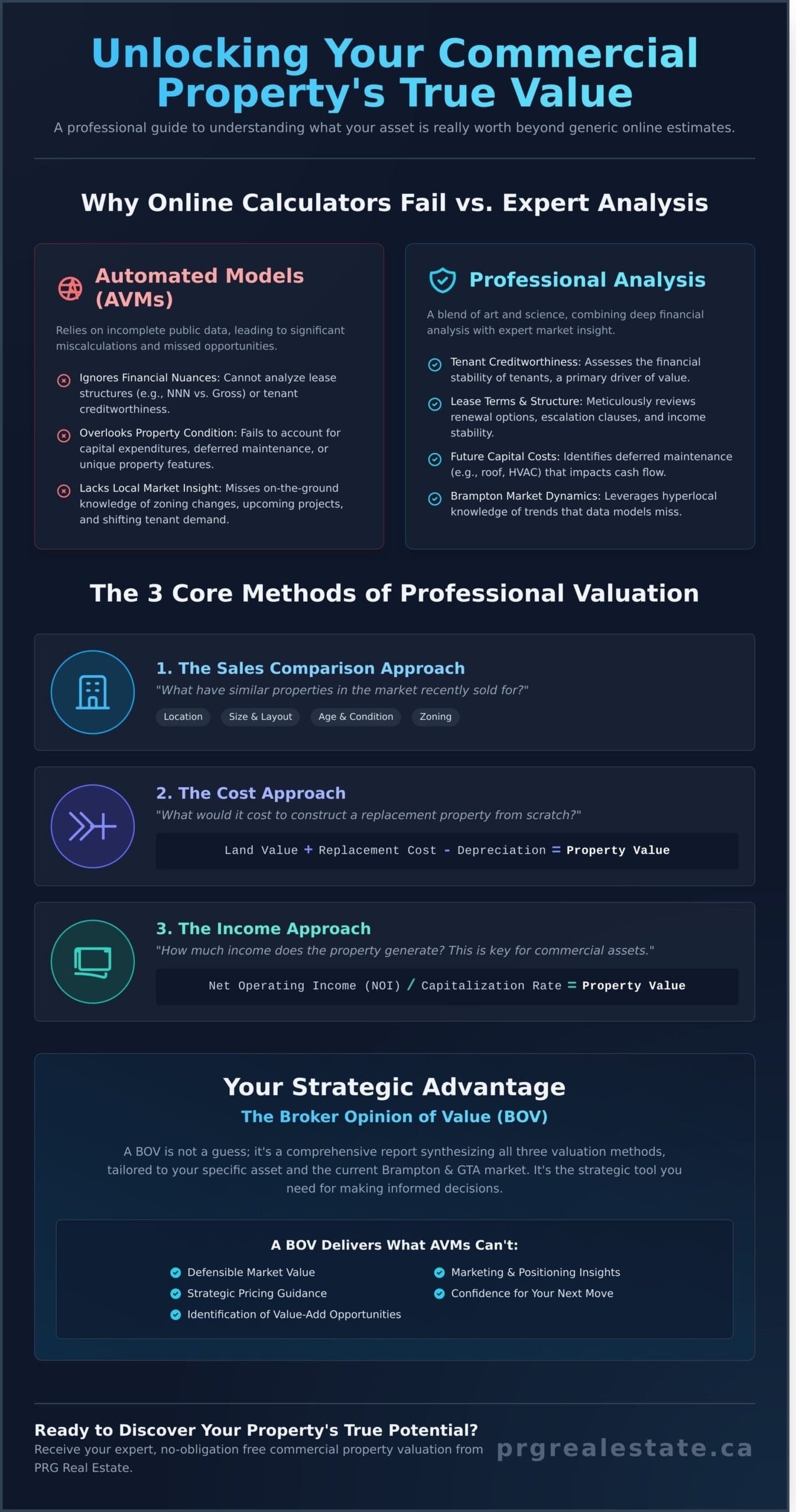
Automated Valuation Models (AVMs) are built on publicly available data, which is often incomplete or confidential for commercial transactions in Canada. These algorithms excel at comparing standardized residential properties but fail when faced with the unique nature of commercial real estate. An AVM cannot analyze the intricate details of a lease agreement, differentiate between a Triple Net (NNN) and a Gross lease, or understand how specific features like zoning restrictions, loading dock capacity, or ceiling clear height impact a property’s utility and value.

Key Data Points That Require Human Analysis

A strategic and accurate valuation requires an expert’s ability to interpret critical data points that algorithms overlook. Our approach to providing a free commercial property valuation is rooted in a comprehensive analysis that considers the complete financial picture of your asset. This includes a deep dive into factors that require professional judgment, such as:

  • Tenant Creditworthiness: The financial stability of your tenants is paramount. A long-term lease with a national, credit-rated corporation holds significantly more value than one with a new, unproven business.
  • Lease Terms & Structure: We meticulously review lease lengths, renewal options, and rent escalation clauses. The structure of the lease directly impacts your net operating income and, therefore, the property’s value.
  • Capital Expenditures: An expert assessment identifies deferred maintenance and potential future costs-like a roof replacement or HVAC system upgrade-that will affect the property’s cash flow and marketability.
  • Local Brampton Market Dynamics: As the top commercial realtors in Brampton, our team possesses on-the-ground knowledge of upcoming developments, infrastructure projects, and shifting tenant demand that generic data models will always miss.

Ultimately, a precise valuation is a blend of art and science, combining financial analysis with deep market insight. It requires an understanding of the established methods of professional commercial property valuation and the expertise to apply them to the unique context of your property and the local market. This level of detail is essential for making informed investment decisions.

The 3 Core Methods of Professional Commercial Property Valuation

Determining the true market value of a commercial asset is not guesswork; it is a strategic discipline built on established, industry-standard methodologies. At PRG, our experts don’t rely on a single data point. Instead, we synthesize insights from three core valuation approaches to provide a comprehensive and defensible assessment. Understanding these methods is the first step in appreciating the expert analysis that underpins a truly accurate, free commercial property valuation.

The Sales Comparison Approach (Market Approach)

Think of this as valuing your asset by examining what similar properties in the Canadian market have recently sold for. It’s a direct reflection of what buyers are currently willing to pay. Our experts perform a detailed analysis, comparing your property against others based on critical factors:

  • Location: Proximity to key arteries, transit, and amenities.
  • Size & Layout: Gross leasable area and functional design.
  • Age & Condition: The physical state and need for capital improvements.
  • Zoning: Permitted use and future development potential.

While highly effective, this method’s precision is contingent on the availability of recent, truly comparable sales, which can be scarce for unique assets.

The Cost Approach

This method answers a fundamental question: what would it cost to construct a replacement property from scratch today? The calculation is direct: Land Value + Replacement Construction Cost – Accumulated Depreciation = Property Value. Depreciation accounts for physical wear, functional inefficiencies, and external economic factors. This approach is most valuable for new constructions or special-purpose properties, such as a community centre or a custom-built industrial facility, where sales and income data are limited.

The Income Capitalization Approach

For an investor, a commercial property is an income-generating machine. This approach values the asset based on its capacity to produce cash flow. We first determine the Net Operating Income (NOI)-the property’s annual income after all operating expenses are paid. This NOI is then divided by a Capitalization (Cap) Rate, which reflects the prevailing rate of return for similar properties in the market. As the premier method for office buildings, retail plazas, and multi-family apartments, it directly links a property’s value to its financial performance, providing the insight you need from a free commercial property valuation.

Free Commercial Property Valuation: Accurately Determine Your Property's Worth

Key Factors That Directly Impact Your Property’s Value in Brampton

While valuation methods provide a framework, the true market value of your commercial property is determined by a strategic analysis of tangible, on-the-ground factors. An expert appraisal moves beyond theory to scrutinize the specific variables that buyers and investors prioritize. Understanding these elements allows you to see your asset through the eyes of the market, identifying both its strengths and areas for potential improvement.

Property-Specific Financials

The financial performance of your property is the bedrock of its value, directly feeding into the Income Approach calculation. A strong and stable cash flow is paramount for attracting premium offers.

  • Rent Roll Analysis: We assess the quality and diversity of your tenants. A property with long-term leases to national, credit-worthy tenants is inherently more valuable than one with short-term leases to small, independent businesses.
  • Lease Terms: Favourable terms, such as built-in annual rent escalations and limited landlord responsibilities (as in a triple net lease), create predictable revenue growth and reduce risk for a new owner.
  • Operating Expenses: A history of well-managed expenses, including property taxes, insurance, and maintenance, demonstrates efficiency and maximizes the Net Operating Income (NOI)-a critical driver of value.

Physical and Locational Attributes

A property’s physical characteristics and its strategic position within Brampton are fundamental to its desirability and long-term potential. Location isn’t just a mantra; in the GTA, it’s a primary value multiplier.

  • Location and Accessibility: Proximity to major transportation arteries like Highways 410, 407, and 401 is a significant advantage, particularly for industrial and logistics properties. High visibility and easy access for retail and office spaces also command higher values.
  • Building Condition: The age, construction quality, and recent capital expenditures (e.g., new roof, updated HVAC) are closely examined. A well-maintained building with minimal deferred maintenance is valued more highly.
  • Zoning and Development Potential: Current zoning regulations dictate the property’s use. However, its potential for future development, intensification, or rezoning can unlock substantial hidden value that a standard analysis might miss.

Brampton Market Dynamics

No property exists in a vacuum. Its value is directly influenced by the real-time conditions of the local Brampton and wider GTA market. This is where our deep market intelligence provides a decisive edge.

  • Supply and Demand: We analyze the current inventory for your specific asset class. Brampton’s tight industrial market, for example, has driven significant value appreciation due to high demand and limited supply.
  • Vacancy Rates and Market Rents: Low local vacancy rates indicate a healthy market, allowing landlords to command higher average rental rates per square foot, which in turn boosts potential income.
  • Prevailing Cap Rates: The capitalization rate is a direct reflection of investor sentiment and perceived risk for similar properties in the area. We track these rates meticulously to ensure your valuation is aligned with current market expectations.

These intricate factors and their interplay are precisely what our team at PRG Real Estate evaluates. A comprehensive understanding is essential for an accurate appraisal. To see how these elements apply to your asset, we invite you to request a free commercial property valuation from our experts. Our detailed analysis ensures you have the strategic insights needed to make informed decisions. Learn more about our approach at prgrealestate.ca.

How to Get Your Free, Professional Broker Opinion of Value (BOV)

Making a strategic decision about your commercial asset starts with a precise understanding of its current market value. A Broker Opinion of Value (BOV) from PRG Real Estate is a powerful tool designed to provide you with the clarity and confidence needed to optimize your investment strategy. We have streamlined our process to deliver expert insights efficiently and professionally.

What is a Broker Opinion of Value?

A BOV, often called a Comparative Market Analysis (CMA), is an expert assessment of your property’s market value conducted by an active commercial realtor with on-the-ground experience. It differs significantly from a formal appraisal, which is a legally binding document typically required by lenders for financing. A BOV is a strategic report that leverages real-time sales data and deep market intelligence, making it the ideal instrument for owners considering a sale, exploring refinancing options, or conducting a strategic portfolio review.

The PRG Valuation Process: What to Expect

Our commitment to excellence is reflected in our efficient and thorough valuation process. We respect your time and provide a clear, confidential path to the insights you need for your free commercial property valuation.

  • Step 1: Initial Consultation. We begin with a confidential discussion to understand your specific property, your long-term objectives, and any unique factors influencing your asset.
  • Step 2: Submission of Key Documents. To ensure maximum accuracy, we request essential documents such as the current rent roll and recent profit and loss (P&L) statements.
  • Step 3: In-Depth Market Analysis. Our team of top commercial realtors conducts a rigorous analysis, evaluating your property against comparable sales, active listings, and prevailing economic conditions in the Brampton market.
  • Step 4: Report Delivery and Discussion. We deliver a comprehensive valuation report and schedule a follow-up meeting to discuss the findings, answer your questions, and outline potential strategies to maximize your return.

Your Complimentary Valuation Report Includes:

Your final report is more than just a number; it is a detailed market intelligence document designed to empower your next move. The insights provided by the experts at PRG Real Estate will give you a decisive advantage.

  • A clear, estimated value range for your property in the current market.
  • A detailed analysis of comparable recent sales and active listings in your area.
  • Expert commentary on current Brampton and GTA market trends affecting your property’s value.

Ready to unlock the true potential of your commercial asset? Take the first step toward a more strategic and profitable future.

Request Your Confidential Valuation from Our Experts.

Secure Your Investment with a Professional Property Valuation

Determining the true worth of your commercial property is a critical strategic decision that generic online estimators simply cannot support. As we’ve covered, a credible valuation moves beyond simple algorithms, requiring an expert analysis of the three core valuation methods and the specific market factors impacting property values right here in Brampton.

Your asset deserves a precise and professional assessment. Let our team of top commercial real estate specialists provide you with a complimentary and confidential free commercial property valuation. This in-depth Broker Opinion of Value is grounded in real-time, local market data and is tailored to the unique characteristics of your property, providing the clarity you need to act with confidence.

Unlock the true potential of your investment. Request Your Free, No-Obligation Property Valuation Today.

Frequently Asked Questions About Your Property Valuation

What is the difference between a broker valuation (BOV) and a formal appraisal?

A Broker Opinion of Value (BOV) is a market-based estimate provided by a real estate professional to determine a probable selling price, used for strategic planning and listing decisions. In contrast, a formal appraisal is a legally binding valuation conducted by a licensed appraiser, typically required by lenders for financing or for legal matters. Our BOV provides expert insight into current market dynamics to inform your investment strategy and potential listing price.

How long does it take to receive my free commercial property valuation?

Our team of top commercial realtors is committed to providing a swift and accurate analysis. Once we receive all the necessary property information, you can typically expect to receive your comprehensive free commercial property valuation within 2 to 4 business days. This efficient turnaround ensures you have the timely data needed to make informed, strategic decisions regarding your asset without delay, reflecting our commitment to client success and results-oriented service.

Is the information I provide kept confidential?

Absolutely. PRG Real Estate operates with unwavering integrity and a commitment to client confidentiality. All information and documentation you provide for your property valuation are handled with the utmost discretion and are used exclusively for the purpose of creating your market analysis. Our reputation is built on trust and loyalty, and we guarantee that your sensitive financial and property data will be kept secure and private throughout the entire process.

Am I obligated to list my property with you if I request a valuation?

There is absolutely no obligation to list your property with PRG Real Estate. We offer this valuation as a professional courtesy to help you understand the current market value of your asset. Our goal is to provide strategic insights and build long-term relationships based on trust and expertise. Should you decide to sell in the future, we are confident our results-oriented approach will make us your first choice, but the decision remains entirely yours.

How often should I get my commercial property valued?

For strategic asset management, we recommend valuing your commercial property at least once a year to stay ahead of market fluctuations. However, an updated valuation is crucial following significant events such as major capital improvements, changes in tenancy or lease terms, local zoning amendments, or substantial shifts in the economic landscape. Proactive valuation ensures your investment strategy remains aligned with current market realities and maximizes potential returns.

What documents do I need to provide for an accurate valuation?

To provide the most accurate and strategic valuation, we require key documents that detail your property’s financial performance and physical condition. Please provide the current rent roll, income and expense statements for the last 2-3 years, a recent property tax bill, and a list of any significant capital expenditures made in the past five years. This data allows our experts to conduct a thorough and precise analysis of your asset’s market position.

Commercial Real Estate Investing: A Beginner's Guide
CategoriesBlog

Commercial Real Estate Investing: A Beginner’s Guide

The world of commercial real estate investing can seem like an exclusive club, reserved for seasoned developers with millions to spend in the Canadian market. For many aspiring investors, complex terms like ‘Cap Rate’ and ‘NOI’ feel like a foreign language, and the fear of a single costly mistake can be paralyzing. This uncertainty often prevents talented individuals from exploring one of the most powerful vehicles for building long-term wealth.

This guide is engineered to dismantle those barriers. At PRG Real Estate Brokerage, we believe that strategic success is built on a foundation of expert knowledge. Here, we will demystify the entire process, providing a clear roadmap for your journey. You will learn the fundamental principles, from understanding key performance metrics and exploring unique Canadian financing options to following a step-by-step framework for acquiring your first income-producing property.

Our commitment is to equip you with the strategic confidence to evaluate opportunities, mitigate risks, and assemble the expert team necessary for success. It’s time to move beyond apprehension and begin building a formidable investment portfolio with a partner dedicated to excellence.

Key Takeaways

  • Master the essential financial metrics that allow you to accurately evaluate a commercial property’s performance and potential return.
  • Discover strategic financing options and how to leverage borrowed capital to acquire valuable commercial assets, even without millions in cash.
  • Successful commercial real estate investing relies on a proven, step-by-step acquisition framework designed to maximize your outcome.
  • Understand how to identify and mitigate common risks, turning potential challenges into strategic advantages for your portfolio.

What is Commercial Real Estate? The Core Investment Types

Venturing into commercial real estate investing represents a strategic move from individual properties to business-centric assets. Unlike residential real estate, which involves properties for private living, commercial real estate (CRE) encompasses properties used exclusively for business activities. At its core, What is Commercial Real Estate? It is an asset class designed to generate profit through capital appreciation and, more significantly, rental income from tenants. The foundation of this model is the commercial lease-a long-term contract that provides a predictable and stable cash flow, making it a powerful tool for portfolio growth. However, this asset class operates on a different scale, demanding greater capital, expertise, and strategic management than typical residential investments.

The Main Categories of Commercial Property

A successful commercial real estate investing strategy begins with understanding the primary asset types, each with unique characteristics and market drivers:

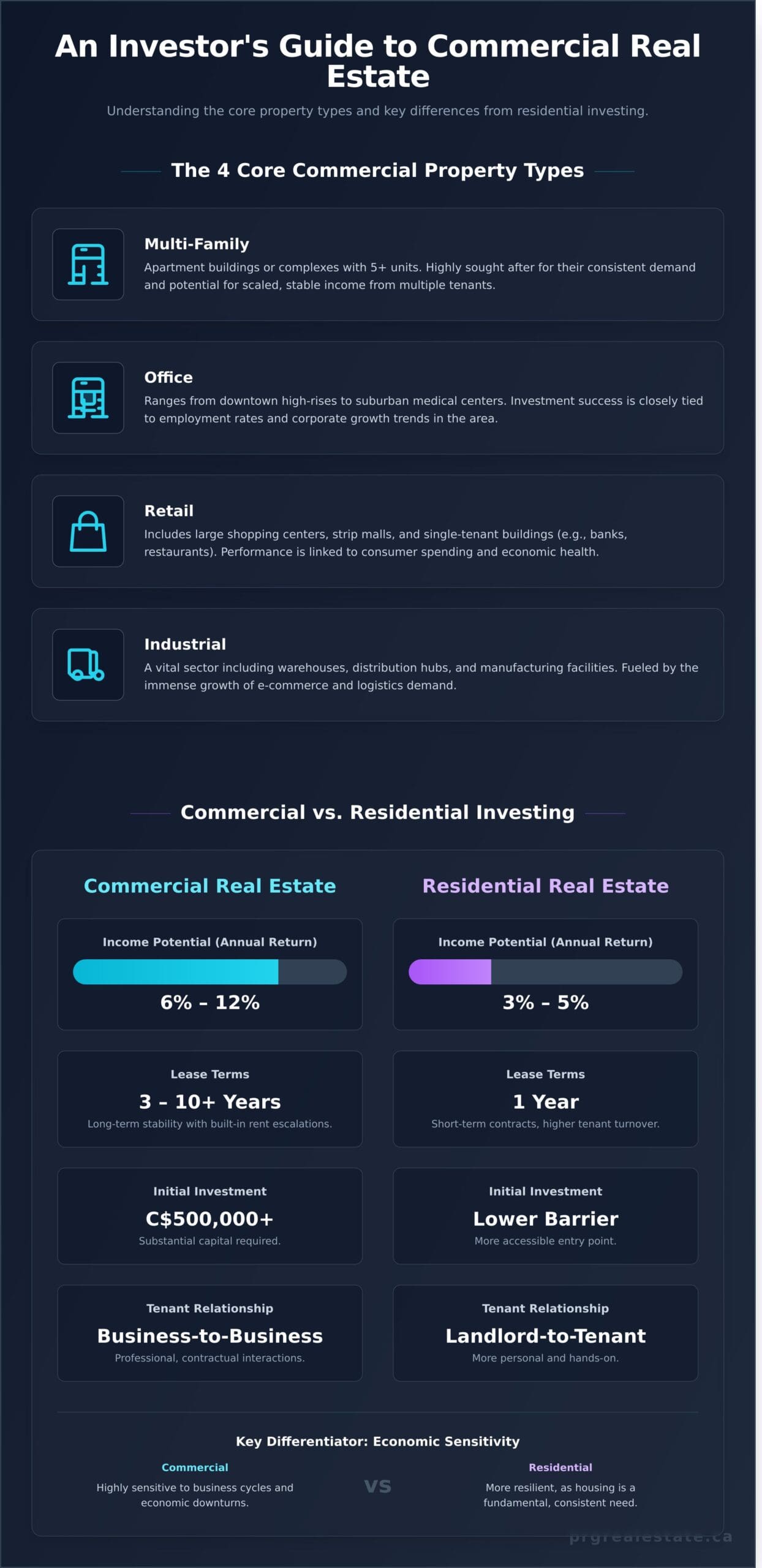
  • Multi-Family: This category includes apartment buildings or complexes with five or more individual units. In Canada, properties with 1-4 units are generally classified as residential. Multi-family assets are highly sought after for their consistent demand and potential for scaled income.
  • Office: These properties range from high-rise towers in downtown cores to suburban low-rise buildings and specialized medical office centers. Investment success is often tied to employment rates and corporate growth.
  • Retail: Encompassing everything from large shopping centres and neighbourhood strip malls to single-tenant buildings occupied by banks or restaurants. The performance of retail assets is closely linked to consumer spending and economic health.
  • Industrial: This vital sector includes warehouses, distribution hubs, and manufacturing facilities. Fueled by the growth of e-commerce and logistics, industrial properties have become a top-performing asset class in Brampton and across Canada.

Pros and Cons of Investing in Commercial vs. Residential

Navigating the transition from residential to commercial investing requires a clear understanding of the fundamental differences. While the potential rewards are significant, the challenges are equally distinct. The following table outlines the key distinctions to inform your strategic approach.

Aspect Commercial Real Estate Residential Real Estate
Income Potential Higher potential returns (typically 6-12% annually) Lower but often stable returns (typically 3-5% annually)
Lease Terms Long-term (3-10+ years), often with built-in rent escalations Short-term (typically 1 year)
Initial Investment (C$) Substantial capital required; often C$500,000+ Lower barrier to entry
Tenant Relationship Professional, business-to-business interaction More personal landlord-tenant dynamic
Economic Sensitivity Highly sensitive to business cycles and economic downturns More resilient, as housing is a fundamental need

Decoding the Numbers: Key Metrics for CRE Investors

Successful commercial real estate investing is a numbers game. While a property’s location and potential are important, the financial metrics are non-negotiable. Mastering these key performance indicators (KPIs) allows you to move beyond emotional decisions and conduct a strategic, data-driven analysis. These numbers provide a standardized framework to compare different assets, measure ongoing performance, and forecast future profitability with confidence.

To illustrate, let’s analyze a hypothetical small commercial property in Brampton with a purchase price of C$1,200,000 and a gross annual rental income of C$100,000.

Net Operating Income (NOI)

NOI is the foundation of almost every commercial real estate valuation. It represents the property’s profitability before accounting for financing. The calculation is straightforward: Gross Operating Income minus all Operating Expenses. These expenses include property taxes, insurance, maintenance, and property management fees. Crucially, debt service (your mortgage payment) is not included.

  • Gross Income: C$100,000
  • Operating Expenses: C$30,000
  • NOI = C$70,000

Capitalization (Cap) Rate

The Cap Rate measures the potential rate of return on an investment property, assuming an all-cash purchase. The formula is Cap Rate = NOI / Property Price. This metric is one of the most effective tools for comparing the relative value of similar properties. Understanding metrics like the Cap Rate is a fundamental step when you’re getting started in commercial real estate, as it provides a clear benchmark for performance. For our example:

  • Cap Rate = C$70,000 / C$1,200,000 = 5.83%

Cash-on-Cash Return

While the Cap Rate ignores financing, the Cash-on-Cash Return focuses on it. This metric is essential for investors using leverage, as it calculates the return on the actual capital you’ve invested (your down payment and closing costs). The formula is Annual Pre-Tax Cash Flow / Total Cash Invested. Continuing our example with a C$300,000 down payment and an annual mortgage payment of C$50,000:

  • Pre-Tax Cash Flow (NOI – Debt Service): C$70,000 – C$50,000 = C$20,000
  • Cash-on-Cash Return: C$20,000 / C$300,000 = 6.67%

How to Finance Your First Commercial Real Estate Investment

A common misconception is that entering the commercial real estate market requires millions in liquid cash. The reality is that strategic financing is the cornerstone of successful commercial real estate investing. The principle of leverage-using borrowed capital to acquire assets and amplify returns-allows savvy investors to control significant properties with a fraction of the total cost.

Unlike residential mortgages that heavily scrutinize personal income, commercial lenders focus primarily on the property’s financial viability. They analyze its potential Net Operating Income (NOI) and its ability to cover debt payments, measured by the Debt Service Coverage Ratio (DSCR). This is why a meticulously prepared business plan and a thorough property analysis are non-negotiable; they are your most critical tools for securing financing.

Traditional Commercial Mortgages

Major Canadian banks and credit unions are the primary sources for commercial mortgages. Lenders typically require a larger down payment than for residential properties, with Loan-to-Value (LTV) ratios usually ranging from 65% to 80%. This means you should anticipate a down payment of 20-35%. These loans often feature shorter amortization periods and terms (e.g., a 5-year term on a 20-year amortization), which may conclude with a balloon payment.

Canada Small Business Financing Program (CSBFP)

For entrepreneurs planning to purchase a property for their own business to operate from (owner-occupied), the government-backed CSBFP loan is an exceptional tool. Offered through most major lenders, this program can finance up to 90% of the property cost, drastically reducing the required down payment. It provides a strategic advantage for small business owners looking to build equity while running their operations.

Creative and Alternative Financing

Beyond traditional routes, several other avenues can fund your investment. These strategic options require expert guidance to navigate effectively:

  • Seller Financing: The property owner acts as the lender, offering more flexible terms. This is often an excellent solution for unique properties or buyers who don’t meet strict bank criteria.
  • Partnerships/Syndication: Pooling capital with other investors allows you to acquire larger, more valuable assets than you could alone, sharing both the risk and the reward.
  • For investors who prefer a more passive role, property investment firms specialize in this syndicated model, managing the entire process on your behalf. If this approach aligns with your goals, you can learn more about PRG MFT.

  • Private Mortgages: These short-term, asset-based loans from private lenders are ideal for securing a property quickly, financing renovations, or navigating complex situations where bank financing is not an option.

Commercial Real Estate Investing: A Beginner's Guide

Your 5-Step Roadmap to Acquiring a Commercial Property

Successful commercial property acquisition is not a single transaction but a strategic, multi-stage process. This five-step roadmap provides a clear framework for navigating the complexities of commercial real estate investing, ensuring each decision is built on a solid foundation of research and expert counsel. Following this disciplined approach mitigates risk and positions your investment for long-term success.

Steps 1 & 2: Define Your Strategy and Research Markets

Your journey begins with clarity. First, define your investment strategy by selecting a niche-be it industrial warehousing, retail plazas, or multi-family residential units. Each sector offers unique opportunities and demands a specific approach. Next, identify and analyze your target markets. In a dynamic region like the GTA, focusing on areas like Brampton requires a deep dive into economic indicators such as population growth, employment trends, and major infrastructure developments. This foundational research informs every subsequent step.

Step 3: Build Your Expert Team

No successful investor operates alone. Assembling a team of dedicated professionals is non-negotiable, as their specialized knowledge is essential for executing a flawless acquisition. Your core team should include:

  • Commercial Real Estate Broker: Your market expert, deal-finder, and chief negotiator who provides access to on- and off-market opportunities.
  • Real Estate Attorney: A legal professional to review purchase agreements, title documents, and contracts to protect your interests.
  • Accountant/CPA: A financial expert to advise on tax implications, ownership structures, and overall financial viability.

This expert team transforms a good opportunity into a great investment. Partner with Brampton’s top commercial realtors to build your team and gain an immediate strategic advantage.

Steps 4 & 5: Secure Financing and Conduct Due Diligence

With your strategy and team in place, the next stage is financial and operational validation. Securing pre-approval for financing from a Canadian lender is essential; it clarifies your purchasing power and strengthens your position when making an offer. Following this, the due diligence phase is where your investment is truly scrutinized. This critical process involves everything from physical property inspections and environmental site assessments to detailed financial audits and a thorough review of all tenant leases. Skipping this step is the costliest mistake an investor can make, as it is your primary opportunity to uncover and mitigate potential risks before closing the deal.

Managing Risks in Commercial Real Estate Investing

All investments carry inherent risk; the defining characteristic of a savvy investor is not the avoidance of risk, but its strategic management. A prudent approach to commercial real estate investing is built on a foundation of comprehensive due diligence and forward-thinking risk mitigation. This commitment to foresight protects your capital and positions your portfolio for resilient, long-term growth.

Market and Economic Risks

Economic downturns, interest rate fluctuations, and shifts in local market dynamics can directly impact tenant demand and property valuations. To safeguard your investment, focus on diversifying across stable asset classes and geographic areas within Brampton and the GTHA. Critically, avoid over-leveraging your assets. Maintaining a disciplined loan-to-value ratio ensures your portfolio can withstand periods of lower occupancy or economic pressure without threatening solvency.

Tenant and Vacancy Risks

The stability of your cash flow is directly tied to the quality and reliability of your tenants. The departure or bankruptcy of a major tenant can significantly impact your revenue. Effective mitigation strategies are non-negotiable:

  • Rigorous Tenant Screening: Conduct thorough financial and operational background checks on all prospective tenants to ensure their stability.
  • Lease Diversification: Whenever possible, secure multiple tenants within a property and strategically stagger their lease expiration dates. This prevents a mass vacancy and creates a more predictable income stream.

Liquidity and Capital Risks

Unlike stocks, commercial real estate is an illiquid asset-it cannot be sold quickly to generate cash. Furthermore, unexpected capital expenditures, such as a complete HVAC system replacement or urgent roof repairs, can arise. The most effective mitigation is maintaining a healthy capital reserve fund. This dedicated fund ensures you can cover unforeseen expenses and major repairs without compromising your financial position or being forced into a premature sale.

Successfully navigating the complexities of commercial real estate investing requires expert guidance. Partnering with a team that prioritizes strategic planning is the ultimate risk mitigation tool. To build a resilient and profitable portfolio in Brampton, connect with the experts at PRG Real Estate.

Your Strategic Next Step in Commercial Real Estate

You now possess the foundational knowledge to navigate the world of commercial properties. From understanding the nuances of different asset types to decoding key financial metrics and mapping out your acquisition roadmap, you are prepared to make informed decisions. This guide has provided the blueprint, but the most successful ventures are built with an expert architect.

Executing a successful strategy in commercial real estate investing demands market-leading expertise and unwavering integrity. At PRG Real Estate, our team, led by top commercial realtor Harsh Pabla, provides exactly that. We specialize in identifying and securing high-value strategic investments across Brampton and the GTA. Our mission extends beyond transactions; we are dedicated to building thriving communities and earning ‘clients for life’ through exceptional results.

Take the definitive step toward building your legacy. Start your investment journey with expert guidance. Contact PRG Real Estate today.

Frequently Asked Questions About Investing in Brampton Commercial Real Estate

How much money do I actually need to start investing in commercial real estate?

The capital required for commercial real estate investing is significant. In Canada, a typical down payment ranges from 25% to 35% of the purchase price. For a C$1 million property in Brampton, this means having C$250,000 to C$350,000 in liquid capital. You must also budget for additional expenses like land transfer tax, legal fees, and appraisal costs, which can add another 3-5% to the total upfront investment. A strategic financial plan is essential for success.

Is commercial real estate a better investment than stocks?

Both asset classes offer distinct advantages. Commercial real estate provides a tangible asset, potential for stable cash flow from leases, and significant tax benefits. Stocks, conversely, offer higher liquidity and a lower barrier to entry. The superior choice depends entirely on your personal financial goals, risk tolerance, and desire for active involvement. Many successful investors use both to build a diversified and resilient portfolio, maximizing long-term wealth creation.

What is the most profitable type of commercial real estate for a beginner?

For new investors, we advise a strategic approach focusing on assets with straightforward management and stable demand. In Brampton, smaller multi-unit industrial properties, well-located retail plazas, or small mixed-use buildings are excellent entry points. These property types often feature simpler NNN (triple net) lease structures and offer a more manageable introduction to tenant relations and property operations compared to large, complex office towers or specialized facilities.

How long does it take to buy a commercial property from start to finish?

The acquisition timeline for a commercial property is more extensive than for a residential purchase, reflecting the complexity of the transaction. From identifying a suitable asset to closing the deal, the process in Brampton typically takes 90 to 180 days. This period includes crucial steps such as securing financing, conducting thorough due diligence (including environmental and structural assessments), and negotiating intricate legal contracts. Partnering with an expert team is key to navigating this efficiently.

Can I manage a commercial property myself or do I need a property manager?

While self-management is possible for a small, single-tenant property, it is a demanding role. For multi-tenant buildings or for investors seeking a more passive role, engaging a professional property manager is a strategic decision. A dedicated manager handles tenant screening, rent collection, maintenance, and regulatory compliance. This expert oversight not only preserves the value of your asset but also maximizes its profitability by ensuring operational excellence and high tenant retention.

What are the main tax advantages of investing in commercial real estate?

A key advantage of commercial real estate investing in Canada is the significant tax benefits available to property owners. You can deduct numerous operating expenses, including mortgage interest, property taxes, insurance, and maintenance costs, against your rental income. Furthermore, you can claim Capital Cost Allowance (CCA), which allows you to depreciate the building’s value over time, creating a valuable tax shield that can substantially reduce your overall tax liability and enhance your net returns.