Common Area Maintenance (CAM) Fees: A Complete Guide for 2026
Securing a commercial lease is a significant milestone, yet hidden within the contract are line items that can dramatically impact your bottom line-none more so than the often-misunderstood common area maintenance fees. These variable charges, intended to cover the upkeep of shared spaces, can quickly escalate, leaving tenants with unexpected bills that erode profitability. Are you confident you know exactly what your C$ are paying for? Can you verify the charges from your landlord? More importantly, do you have a strategy to negotiate these terms to protect your investment?
This definitive 2025 guide is engineered to eliminate that uncertainty. We provide expert, strategic insights into CAM charges within the Canadian commercial real estate market. You will learn precisely what these fees should cover, how they are calculated, and the critical questions to ask before signing any lease. Our objective is to empower you with the knowledge to analyze lease offers with confidence, negotiate fair and transparent terms, and ultimately safeguard your business from costly surprises. Consider this your roadmap to mastering one of the most critical financial components of your commercial lease.
Key Takeaways
- Learn precisely what CAM fees cover-from administrative costs to utilities-to gain a clear picture of your total occupancy expenses in Canada.
- Understand the pro-rata share calculation to verify that your billed common area maintenance fees accurately reflect your percentage of the total leasable area.
- Identify which expenses, such as major capital improvements, should be strategically excluded from CAM charges to protect your business from unfair costs.
- Discover actionable negotiation tactics to cap annual increases, define controllable vs. uncontrollable costs, and secure crucial audit rights in your commercial lease.
What Are Common Area Maintenance (CAM) Fees?
In Canadian commercial real estate, common area maintenance fees are one of the most critical financial components of a lease agreement. These fees represent a tenant’s proportional share of the costs associated with the operation, repair, and upkeep of shared spaces within a property. Unlike base rent, which covers the exclusive use of your leased premises, CAM fees ensure that the entire property-from the parking lot to the lobby-remains functional, safe, and professionally managed. For any business, a strategic understanding of these costs is non-negotiable for accurate budgeting and sustained profitability.
The Role of CAM in Commercial Leases
For landlords, CAM provides a structured mechanism to manage and pass through the operational costs of a multi-tenant property, ensuring its value is preserved. For tenants, these fees translate into tangible benefits: a well-maintained environment that enhances customer experience and employee safety. The allocation of these costs is typically done on a ‘pro-rata’ basis, where a tenant pays a percentage of the total expenses equal to their share of the property’s total leasable area. These Common Area Maintenance (CAM) charges are a standard feature in most net leases across Canada, forming a key part of a tenant’s total occupancy cost alongside base rent, property taxes, and insurance.
Examples of Common Areas Covered
The specific costs included in common area maintenance fees are detailed in the lease agreement, but they generally cover a wide range of shared property elements. A comprehensive list often includes:
- Exterior and Grounds: Parking lot maintenance (including paving, lighting, and crucial snow removal), landscaping, and sidewalk upkeep.
- Interior Shared Spaces: Lobbies, hallways, elevators, public restrooms, and shared corridors.
- Building Systems & Structure: Maintenance and repair of the roof, foundation, HVAC systems serving common areas, and fire safety systems.
- Management and Administration: Fees for property management, security services, and administrative costs associated with managing the property.
The Anatomy of CAM Fees: What’s Included and What’s Excluded
To effectively manage and budget for commercial tenancy, both landlords and tenants must have a precise understanding of what constitutes a Common Area Maintenance (CAM) fee. While these charges are standard, their composition is not. The single most critical document defining these costs is the commercial lease agreement. It serves as the definitive guide, and a thorough review is non-negotiable before signing.
Dissecting these fees reveals that they fall into distinct categories, each covering a necessary aspect of maintaining a property’s value, safety, and operational integrity.
Standard Inclusions in CAM Charges
While specifics vary, most common area maintenance fees are allocated to cover the day-to-day operational costs of shared spaces. These expenses ensure the property remains functional, clean, and safe for all tenants and their clients. Typical inclusions are:
- Property Services: This is the most visible category, including costs for janitorial services, landscaping, security personnel, parking lot maintenance, and seasonal needs like snow and ice removal in the Canadian winter.
- Common Area Utilities: The cost to power, heat, and cool shared spaces such as lobbies, hallways, elevators, and public restrooms. This includes hydro, water, and natural gas.
- Administrative Fees: A portion of the property management team’s salaries, along with costs for essential professional services like accounting and legal fees directly related to managing the property.
Common Exclusions & Red Flags to Watch For
Just as important as what is included is what should be excluded. The fundamental distinction lies between operating expenses (CAM) and capital expenditures (CapEx). CAM fees cover routine maintenance, while CapEx involves major improvements or replacements that increase the property’s value, such as a new roof or HVAC system. These are typically the landlord’s responsibility.
Tenants should be vigilant for red flags in the lease, such as vague clauses using terms like “etc.” or costs that solely benefit the landlord, including marketing expenses to attract new tenants or brokerage commissions.
Controllable vs. Uncontrollable Costs
A strategic approach to CAM involves differentiating between costs the landlord can influence and those they cannot.
- Uncontrollable Costs: These include expenses like property taxes, building insurance, and regulated utility rates. They are passed through to tenants with little room for negotiation.
- Controllable Costs: These are expenses where a landlord can seek competitive bids and manage efficiencies, such as cleaning contracts, landscaping services, or security providers.
For instance, property managers will often get quotes from specialized exterior maintenance firms, such as PBC Pressure Cleaning, to ensure they are getting competitive rates for services like power washing parking lots and building exteriors, which fall under these controllable costs.
Understanding this distinction is a critical component when negotiating CAM charges, as it empowers tenants to focus their due diligence on the variable costs that the landlord can directly influence. This is where strategic oversight can lead to significant savings over the lease term.

How CAM Fees Are Calculated and Billed
In commercial real estate, financial transparency is paramount. Common area maintenance fees are not arbitrary charges; they are calculated using an established methodology designed to distribute costs equitably among all tenants. Landlords typically forecast these expenses for the upcoming year and bill tenants in monthly installments alongside their base rent. This strategic approach ensures the property remains impeccably maintained while providing predictable budgeting for your business.
Calculating Your Pro-Rata Share
A tenant’s portion of the total CAM cost is determined by their “pro-rata share,” which is their percentage of the property’s total leasable area. The standard formula is direct and effective:
(Tenant’s Leased Square Footage / Total Leasable Square Footage of Property) x Total Annual CAM Costs
For example, if a property has C$300,000 in total CAM costs and 100,000 leasable square feet, a tenant leasing a 5,000 sq. ft. unit would be responsible for 5% of the costs. This equates to C$15,000 annually, or C$1,250 per month. Verifying these square footage figures in your lease agreement is a critical due diligence step.
CAM in Different Lease Types
The allocation of common area maintenance fees is fundamentally tied to the type of commercial lease you sign. The primary structures in the Canadian market include:
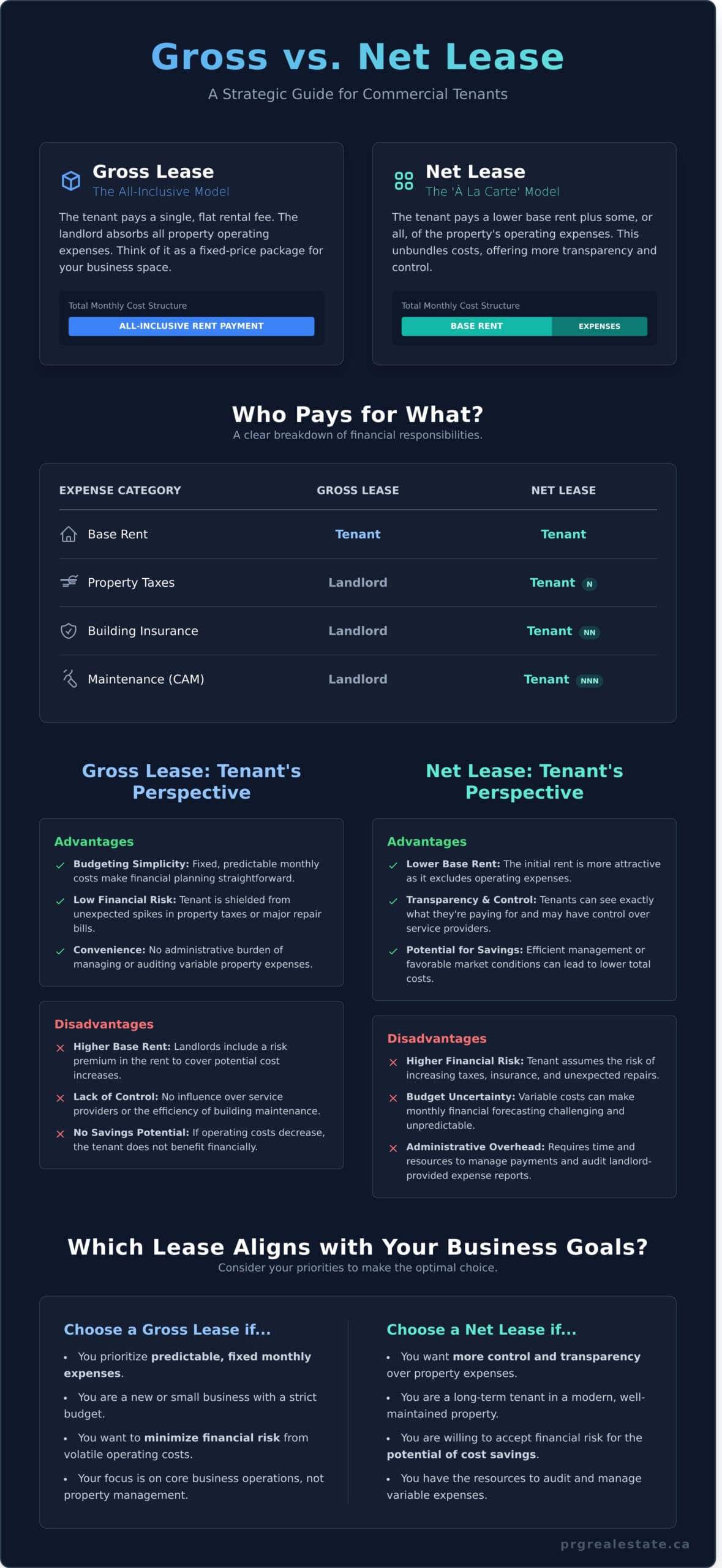
- Triple Net (NNN) Lease: The most common model for multi-tenant properties. The tenant pays their pro-rata share of all three “nets”-CAM, property taxes, and building insurance-separately from their base rent.
- Modified Gross Lease: A hybrid agreement where the landlord and tenant negotiate to share specific operating costs. The exact responsibilities are explicitly defined within the lease document.
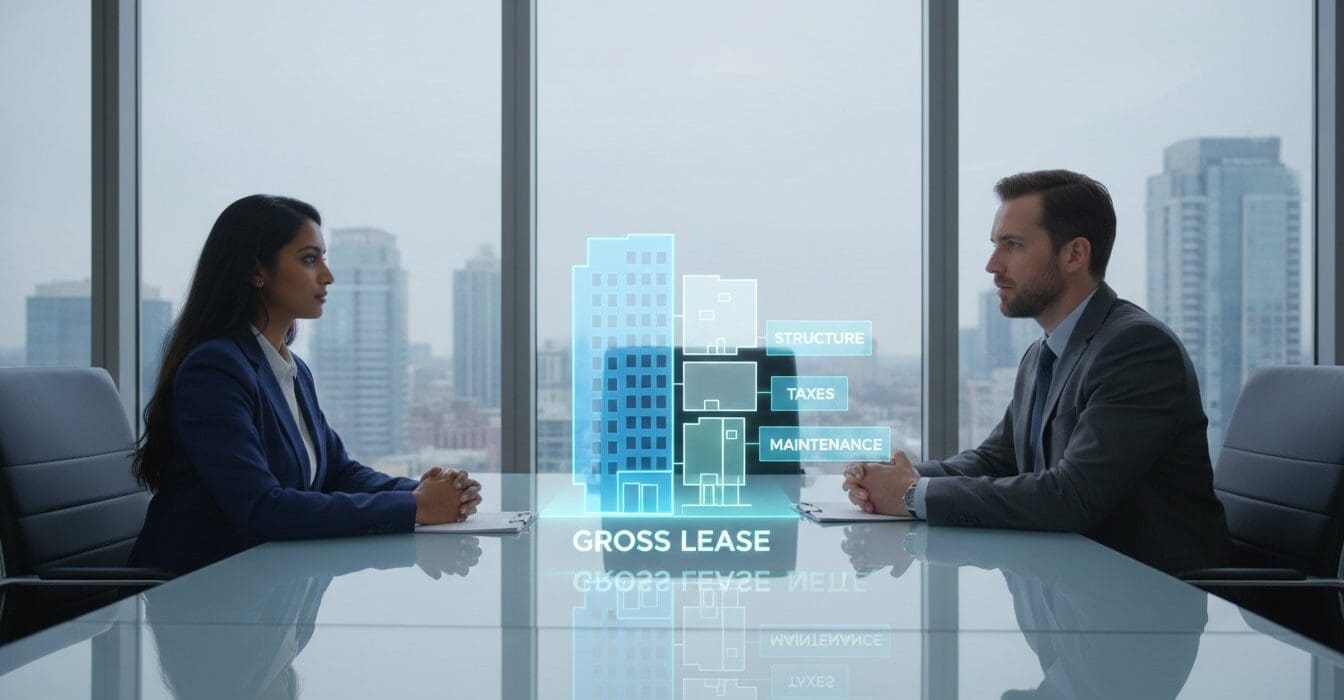
- Full-Service Gross Lease: The landlord covers all property operating expenses. These costs are factored into a higher base rent, offering the tenant simplified and predictable monthly payments.
Understanding CAM Reconciliation
At the end of each fiscal year, the landlord performs a CAM reconciliation. This essential audit compares the total estimated CAM charges paid by tenants against the actual expenses incurred. If tenants overpaid, they will receive a credit or refund. Conversely, if actual costs exceeded the estimates, tenants will receive an invoice for the shortfall. This annual statement ensures financial accuracy and is a standard practice tenants should anticipate and review carefully.
Navigating these details requires expert guidance. For strategic advice on your next commercial lease agreement, connect with the professionals at PRG Real Estate Brokerage.
A Strategic Guide to Negotiating CAM Clauses
Negotiating the CAM clause is not an adversarial process; it is a fundamental step in structuring a successful commercial lease. For both tenants and landlords, the objective is to establish a transparent, predictable, and fair agreement that protects their respective interests. A well-negotiated clause on common area maintenance fees prevents future disputes and fosters a positive, long-term landlord-tenant relationship.
Key Negotiation Points for Tenants
Tenants should approach CAM negotiations with a focus on clarity and cost control. Securing favourable terms requires a strategic review of the following critical areas:
- Cap on Controllable Expenses: Propose an annual cap (e.g., 3-5%) on controllable costs like landscaping or cleaning. This protects you from unpredictable spikes in operating expenses, while acknowledging that uncontrollable costs like property taxes cannot be capped.
- Define Exclusions: Insist on a clear, itemized list of what is excluded from CAM. This should explicitly prohibit passing through capital expenditures, such as a full roof replacement or major structural repairs, which are the landlord’s responsibility.
- Secure Audit Rights: The lease should grant you the right to audit the landlord’s CAM records annually. This essential clause provides the transparency needed to verify that charges are accurate and comply with the lease terms.
- Clarify Management Fees: Scrutinize how the management fee is calculated. A fee based on a percentage of total CAM costs is often preferable to one based on a percentage of gross rent, as the latter can inflate the fee without adding value.
Strategic Considerations for Landlords
Landlords must balance operational flexibility with tenant fairness to maintain a competitive and well-managed property. The goal is to ensure the lease allows for complete cost recovery while building trust:
- Maintain Clear Definitions: Define CAM expenses broadly enough to cover all legitimate operational costs but with enough clarity to avoid ambiguity. This ensures you can recover costs for services like security, snow removal, and general administration.
- Resist Uncontrollable Caps: It is standard practice to refuse caps on uncontrollable expenses like property taxes, insurance premiums, and utilities. Capping these exposes the landlord to significant financial risk.
- Offer Proactive Transparency: Build tenant confidence by providing detailed annual CAM reconciliations. Transparent reporting reduces disputes and strengthens relationships, making tenants more likely to renew.
- Allow for New Services: Ensure the lease permits the pass-through of costs for new services or technologies that become necessary or beneficial to the property, such as security system upgrades or sustainability initiatives.
The Role of Your Commercial Realtor
Navigating the complexities of commercial leases requires specialized expertise. An experienced commercial realtor is not just an advisor; they are your strategic advocate. A top-tier realtor leverages deep market knowledge to identify clauses that deviate from Canadian market standards, strengthening your negotiating position. They ensure every verbal agreement is meticulously translated into the final lease document, protecting you from costly oversights. Ultimately, their involvement transforms the leasing process from a potential liability into a strategic advantage. Partner with PRG’s experts to secure the best lease terms.
Secure Your Advantage: Final Thoughts on CAM Fees
Mastering the complexities of commercial leasing begins with a firm grasp of common area maintenance fees. As this guide has detailed, these charges are a significant component of your total occupancy cost. Understanding the specific inclusions and exclusions, scrutinizing calculation methods like pro-rata shares, and strategically negotiating caps and audit rights are not just best practices-they are essential actions for protecting your bottom line and ensuring a transparent, fair lease agreement.
However, turning this knowledge into a tangible financial advantage requires seasoned expertise. As the top commercial realtors in Brampton, PRG Real Estate has a proven track record of securing favourable terms for our clients, built on a reputation of trust and exceptional outcomes. Our team provides the strategic advice needed to transform complex lease negotiations from a potential liability into a significant asset for your investment. Don’t leave your financial success to chance. Let our expert commercial realtors guide you through your next lease. Contact PRG today.
Frequently Asked Questions About Common Area Maintenance (CAM) Fees
What is the difference between CAM and TMI (Taxes, Maintenance, Insurance)?
In Canadian commercial real estate, TMI represents the total additional rent covering Property Taxes, Common Area Maintenance, and Building Insurance. CAM is a specific component within TMI, focused exclusively on the costs to operate and maintain shared spaces like lobbies, parking lots, and elevators. While related, TMI is the comprehensive term for all three operating cost categories, whereas CAM is just one piece of that financial puzzle. Understanding this distinction is critical for accurate lease analysis.
Can a landlord make a profit from CAM fees?
No, a landlord should not profit from common area maintenance fees. These charges are intended to be a direct pass-through of the actual costs incurred to operate and maintain the property. The lease agreement is the governing document and should clearly outline what is included. Tenants typically have the right to audit the landlord’s CAM records to ensure transparency and verify that the charges accurately reflect legitimate expenses without any additional markup for profit.
Are capital improvements, like replacing an entire HVAC system, ever included in CAM?
Typically, major capital improvements that increase a property’s value, such as a full HVAC replacement, are the landlord’s responsibility and are not included in CAM. However, many modern leases contain clauses that allow for the amortization of certain capital expenditures. If an improvement reduces operating costs or is required by law, its cost may be spread over its useful life, and that annual amortized amount can be legitimately included in the CAM charges passed on to tenants.
How are CAM fees handled for a vacant space in the building?
The landlord is generally responsible for paying the pro-rata share of CAM fees for any vacant units within the property. The total building operating costs are allocated among tenants based on their occupied square footage. To protect tenants from sharp increases if a major tenant leaves, some leases include a “gross-up” clause. This provision allows the landlord to calculate CAM expenses as if the building were 95-100% occupied, ensuring a stable and predictable cost structure.
What is a typical CAM fee as a percentage of base rent in the Brampton area?
In the Brampton and Greater Toronto Area, CAM fees are almost always expressed as a cost per square foot, not as a percentage of base rent. For retail or office properties, tenants can typically expect CAM fees to range from C$12 to C$18 per square foot annually. This figure can fluctuate significantly based on the building’s age, amenities, and the specific services included. Industrial properties often have lower CAM costs due to fewer shared amenities.
What should I do if I believe there is an error in my CAM reconciliation bill?
If you suspect an error, your first step is to review the CAM clauses in your lease agreement. Next, submit a formal written request to your landlord or property manager for detailed documentation supporting the charges, including invoices and receipts. Compare these documents against your lease terms. If discrepancies persist after your review, a formal dispute notice should be sent. For complex situations, seeking guidance from an expert commercial real estate advisor or legal counsel is a prudent final step.