
Selling Commercial Property: A Complete Step-by-Step Guide
CategoriesBlog

Selling Commercial Property: A Complete Step-by-Step Guide

The decision to sell a commercial asset represents a significant financial milestone. However, the process of selling commercial property in Canada can feel overwhelmingly complex, riddled with concerns over accurate valuation, effective marketing, and the potential for costly legal missteps. Many owners fear leaving significant money on the table or becoming entangled in a transaction that fails to meet its timeline or financial objectives, transforming a potential opportunity into a source of stress and uncertainty.

This definitive guide is engineered to replace that uncertainty with a clear, strategic framework. We provide the expert, step-by-step roadmap necessary to navigate every stage with precision-from preparing your asset for sale to closing the deal with confidence. Our commitment is to equip you with the insights needed to command the maximum possible sale price for your property and ensure a smooth, predictable, and successful transaction from start to finish.

Key Takeaways

  • Master the crucial pre-sale phase by conducting a strategic valuation and preparing your asset meticulously before it ever hits the market.
  • Develop a tailored marketing and sales strategy designed to attract the most qualified investors, moving far beyond a simple listing.
  • Successfully selling commercial property requires navigating the complex due diligence and closing phases to protect your investment and maximize returns.
  • Understand that an initial offer is just the start of a detailed negotiation process where expert guidance is critical to securing favourable terms.

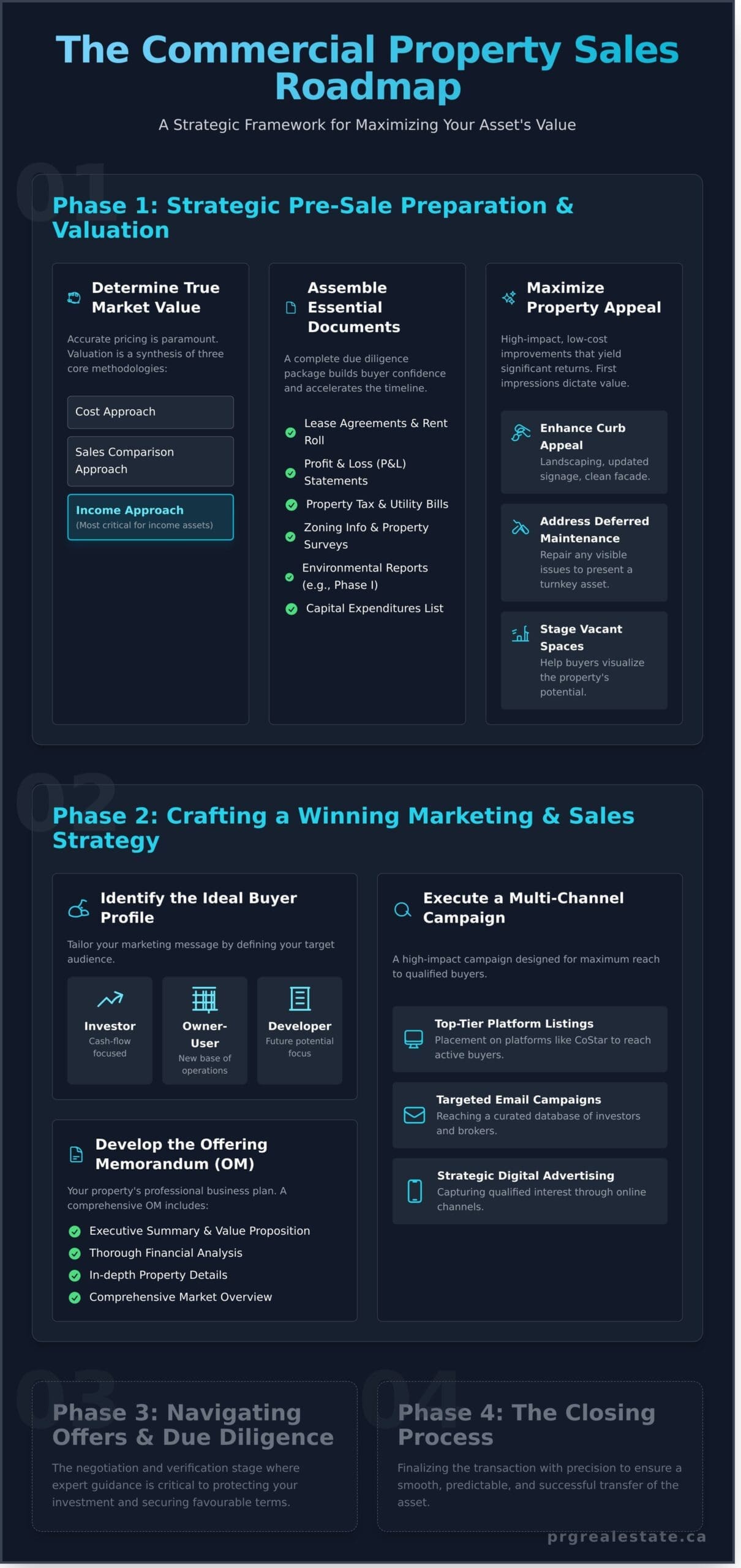
Phase 1: Strategic Pre-Sale Preparation and Valuation

The successful sale of a high-value asset begins long before it hits the market. The initial phase of selling commercial property in the Greater Toronto Area is not about listing, but about meticulous, strategic preparation. This foundational work ensures you enter the market from a position of strength, prepared to maximize your return on investment and facilitate a seamless transaction. Overlooking this stage is the most common and costly mistake an owner can make.

Determining Your Property’s True Market Value

Commercial valuation is a sophisticated, data-driven discipline far removed from residential appraisals. An accurate price is determined by a synthesis of three core methodologies: the Cost Approach (what it would cost to replace), the Sales Comparison Approach (what similar properties have sold for), and most critically for income-generating assets, the Income Approach (its potential to generate revenue). A comprehensive Broker’s Opinion of Value (BOV) from a seasoned commercial real estate expert is essential. This analysis considers not just the numbers, but critical factors like location, zoning regulations, tenant quality, lease terms, and the physical condition of the commercial property itself. Pricing your asset correctly from day one is paramount to attracting qualified buyers and avoiding prolonged, value-eroding time on the market.

Assembling the Essential Documentation Package

A prepared seller is a credible seller. Before listing, our team helps you assemble a comprehensive due diligence package. Having this information organized and ready for review builds immediate buyer confidence and significantly accelerates the transaction timeline. Your package should be complete and accurate, including:

  • Current and historical lease agreements and a detailed rent roll
  • Three years of profit and loss (P&L) statements
  • Recent property tax bills and utility statements
  • Up-to-date zoning information and property surveys
  • Any available environmental reports (e.g., Phase I ESA)
  • A list of recent capital expenditures and planned improvements

Maximizing Appeal: Property Enhancements and Staging

First impressions dictate perceived value. We advise clients on high-impact, low-cost improvements that yield significant returns. This includes enhancing curb appeal with landscaping and updated signage, addressing any deferred maintenance issues, and ensuring the property is immaculately clean and easily accessible for investor tours. For vacant spaces, professional staging can help prospective tenants or buyers visualize the potential. The goal is to present a turnkey, well-maintained asset, clearly highlighting its potential for future development or optimized use to capture maximum investor interest.

Phase 2: Crafting a Winning Marketing and Sales Strategy

In the competitive Greater Toronto Area market, effective marketing goes far beyond a simple ‘For Sale’ sign. A sophisticated, tailored strategy is essential to attract the most qualified buyers and maximize your property’s value. This involves creating non-negotiable professional marketing materials and leveraging a broker’s extensive network to generate both on-market and off-market interest, ensuring your asset is positioned for optimal results.

Identifying the Ideal Buyer Profile

Success in selling commercial property begins with a clear understanding of your target audience. Is your ideal buyer an investor focused on cash flow, an owner-user seeking a new base of operations, or a developer with an eye for future potential? By defining this profile, we tailor every marketing message to resonate with their specific motivations, preventing wasted time and resources on unqualified leads and focusing exclusively on prospects with genuine intent and capacity.

Developing a Compelling Offering Memorandum (OM)

The Offering Memorandum (OM) is the professional business plan for your property. It is your most powerful tool to showcase the investment opportunity and establish credibility. A comprehensive OM must include high-quality photography, detailed floor plans, and critical data points. Key sections include:

  • An Executive Summary highlighting the unique value proposition.
  • A thorough Financial Analysis with rent rolls, operating expenses, and pro-forma projections.
  • In-depth Property Details covering zoning, building specifications, and capital improvements.
  • A Market Overview of the immediate area and broader GTA trends.

A well-structured OM is a cornerstone of any successful sale, providing the essential documentation required to attract serious investors and facilitate informed decision-making.

Executing a Multi-Channel Marketing Campaign

Once your strategy and materials are perfected, we execute a high-impact, multi-channel campaign designed for maximum reach. This includes listing your property on top-tier commercial platforms like CoStar, deploying targeted email campaigns to our curated database of active investors and brokers, and utilizing strategic digital advertising to capture qualified interest. This proactive approach ensures your property is presented to the entire market, not just a fraction of it. See how PRG Real Estate Brokerage’s strategic marketing gets results.
Selling Commercial Property: A Complete Step-by-Step Guide

Phase 3: Navigating Offers and the Due Diligence Gauntlet

Receiving an offer is a significant milestone, but it marks the beginning of the most intricate phase of your transaction. This is a critical stage when selling commercial property, where strategic negotiation and meticulous management determine whether a potential deal closes successfully or collapses under pressure. A results-oriented approach, managed by an expert commercial broker, is non-negotiable to protect your interests and maximize your return on investment.

Evaluating and Negotiating Offers

The most attractive offer isn’t always the one with the highest price. A truly superior offer combines a strong price with favourable terms. Our team conducts a comprehensive analysis of all components to position you for success. Key considerations include:

  • Buyer Credibility: Assessing the buyer’s financial strength, financing pre-approval, and track record in the market.
  • Conditions & Contingencies: Scrutinizing financing, inspection, and zoning conditions that could create risk.
  • Closing Timeline: Ensuring the proposed date aligns with your financial and strategic objectives.

We leverage strategic counter-offers to improve terms, moving methodically toward a binding Agreement of Purchase and Sale (APS) that safeguards your position.

Managing the Due Diligence Period

Once an agreement is conditionally accepted, the buyer begins their due diligence-an intensive verification period that can last 30 to 90 days. Our role is to manage this process with absolute efficiency and transparency. This involves facilitating access for physical inspections, Phase I Environmental Site Assessments (ESAs), financial and lease audits, and comprehensive title searches. By maintaining impeccably organized records and responding promptly to all inquiries, we build buyer confidence and prevent unnecessary delays.

Overcoming Common Hurdles and Re-Negotiations

It is common for buyers to uncover perceived issues during due diligence, often leading to re-negotiation requests. Whether it’s a minor repair or a complex zoning query, these hurdles require a skilled negotiator. The expert guidance provided by the PRG Real Estate team helps you determine when to offer a credit versus making a repair, ensuring minor issues don’t derail the sale. With an unwavering commitment to your goals, we keep the transaction on track, navigating every challenge to achieve a successful and profitable closing.

Phase 4: The Closing Process and Finalizing the Transaction

The final phase of selling your commercial property is where meticulous execution transforms a negotiated offer into a completed sale. This stage is defined by critical legal and financial coordination, demanding professional oversight to navigate complexities and protect your interests. Success hinges on the seamless collaboration between your broker, legal counsel, and the buyer’s representatives to ensure all obligations are met precisely and on schedule.

From Accepted Offer to Binding Agreement (PSA)

Once an offer is accepted, the next critical step is drafting the Purchase and Sale Agreement (PSA). This legally binding contract is prepared by real estate lawyers and must accurately reflect every term, condition, and timeline negotiated. Key clauses to scrutinize include representations and warranties about the property’s condition, closing adjustments for items like property taxes and utilities, and default provisions. This document is the definitive blueprint for the remainder of the transaction.

Coordinating with Lawyers, Lenders, and Title Companies

Effective coordination is paramount to prevent costly delays. Your PRG Real Estate broker acts as the central point of communication, ensuring a fluid exchange of information between all parties. Our role involves:

  • Liaising with both seller and buyer lawyers to facilitate the PSA review.
  • Confirming the buyer’s financing is secured and progressing according to the agreed-upon timeline.
  • Working with the title insurance company to resolve any potential issues or encumbrances on the property title.

This proactive management ensures that the path to closing remains clear and efficient.

The Closing Day: What to Expect

On the closing day, all the preceding efforts culminate in the final transfer. You will review and sign the closing documents, including the Statement of Adjustments, which provides a detailed financial breakdown of the sale. This statement outlines all credits and debits, including the final purchase price, legal fees, and brokerage commissions. Once documents are signed and funds are successfully transferred via the lawyers’ trust accounts, the property ownership is officially registered in the buyer’s name, finalizing the process of selling commercial property.

Navigating the closing process requires unwavering expertise and a commitment to excellence. To ensure your transaction is executed with strategic precision, partner with the experts at PRG Real Estate.

Secure Your Investment’s Future: Partner with a Commercial Real Estate Leader

As this guide has demonstrated, successfully selling commercial property is a multi-faceted endeavor that extends far beyond simply listing a building. From meticulous pre-sale preparation and accurate valuation to executing a sophisticated marketing campaign, every step is critical. Expertly navigating the due diligence gauntlet and ensuring a seamless closing process are the final, crucial pieces to securing an optimal outcome.

Achieving a premium result in this competitive landscape requires a partner with a proven track record. As specialists in the dynamic Brampton and Greater Toronto Area commercial market, the team at PRG Real Estate leverages a strategic, data-driven marketing approach. Our commitment is to position your asset perfectly, attract the most qualified buyers, and ensure your property achieves its highest possible value.

Don’t leave your investment’s potential to chance. Maximize your property’s value. Partner with Brampton’s top commercial realtors.

Take the definitive step toward a successful and profitable transaction today.

Frequently Asked Questions About Selling Commercial Property

What are the typical commission rates for selling a commercial property?

In Canada, commercial real estate commission rates are negotiable and not standardized. They often follow a tiered structure based on the property’s final sale price. For example, a common arrangement is 5% on the first C$1 million and 2.5% on the remaining balance. This commission is typically split between the listing brokerage and the buyer’s brokerage. Engaging an expert commercial realtor ensures you negotiate a structure that aligns with your property’s value and market position for optimal results.

How long does it usually take to sell a commercial property in the Brampton area?

The timeline for selling commercial property in the Brampton area is typically more extended than for residential sales, often ranging from 6 to 12 months or longer. Key factors influencing this timeframe include the asset class (e.g., industrial, retail, office), current market demand, strategic pricing, and the complexity of buyer due diligence. A proactive marketing strategy, managed by top commercial realtors in Brampton, is critical to expediting this process and attracting qualified purchasers efficiently.

What are the main differences between selling commercial and residential real estate?

The key distinction lies in the buyer’s motivation and the transaction’s complexity. Commercial buyers are driven by investment metrics like capitalization rates and ROI, not emotion. The due diligence process is far more intensive, involving analysis of leases, zoning, environmental reports, and financial statements. Consequently, marketing is highly targeted toward specific investors and businesses, unlike the broad-market approach in residential sales, creating a more strategic and data-driven process from start to finish.

What are the capital gains tax implications of selling a commercial property in Canada?

In Canada, when you sell a commercial property, 50% of the capital gain is considered taxable income. A capital gain is the selling price minus the property’s adjusted cost base and any expenses related to its sale. This taxable portion is then added to your income for the year and taxed at your personal or corporate marginal tax rate. We strongly advise consulting with a tax professional to understand the precise implications and explore potential deferral strategies.

How can I ensure confidentiality when selling my business’s property?

Maintaining confidentiality is paramount, especially for an operating business. This is achieved through a strategic, controlled marketing process. We utilize non-disclosure agreements (NDAs) that all prospective buyers must sign before receiving sensitive information. Furthermore, we thoroughly vet all inquiries to ensure only financially qualified and serious parties gain access to property details. This discreet approach protects your operations, employees, and client relationships from unnecessary disruption during the sale.

Can I continue to operate my business in the building during the sales process?

Absolutely. It is standard practice to continue full business operations while your property is on the market. This can be structured in two ways: selling to an investor who values an in-place tenant (your business), or selling to an end-user who will occupy the space after you vacate. A popular strategic option is a sale-leaseback, where you sell the property and simultaneously sign a lease with the new owner, unlocking capital while ensuring business continuity.

Commercial Real Estate Marketing: The Definitive Strategy Guide
CategoriesBlog

Commercial Real Estate Marketing: The Definitive Strategy Guide

A high-value commercial property sitting vacant is more than an empty space-it’s a significant liability in your investment portfolio. The critical difference between a rapid, profitable transaction and a lengthy, costly vacancy often hinges on a single element: a sophisticated and strategic approach to commercial real estate marketing. In a competitive Canadian market, simply listing a property and hoping for the best is a formula for unrealized potential and mounting expenses, leaving you wondering if you’re reaching the right decision-makers or leaving money on the table.

This definitive guide is engineered to eliminate that uncertainty. We move beyond theory to deliver a clear, actionable framework of proven digital and traditional strategies tailored for the Canadian commercial real estate landscape. You will discover which channels deliver the highest return on investment, how to attract and qualify serious buyers and tenants, and how to execute a plan that not only accelerates your transaction timeline but maximizes your property’s final value. Prepare to transform your marketing from a cost centre into a powerful driver of profit.

Key Takeaways

  • Build a strategic foundation before executing any tactics. A well-defined plan ensures every marketing effort is targeted for maximum return on investment.
  • Master the digital landscape to capture attention first. High-quality digital assets are non-negotiable for attracting qualified buyers and tenants in today’s market.
  • Leverage high-impact traditional methods to build local credibility. A blended approach using proven tactics establishes a powerful and trustworthy physical presence for your property.
  • Partnering with an expert brokerage amplifies your reach and results. An effective commercial real estate marketing strategy requires specialized resources and expertise to maximize your property’s value.

The Foundation: Building Your Commercial Real Estate Marketing Strategy

In the competitive landscape of Canadian real estate, success is not achieved through random tactics but is built upon a deliberate, strategic plan. A successful sale or lease begins long before the first listing goes live. This foundational phase is the most critical component of your entire commercial real estate marketing campaign, setting the direction and ensuring every subsequent action is targeted, efficient, and effective. A professional approach transforms the process from a simple transaction into a strategic exercise, a core principle of the modern real estate business that drives superior outcomes.

Defining Your Property’s Unique Value Proposition (UVP)

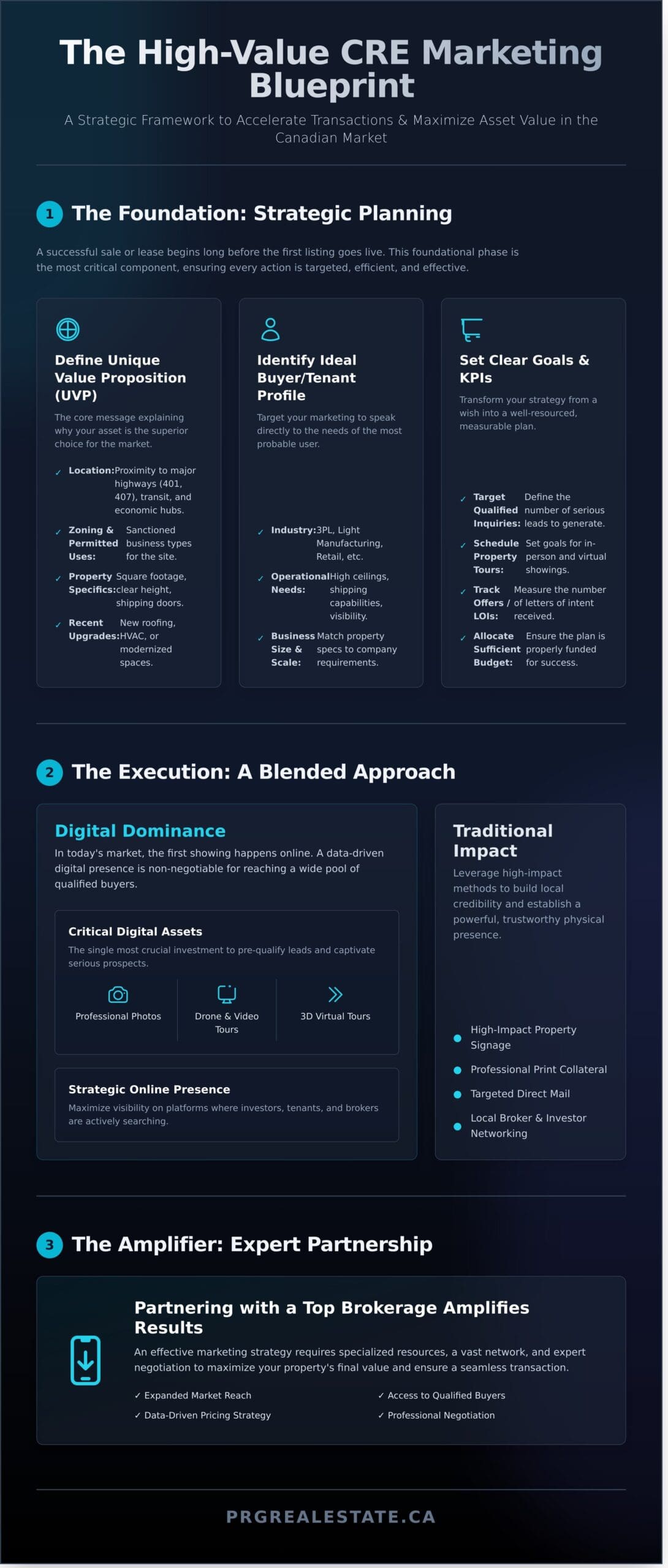
Your property’s UVP is the core of your marketing message-it’s the compelling reason a buyer or tenant should choose your asset over all others. To define it, you must conduct a thorough analysis of its most powerful attributes. This requires a deep dive into its position within the local market, such as Brampton, to understand how it stands out. Key factors to identify include:

  • Location: Proximity to major highways (e.g., 401, 407), transit, and economic hubs.
  • Zoning & Permitted Uses: What business types are officially sanctioned for the site?
  • Property specifics: Total square footage, clear height, shipping doors, and office-to-warehouse ratio.
  • Recent Upgrades: New roofing, HVAC systems, or modernised office spaces that reduce future costs for the user.

Identifying Your Ideal Buyer or Tenant Profile

Effective commercial real estate marketing speaks directly to the needs of a specific audience. Instead of casting a wide, generic net, you must identify the most probable user for your space. Is it a third-party logistics (3PL) company needing high ceilings and extensive shipping capabilities? A light manufacturing firm? Or a retail business seeking high-visibility frontage? Creating a detailed profile of this ideal prospect-including their industry, operational needs, and business size-allows you to tailor every piece of marketing collateral to resonate with their specific pain points and objectives.

Setting Clear Marketing Goals and KPIs

A strategy without measurable goals is merely a wish. To ensure accountability and track progress, you must establish clear Key Performance Indicators (KPIs) from the outset. These goals should be specific, measurable, and tied to a realistic timeline based on current market data. Define what success looks like for your campaign by setting targets for qualified inquiries, scheduled property tours, and the number of letters of intent or offers received. Finally, allocate a clear and sufficient budget to power these activities, ensuring your strategy is not only well-planned but also well-resourced.

Mastering Digital Marketing for Commercial Properties

In today’s market, the first showing of your property doesn’t happen in person-it happens online. The modern commercial real estate landscape is dominated by digital-first impressions, making a strategic and data-driven online presence a non-negotiable for securing a swift and profitable sale. A comprehensive commercial real estate marketing plan leverages multiple channels to reach a wider pool of qualified local and national buyers. Unlike traditional methods, digital campaigns provide trackable data, allowing for real-time adjustments to maximize ROI. For those looking to deepen their understanding, many industry leaders offer excellent commercial real estate marketing tips that reinforce the power of a robust digital strategy.

Professional Photography, Videography, and Virtual Tours

Your digital assets are the single most crucial investment in the marketing process. High-resolution, professional photos are the baseline, but to truly captivate serious prospects, you must go further. Drone footage is invaluable for showcasing a property’s scale, accessibility to major transportation routes like the 401 or QEW, and its position within the community. Furthermore, immersive 3D virtual tours (e.g., Matterport) act as a powerful filter, pre-qualifying leads by allowing them to explore every angle of the space remotely. This saves immense time for all parties and ensures in-person tours are reserved for the most committed decision-makers.

Strategic Online Listings and Syndication

Visibility is paramount. Your property must be professionally presented on the platforms where investors, tenants, and brokers are actively searching. This includes leading commercial real estate listing platforms and industry-specific marketplaces, as well as the commercial sections of local real estate boards (MLS). However, simply listing is not enough. A compelling property description that focuses on benefits-not just features-is essential. Instead of just listing square footage, highlight how the layout optimizes workflow or how its location reduces logistics costs. An expert broker then syndicates this powerful listing across a vast network, ensuring it reaches every potential buyer.

Targeted Digital Advertising (PPC & Social Media)

To accelerate the sales process, a proactive advertising strategy is key. A multi-faceted approach ensures you capture attention across the digital ecosystem:

  • Google Ads (PPC): Target high-intent users actively searching for terms like “industrial space for lease in Vaughan” or “Toronto retail property for sale.” This puts your asset directly in front of motivated buyers.
  • LinkedIn Advertising: Reach corporate decision-makers with precision. Target users by job title (e.g., CEO, Operations Manager), industry, or company size to connect with the individuals who approve these transactions.
  • Remarketing Campaigns: Stay top-of-mind with prospects who have already viewed your listing. Subtle display ads follow them across the web, reinforcing your property’s value and encouraging them to take the next step.

Commercial Real Estate Marketing: The Definitive Strategy Guide

Leveraging Traditional Marketing for High-Impact Results

In an increasingly digital world, it’s easy to overlook the formidable power of tangible marketing assets. However, a strategic and well-executed traditional campaign remains a cornerstone of successful commercial real estate marketing. These proven methods build critical local awareness, establish credibility, and engage serious buyers in ways digital channels cannot replicate. The most effective strategies achieve superior results by integrating these high-impact offline tactics with a robust online presence.

High-Impact Property Signage and Offering Memorandums

Your property sign is more than just a marker; it’s a 24/7 advertisement. A professionally designed sign featuring clear branding, essential property details, and prominent contact information captures the attention of high-potential local prospects. Equally critical is the Offering Memorandum (OM), a comprehensive document that serves as the property’s business plan. A top-tier OM must include:

  • An executive summary highlighting the core investment opportunity.
  • Detailed financial analysis, including pro-forma projections and current rent rolls.
  • High-resolution photography, floor plans, and site surveys.
  • In-depth market and demographic analysis for the surrounding area.

A polished, printed brochure version of the OM acts as a powerful leave-behind, reinforcing your property’s value long after a tour is complete.

The Power of Broker-to-Broker Networking

The most lucrative commercial real estate deals are often secured through established relationships before a property is ever listed publicly. Top brokerages cultivate extensive networks of other agents, each with their own pool of qualified buyers and investors. A brokerage’s reputation for integrity and excellence, like that of PRG Real Estate Brokerage, acts as a powerful endorsement, ensuring your property is presented directly to the most serious and capable players in the market.

Direct Mail and Targeted Email Campaigns

While broad digital campaigns have their place, precision targeting through direct mail and email remains exceptionally effective. By building a curated list of potential buyers-such as owners of similar properties, local business leaders, or known investors in your asset class-you can deliver your message with unparalleled accuracy. An effective email campaign showcases the property’s key value propositions with professional visuals and a clear call-to-action, while a well-designed direct mail piece can cut through digital noise to make a lasting impression on high-value targets.

Why Partnering with a Top Brokerage Amplifies Your Marketing

Executing a successful marketing strategy for a commercial property demands far more than just a listing; it requires significant expertise, time, and resources that most property owners cannot spare. An expert brokerage acts as your strategic partner, managing the entire complex process from start to finish. This allows you to remain focused on your core business, confident that your asset is being positioned for maximum value. The objective is not merely to market a property, but to engineer the optimal deal structure and secure the best possible terms.

Access to an Exclusive Network and Off-Market Opportunities

A primary advantage of partnering with a top-tier firm like PRG is gaining immediate access to our exclusive, private database of qualified investors, developers, and businesses actively seeking properties in the Brampton area. We leverage these deep-rooted connections to generate interest and identify potential buyers before your property ever hits the public market. Our established reputation ensures your asset is presented to serious, pre-vetted prospects, creating a competitive and confidential sales environment from day one.

Expertise in Crafting and Executing a Multi-Channel Strategy

There is no one-size-fits-all solution in commercial real estate marketing. Our team develops a bespoke, multi-channel plan tailored to your asset’s unique value proposition. We manage every critical detail to ensure a professional and compelling presentation, including:

  • High-impact professional photography and virtual tours
  • Targeted digital advertising campaigns and social media promotion
  • Creation of institutional-grade marketing collateral
  • Proactive outreach and skilled negotiations

Throughout the process, we provide transparent, professional reporting to keep you fully informed of all progress and interest.

Maximizing Your Return on Investment

Our strategic marketing is designed to create a competitive environment that drives up the final sale price, directly enhancing your return. By entrusting your sale to our experts, you save invaluable time and avoid the costly mistakes that can arise from inexperienced marketing efforts. We don’t just sell properties; we deliver superior financial outcomes. Let PRG’s experts craft a winning marketing strategy for your property.

Achieve Unmatched Results with a Strategic Marketing Partner

As we’ve explored, a successful approach to commercial real estate marketing demands a robust foundation, a strategic blend of digital and traditional tactics, and flawless execution. While a well-defined plan is essential, the expertise guiding the process is what truly separates a standard listing from a landmark transaction.

Transforming this knowledge into tangible results is where a partnership with an elite brokerage makes the difference. At PRG Real Estate, our award-winning team-recognized as Royal LePage® Red Diamond™ members-leverages unparalleled expertise in the Brampton and Greater Toronto Area market to develop strategic, results-driven marketing plans that maximize your asset’s value.

Are you ready to elevate your marketing and achieve superior outcomes? Partner with Brampton’s Top Commercial Realtors to Market Your Property and let our proven strategies unlock the full potential of your investment.

Frequently Asked Questions About Commercial Real Estate Marketing

How much should I budget for commercial real estate marketing?

A strategic commercial real estate marketing budget in Canada typically ranges from 1% to 3% of the property’s anticipated sale price. For a C$2 million asset, this means allocating between C$20,000 and C$60,000. This investment covers high-impact essentials like professional photography, videography, targeted digital advertising, premium listings, and the creation of a comprehensive offering memorandum. A well-funded campaign ensures maximum exposure to qualified investors and accelerates the transaction timeline.

What is the single most important marketing tool for a commercial property?

While high-quality digital assets are crucial, the single most indispensable tool is a professionally crafted Offering Memorandum (OM). This comprehensive document serves as the property’s business plan, detailing everything from financial projections and market analysis to property specifications and due diligence materials. A compelling OM establishes credibility, answers key investor questions upfront, and provides serious buyers with the concrete data they need to make a confident, informed decision. It is the cornerstone of a successful campaign.

How long does it typically take to sell or lease a commercial property with effective marketing?

The timeline for selling or leasing a commercial asset in Canada varies based on market conditions, property type, and price point. However, with an aggressive and strategic marketing plan, a properly priced property can often secure a qualified buyer or tenant within 6 to 12 months. An ineffective strategy can leave a property languishing on the market indefinitely. Our results-oriented approach is designed to compress this timeline by targeting the right audience from day one. For owners who require a much faster timeline, an alternative to traditional marketing is selling directly to a real estate investment firm. Companies in this space, such as Peregrine REI, specialize in quick, direct purchases, offering a different path for sellers who prioritize speed and certainty.

For owners who require a much faster timeline, an alternative to traditional marketing is selling directly to a real estate investment firm. Companies in this space, such as Peregrine REI, specialize in quick, direct purchases, offering a different path for sellers who prioritize speed and certainty.

What are the biggest marketing mistakes property owners make when trying to sell?

The most detrimental marketing mistakes are poor quality photography, inaccurate pricing, and insufficient market exposure. Amateur photos fail to capture a property’s value and deter serious inquiries. Overpricing an asset based on emotion rather than data alienates qualified buyers from the start. Finally, simply listing a property without a proactive outreach and advertising strategy ensures it will be overlooked. Avoiding these common pitfalls is fundamental to achieving a timely and profitable sale.

Is digital marketing or traditional marketing more important for CRE?

A modern commercial real estate marketing strategy demands an integrated approach, but digital channels now hold a distinct advantage. Digital marketing provides unparalleled reach, precision targeting of investors, and measurable analytics to optimize campaign performance. While traditional methods like signage and broker networks remain valuable, platforms like LinkedIn, targeted email campaigns, and premium online listings are essential for reaching a national or even global pool of qualified prospects efficiently and effectively.

Can I market a commercial property myself without a broker?

While technically possible, marketing a significant commercial asset yourself is not advisable. The process demands extensive market knowledge, a vast network of qualified buyers, and expertise in complex negotiations and due diligence. Partnering with top commercial realtors ensures your property receives maximum exposure through established channels and is presented professionally. This strategic alliance is crucial for navigating complexities, mitigating risks, and ultimately securing the highest possible return on your investment.