

The decision to sell a commercial asset represents a significant financial milestone. However, the process of selling commercial property in Canada can feel overwhelmingly complex, riddled with concerns over accurate valuation, effective marketing, and the potential for costly legal missteps. Many owners fear leaving significant money on the table or becoming entangled in a transaction that fails to meet its timeline or financial objectives, transforming a potential opportunity into a source of stress and uncertainty.
This definitive guide is engineered to replace that uncertainty with a clear, strategic framework. We provide the expert, step-by-step roadmap necessary to navigate every stage with precision-from preparing your asset for sale to closing the deal with confidence. Our commitment is to equip you with the insights needed to command the maximum possible sale price for your property and ensure a smooth, predictable, and successful transaction from start to finish.
Key Takeaways
- Master the crucial pre-sale phase by conducting a strategic valuation and preparing your asset meticulously before it ever hits the market.
- Develop a tailored marketing and sales strategy designed to attract the most qualified investors, moving far beyond a simple listing.
- Successfully selling commercial property requires navigating the complex due diligence and closing phases to protect your investment and maximize returns.
- Understand that an initial offer is just the start of a detailed negotiation process where expert guidance is critical to securing favourable terms.
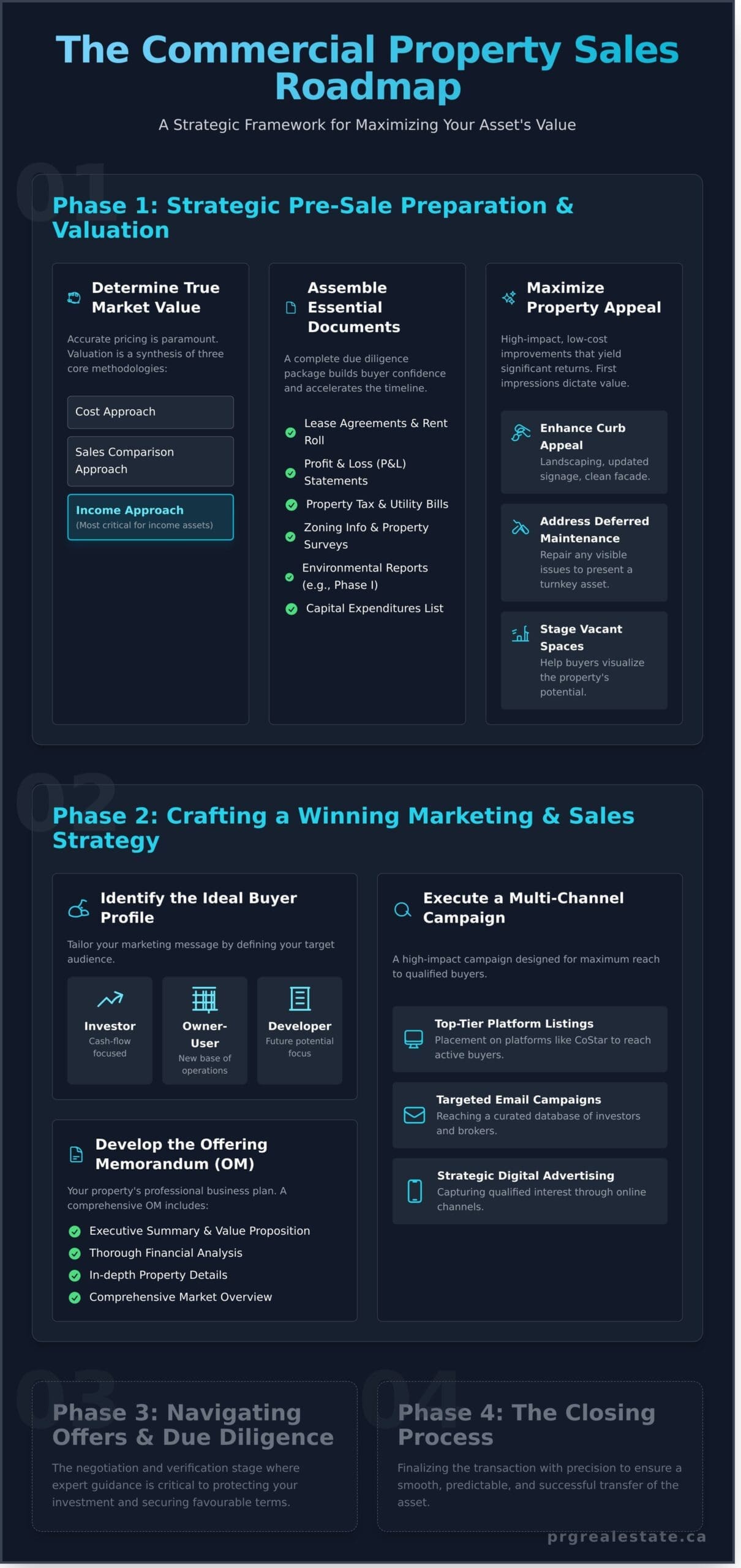
Phase 1: Strategic Pre-Sale Preparation and Valuation
The successful sale of a high-value asset begins long before it hits the market. The initial phase of selling commercial property in the Greater Toronto Area is not about listing, but about meticulous, strategic preparation. This foundational work ensures you enter the market from a position of strength, prepared to maximize your return on investment and facilitate a seamless transaction. Overlooking this stage is the most common and costly mistake an owner can make.
Determining Your Property’s True Market Value
Commercial valuation is a sophisticated, data-driven discipline far removed from residential appraisals. An accurate price is determined by a synthesis of three core methodologies: the Cost Approach (what it would cost to replace), the Sales Comparison Approach (what similar properties have sold for), and most critically for income-generating assets, the Income Approach (its potential to generate revenue). A comprehensive Broker’s Opinion of Value (BOV) from a seasoned commercial real estate expert is essential. This analysis considers not just the numbers, but critical factors like location, zoning regulations, tenant quality, lease terms, and the physical condition of the commercial property itself. Pricing your asset correctly from day one is paramount to attracting qualified buyers and avoiding prolonged, value-eroding time on the market.
Assembling the Essential Documentation Package
A prepared seller is a credible seller. Before listing, our team helps you assemble a comprehensive due diligence package. Having this information organized and ready for review builds immediate buyer confidence and significantly accelerates the transaction timeline. Your package should be complete and accurate, including:
- Current and historical lease agreements and a detailed rent roll
- Three years of profit and loss (P&L) statements
- Recent property tax bills and utility statements
- Up-to-date zoning information and property surveys
- Any available environmental reports (e.g., Phase I ESA)
- A list of recent capital expenditures and planned improvements
Maximizing Appeal: Property Enhancements and Staging
First impressions dictate perceived value. We advise clients on high-impact, low-cost improvements that yield significant returns. This includes enhancing curb appeal with landscaping and updated signage, addressing any deferred maintenance issues, and ensuring the property is immaculately clean and easily accessible for investor tours. For vacant spaces, professional staging can help prospective tenants or buyers visualize the potential. The goal is to present a turnkey, well-maintained asset, clearly highlighting its potential for future development or optimized use to capture maximum investor interest.
Phase 2: Crafting a Winning Marketing and Sales Strategy
In the competitive Greater Toronto Area market, effective marketing goes far beyond a simple ‘For Sale’ sign. A sophisticated, tailored strategy is essential to attract the most qualified buyers and maximize your property’s value. This involves creating non-negotiable professional marketing materials and leveraging a broker’s extensive network to generate both on-market and off-market interest, ensuring your asset is positioned for optimal results.
Identifying the Ideal Buyer Profile
Success in selling commercial property begins with a clear understanding of your target audience. Is your ideal buyer an investor focused on cash flow, an owner-user seeking a new base of operations, or a developer with an eye for future potential? By defining this profile, we tailor every marketing message to resonate with their specific motivations, preventing wasted time and resources on unqualified leads and focusing exclusively on prospects with genuine intent and capacity.
Developing a Compelling Offering Memorandum (OM)
The Offering Memorandum (OM) is the professional business plan for your property. It is your most powerful tool to showcase the investment opportunity and establish credibility. A comprehensive OM must include high-quality photography, detailed floor plans, and critical data points. Key sections include:
- An Executive Summary highlighting the unique value proposition.
- A thorough Financial Analysis with rent rolls, operating expenses, and pro-forma projections.
- In-depth Property Details covering zoning, building specifications, and capital improvements.
- A Market Overview of the immediate area and broader GTA trends.
A well-structured OM is a cornerstone of any successful sale, providing the essential documentation required to attract serious investors and facilitate informed decision-making.
Executing a Multi-Channel Marketing Campaign
Once your strategy and materials are perfected, we execute a high-impact, multi-channel campaign designed for maximum reach. This includes listing your property on top-tier commercial platforms like CoStar, deploying targeted email campaigns to our curated database of active investors and brokers, and utilizing strategic digital advertising to capture qualified interest. This proactive approach ensures your property is presented to the entire market, not just a fraction of it. See how PRG Real Estate Brokerage’s strategic marketing gets results.
Phase 3: Navigating Offers and the Due Diligence Gauntlet
Receiving an offer is a significant milestone, but it marks the beginning of the most intricate phase of your transaction. This is a critical stage when selling commercial property, where strategic negotiation and meticulous management determine whether a potential deal closes successfully or collapses under pressure. A results-oriented approach, managed by an expert commercial broker, is non-negotiable to protect your interests and maximize your return on investment.
Evaluating and Negotiating Offers
The most attractive offer isn’t always the one with the highest price. A truly superior offer combines a strong price with favourable terms. Our team conducts a comprehensive analysis of all components to position you for success. Key considerations include:
- Buyer Credibility: Assessing the buyer’s financial strength, financing pre-approval, and track record in the market.
- Conditions & Contingencies: Scrutinizing financing, inspection, and zoning conditions that could create risk.
- Closing Timeline: Ensuring the proposed date aligns with your financial and strategic objectives.
We leverage strategic counter-offers to improve terms, moving methodically toward a binding Agreement of Purchase and Sale (APS) that safeguards your position.
Managing the Due Diligence Period
Once an agreement is conditionally accepted, the buyer begins their due diligence-an intensive verification period that can last 30 to 90 days. Our role is to manage this process with absolute efficiency and transparency. This involves facilitating access for physical inspections, Phase I Environmental Site Assessments (ESAs), financial and lease audits, and comprehensive title searches. By maintaining impeccably organized records and responding promptly to all inquiries, we build buyer confidence and prevent unnecessary delays.
Overcoming Common Hurdles and Re-Negotiations
It is common for buyers to uncover perceived issues during due diligence, often leading to re-negotiation requests. Whether it’s a minor repair or a complex zoning query, these hurdles require a skilled negotiator. The expert guidance provided by the PRG Real Estate team helps you determine when to offer a credit versus making a repair, ensuring minor issues don’t derail the sale. With an unwavering commitment to your goals, we keep the transaction on track, navigating every challenge to achieve a successful and profitable closing.
Phase 4: The Closing Process and Finalizing the Transaction
The final phase of selling your commercial property is where meticulous execution transforms a negotiated offer into a completed sale. This stage is defined by critical legal and financial coordination, demanding professional oversight to navigate complexities and protect your interests. Success hinges on the seamless collaboration between your broker, legal counsel, and the buyer’s representatives to ensure all obligations are met precisely and on schedule.
From Accepted Offer to Binding Agreement (PSA)
Once an offer is accepted, the next critical step is drafting the Purchase and Sale Agreement (PSA). This legally binding contract is prepared by real estate lawyers and must accurately reflect every term, condition, and timeline negotiated. Key clauses to scrutinize include representations and warranties about the property’s condition, closing adjustments for items like property taxes and utilities, and default provisions. This document is the definitive blueprint for the remainder of the transaction.
Coordinating with Lawyers, Lenders, and Title Companies
Effective coordination is paramount to prevent costly delays. Your PRG Real Estate broker acts as the central point of communication, ensuring a fluid exchange of information between all parties. Our role involves:
- Liaising with both seller and buyer lawyers to facilitate the PSA review.
- Confirming the buyer’s financing is secured and progressing according to the agreed-upon timeline.
- Working with the title insurance company to resolve any potential issues or encumbrances on the property title.
This proactive management ensures that the path to closing remains clear and efficient.
The Closing Day: What to Expect
On the closing day, all the preceding efforts culminate in the final transfer. You will review and sign the closing documents, including the Statement of Adjustments, which provides a detailed financial breakdown of the sale. This statement outlines all credits and debits, including the final purchase price, legal fees, and brokerage commissions. Once documents are signed and funds are successfully transferred via the lawyers’ trust accounts, the property ownership is officially registered in the buyer’s name, finalizing the process of selling commercial property.
Navigating the closing process requires unwavering expertise and a commitment to excellence. To ensure your transaction is executed with strategic precision, partner with the experts at PRG Real Estate.
Secure Your Investment’s Future: Partner with a Commercial Real Estate Leader
As this guide has demonstrated, successfully selling commercial property is a multi-faceted endeavor that extends far beyond simply listing a building. From meticulous pre-sale preparation and accurate valuation to executing a sophisticated marketing campaign, every step is critical. Expertly navigating the due diligence gauntlet and ensuring a seamless closing process are the final, crucial pieces to securing an optimal outcome.
Achieving a premium result in this competitive landscape requires a partner with a proven track record. As specialists in the dynamic Brampton and Greater Toronto Area commercial market, the team at PRG Real Estate leverages a strategic, data-driven marketing approach. Our commitment is to position your asset perfectly, attract the most qualified buyers, and ensure your property achieves its highest possible value.
Don’t leave your investment’s potential to chance. Maximize your property’s value. Partner with Brampton’s top commercial realtors.
Take the definitive step toward a successful and profitable transaction today.
Frequently Asked Questions About Selling Commercial Property
What are the typical commission rates for selling a commercial property?
In Canada, commercial real estate commission rates are negotiable and not standardized. They often follow a tiered structure based on the property’s final sale price. For example, a common arrangement is 5% on the first C$1 million and 2.5% on the remaining balance. This commission is typically split between the listing brokerage and the buyer’s brokerage. Engaging an expert commercial realtor ensures you negotiate a structure that aligns with your property’s value and market position for optimal results.
How long does it usually take to sell a commercial property in the Brampton area?
The timeline for selling commercial property in the Brampton area is typically more extended than for residential sales, often ranging from 6 to 12 months or longer. Key factors influencing this timeframe include the asset class (e.g., industrial, retail, office), current market demand, strategic pricing, and the complexity of buyer due diligence. A proactive marketing strategy, managed by top commercial realtors in Brampton, is critical to expediting this process and attracting qualified purchasers efficiently.
What are the main differences between selling commercial and residential real estate?
The key distinction lies in the buyer’s motivation and the transaction’s complexity. Commercial buyers are driven by investment metrics like capitalization rates and ROI, not emotion. The due diligence process is far more intensive, involving analysis of leases, zoning, environmental reports, and financial statements. Consequently, marketing is highly targeted toward specific investors and businesses, unlike the broad-market approach in residential sales, creating a more strategic and data-driven process from start to finish.
What are the capital gains tax implications of selling a commercial property in Canada?
In Canada, when you sell a commercial property, 50% of the capital gain is considered taxable income. A capital gain is the selling price minus the property’s adjusted cost base and any expenses related to its sale. This taxable portion is then added to your income for the year and taxed at your personal or corporate marginal tax rate. We strongly advise consulting with a tax professional to understand the precise implications and explore potential deferral strategies.
How can I ensure confidentiality when selling my business’s property?
Maintaining confidentiality is paramount, especially for an operating business. This is achieved through a strategic, controlled marketing process. We utilize non-disclosure agreements (NDAs) that all prospective buyers must sign before receiving sensitive information. Furthermore, we thoroughly vet all inquiries to ensure only financially qualified and serious parties gain access to property details. This discreet approach protects your operations, employees, and client relationships from unnecessary disruption during the sale.
Can I continue to operate my business in the building during the sales process?
Absolutely. It is standard practice to continue full business operations while your property is on the market. This can be structured in two ways: selling to an investor who values an in-place tenant (your business), or selling to an end-user who will occupy the space after you vacate. A popular strategic option is a sale-leaseback, where you sell the property and simultaneously sign a lease with the new owner, unlocking capital while ensuring business continuity.