

Finding the ideal commercial space for your business is an exciting milestone. However, that excitement can quickly turn to anxiety when faced with a complex lease and the significant cost of transforming a bare shell into a functional, branded environment. The fear of hidden expenses and the pressure to negotiate favourable terms can be overwhelming for even the most experienced entrepreneurs.
This is precisely where understanding the tenant improvement allowance (TIA) becomes one of the most critical factors in your negotiation strategy. The TIA is a sum of money provided by the landlord to help you finance the construction and renovation of your new space, but securing a favourable deal requires professional insight and strategic planning.
In this guide, our team of expert commercial real estate professionals will equip you with the knowledge to navigate this crucial component of your lease. You will learn what a TIA typically covers, how to calculate the amount you need, and the proven negotiation tactics to secure the best possible terms. We are committed to ensuring your commercial investment is both strategic and successful, starting with a lease that empowers your business to thrive from day one.
Key Takeaways
- Understand that a TIA is a strategic financial contribution from a landlord to fund your custom build-out, serving as a key incentive in commercial leasing.
- Learn the critical distinction between TIA-covered ‘hard costs’ and non-covered ‘soft costs’ to budget your renovation project with professional accuracy.
- Identify the key factors that provide leverage to successfully negotiate the maximum possible tenant improvement allowance for your commercial space.
- Master the TIA process from the lease agreement to fund disbursement to ensure a smooth, efficient, and successful construction phase.
What is a Tenant Improvement Allowance (TIA)? The Fundamentals
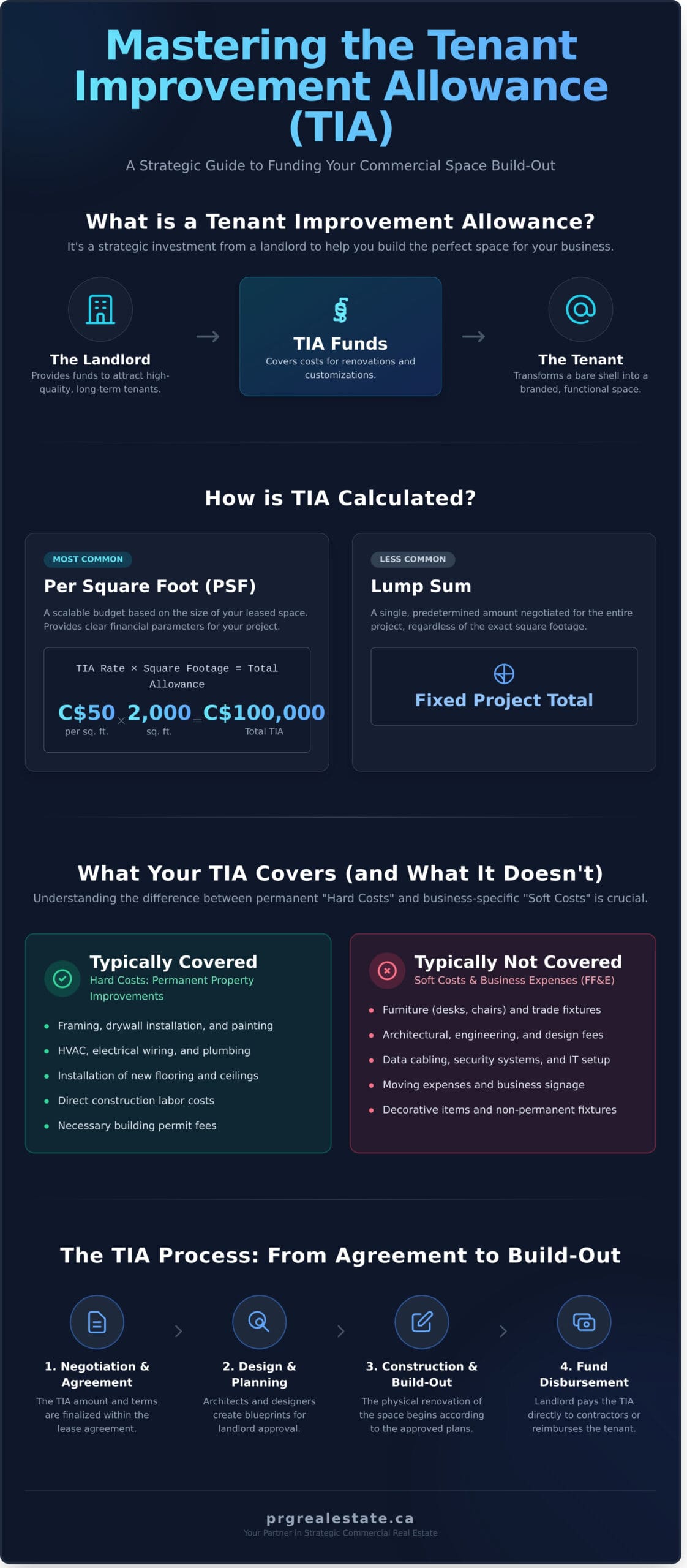
In commercial real estate, a tenant improvement allowance (TIA) is a sum of money provided by a landlord to a tenant to cover all or part of the costs associated with renovating or customizing a leased space. It is a powerful incentive designed to attract high-quality, long-term tenants by helping them transform a standard unit into a space that perfectly aligns with their business operations and brand identity.
Understanding the structure and purpose of this allowance is a critical first step for any business looking to lease commercial property. It is not a gift, but a strategic investment by the property owner to secure a reliable tenancy and enhance the value of their asset.
How TIA is Calculated: Per Square Foot vs. Lump Sum
The most common method for calculating a TIA, especially within the competitive Greater Toronto Area market, is on a per-square-foot (PSF) basis. This approach provides a clear and scalable budget. For example, if a landlord offers C$50 PSF for a 2,000-square-foot office in Brampton, your total allowance would be C$100,000. A less frequent alternative is a fixed lump sum, where a single, predetermined amount is negotiated for the entire project, regardless of square footage.
The Landlord’s Perspective: Why TIA is a Smart Investment
Landlords offer a tenant improvement allowance because it is a mutually beneficial arrangement that strengthens their investment. By understanding their motivation, tenants can frame their proposals more effectively during negotiations. Key landlord benefits include:
- Securing Desirable Tenants: A competitive TIA helps landlords attract and retain stable, successful businesses in their properties for longer lease terms.
- Increasing Asset Value: The renovations funded by the TIA-such as upgraded electrical, modern fixtures, or new layouts-become permanent improvements to the property, increasing its market value and appeal to future tenants.
- A Powerful Negotiation Tool: The TIA is often a central point of negotiation, allowing landlords flexibility to close a deal that might otherwise stall on rental rates alone.
What Your TIA Covers (and What It Doesn’t)
A successful lease negotiation depends on a clear understanding of what your tenant improvement allowance can be used for. The fundamental distinction lies between “hard costs” and “soft costs.” Landlords provide this allowance to fund permanent, physical changes to the space-improvements that add value to the property itself and will remain after your tenancy ends. Understanding the nuances of how tenant improvement allowances work is crucial for accurately budgeting your build-out.
Eligible Expenses: Hard Construction Costs
Hard costs are tangible expenses directly related to the physical construction and alteration of the commercial space. These are the core improvements that transform a shell space into a functional environment for your business. Your tenant improvement allowance is almost exclusively designated for these types of expenditures.
- Framing, drywall installation, and painting of new walls
- HVAC system modifications, electrical wiring, and plumbing upgrades
- Installation of new flooring (carpet, tile, hardwood) and ceilings
- Labour costs directly associated with construction
- Costs for necessary building permits
Commonly Excluded Items: Soft Costs & Business Expenses
Soft costs and other business-specific expenses are typically not covered because they are not permanent fixtures of the property. This category includes furniture, fixtures, and equipment (FF&E), which are movable and specific to your business operations. These items will be removed when you vacate the premises and therefore do not add long-term value to the landlord’s asset.
- Furniture (desks, chairs, workstations) and trade fixtures
- Architectural, engineering, and interior design fees
- Data cabling, security systems, and IT infrastructure setup
- Moving expenses, business signage, and decorative items
| Typically Covered by TIA | Typically Not Covered by TIA |
|---|---|
| Interior Walls & Doors | Office Furniture & Cubicles |
| Electrical & Plumbing | Computers & IT Equipment |
| HVAC & Ductwork | Security Systems & Cameras |
| Flooring & Ceilings | Architectural & Design Fees |
| Construction Labour & Permits | Moving Costs & Signage |
Crucially, these are general guidelines. The specifics of what is covered must be meticulously detailed in your lease agreement. A well-negotiated lease will eliminate ambiguity, ensuring both tenant and landlord have a clear, legally binding understanding of how the allowance funds will be allocated. Always seek professional guidance to ensure the terms align with your strategic objectives.
How to Negotiate the Best Possible Tenant Improvement Allowance
Entering lease negotiations is a standard and expected part of securing a commercial space. A landlord’s initial offer is a starting point, not a final decision. With a strategic and professional approach, you can secure the funding necessary to build out a space that perfectly aligns with your business objectives. Success hinges on understanding your leverage and presenting a compelling, data-backed case for the tenant improvement allowance you require.
Key Factors That Influence Your TIA Offer
A landlord’s willingness to invest in your build-out is a business decision calculated on risk and potential return. Several key factors strengthen your negotiating position and directly influence the TIA offer:
- Your Financial Strength: A tenant with a strong credit history and solid financials represents a low-risk, high-value partner for the landlord.
- The Length of the Lease Term: Offering to sign a longer lease (e.g., 7-10 years versus 3-5) provides the landlord with long-term, guaranteed income, making a larger TIA a more secure investment on their part.
- The Current Condition of the Space: A raw ‘shell’ space will justifiably require a much larger TIA than a ‘second-generation’ space that only needs minor cosmetic updates.
- Local Market Conditions: In a tenant’s market with higher vacancy rates, such as certain commercial districts in Brampton, landlords are more motivated to offer generous incentives to attract and secure quality tenants.
Actionable Strategies for a Successful Negotiation
Leverage is only effective when paired with a clear, professional strategy. To make a compelling case and secure the best possible terms, you should:
- Obtain Detailed Construction Bids: Don’t rely on estimates. Presenting itemized bids from contractors adds significant weight to your request, transforming it from an ask into a data-backed business proposal. The legal framework around negotiating a tenant improvement allowance often hinges on such clear documentation.
- Demonstrate Your Value: Showcase your business’s stability, growth potential, and how your presence will enhance the property’s overall tenant profile.
- Be Prepared to Walk Away: Your most powerful negotiating tool is the ability to confidently pursue other options if the landlord’s terms are not financially viable for your business.
The Realtor’s Role: Your Advocate in Negotiations
Navigating these complex negotiations alone is a significant risk. An expert commercial realtor is an indispensable asset, providing critical market intelligence and professional advocacy. A top realtor understands current market-rate TIA values (e.g., C$50 vs. C$100 per square foot) and ensures your request is both competitive and realistic. They handle the intricate back-and-forth communication on your behalf, saving you valuable time while avoiding common pitfalls in complex lease language. Their expertise is your strategic advantage.
Partner with PRG’s experts to maximize your negotiation power.
The TIA Process: From Agreement to Build-Out and Payment
Once the tenant improvement allowance is finalized in your lease agreement, the process of transforming the space begins. A well-defined plan is crucial for a smooth and successful build-out, ensuring the project stays on schedule and within budget. This phase requires meticulous oversight and clear communication between you, your landlord, and your contractors.
Who Manages the Construction: Landlord vs. Tenant
A key strategic decision is determining who will oversee the construction. If the landlord manages the project, they leverage their existing contractor relationships, which can simplify the process. However, this often means less control for the tenant. When the tenant manages the build-out, they gain complete control over the design, quality, and timeline, ensuring the final space perfectly aligns with their brand vision. This choice is a critical point of negotiation.
Receiving Your Allowance: Disbursement Methods
In the Canadian commercial real estate market, funds from the allowance are typically disbursed in one of three ways, as stipulated in the lease:
- Reimbursement: The tenant pays for all construction costs upfront and submits paid invoices and lien waivers to the landlord, who then reimburses them up to the agreed-upon allowance amount.
- Direct Payment: The landlord pays contractors and suppliers directly from the allowance fund upon receiving approved invoices. This method reduces the tenant’s initial cash outlay.
- Rent Abatement: If any portion of the TIA is unused, it may be applied as a credit toward future rent payments, though this is less common and must be explicitly negotiated.
Common Pitfalls to Avoid During the Build-Out
Executing a successful build-out requires avoiding common obstacles that can lead to costly delays and disputes. Proactive management is essential to protect your investment and ensure a timely opening. Key challenges to anticipate include:
- Exceeding the Budget: Failing to account for all costs, from architectural drawings to final finishes, can quickly exhaust your allowance. Always include a contingency fund of 10-15%.
- Lack of Landlord Approval: All plans, material changes, and contractor selections must receive written approval from the landlord to ensure they are eligible for TIA funds.
- Permitting and Construction Delays: The process for securing municipal permits in Canada can be lengthy. Build these potential delays into your project timeline from the start.
- Misunderstanding Eligible Costs: Be clear on what the tenant improvement allowance covers. It typically excludes trade fixtures, furniture, or moving expenses.
Navigating these complexities requires professional guidance. The expert team at PRG Real Estate Brokerage ensures our clients are positioned for success from negotiation to completion.
Secure Your Success with a Strategic Approach to Your TIA
Ultimately, a commercial lease is more than just a contract-it’s a strategic tool for your business’s growth. Understanding the fundamentals of a tenant improvement allowance is the first step toward creating a space that aligns with your objectives. A well-negotiated TIA not only funds your essential build-out but also reflects the strength of your entire lease agreement. Mastering the process, from defining the scope of work to navigating payment, is crucial for a successful outcome.
Navigating these complex negotiations requires professional expertise. As the Top Commercial Realtors in Brampton, PRG Real Estate has a proven track record in successful lease negotiations, backed by an unwavering commitment to client success. Don’t leave this critical investment to chance. Secure your ideal commercial space with expert guidance. Contact PRG today.
Let us help you lay the groundwork for your future success.
Frequently Asked Questions About Tenant Improvement Allowances
What is a standard tenant improvement allowance in Brampton or the GTA?
While there is no single standard, a typical tenant improvement allowance in Brampton and the GTA can range from C$20 to over C$100 per square foot. The final amount is highly negotiable and depends on factors like the building’s class, current market conditions, the length of the lease term, and the tenant’s financial strength. A longer lease term and a stronger tenant profile often result in a more generous allowance from the landlord.
What happens if my renovation costs are higher than the TIA?
If your total renovation expenses exceed the agreed-upon TIA, the tenant is responsible for paying the difference out of pocket. This is a common scenario, and it is critical to budget for potential overages before commencing work. Effective project management and detailed cost estimation are essential to ensure that your build-out aligns with both your vision and your financial plan, preventing unexpected financial strain on your business operations.
What happens if I don’t use the full tenant improvement allowance?
The treatment of unused funds depends entirely on the terms negotiated in your lease agreement. In many cases, any portion of the tenant improvement allowance that is not used is forfeited, meaning the landlord retains the funds. However, a well-negotiated lease may allow for the remaining balance to be applied as a credit toward future rent payments. It is crucial to clarify this point during lease negotiations to maximize the value of your allowance.
Is the tenant improvement allowance considered taxable income?
In Canada, a TIA is generally considered taxable income for the tenant if the tenant owns the improvements. However, the tenant can then claim capital cost allowance (depreciation) on these leasehold improvements over time. The specific tax implications can be complex and depend on the structure of the lease. We strongly advise consulting with a professional tax advisor to ensure compliance and to structure your agreement in the most financially advantageous way.
Can I use the TIA to pay for architectural or design fees?
Yes, a TIA can typically be used to cover both “hard costs,” like construction and materials, and “soft costs.” Soft costs include professional services such as architectural drawings, design consultations, engineering fees, and project management expenses. To ensure clarity and avoid disputes, your lease agreement should explicitly list all the permissible uses for the allowance funds, confirming that these essential professional fees are covered by the landlord’s contribution.
What is a ‘turn-key’ build-out and how does it differ from a TIA?
A ‘turn-key’ build-out is when the landlord manages and pays for the entire renovation process based on a pre-agreed plan, delivering a move-in-ready space to the tenant. In contrast, a tenant improvement allowance provides the tenant with a specific amount of capital to manage their own build-out. A TIA offers the tenant greater control over design and contractors, while a turn-key solution offers more convenience and less direct management responsibility for the tenant.